
8 Modern Minimalist Christmas Tree Quilt Ideas
Minimalist Christmas quilting is about making a few thoughtful design choices rather than filling every inch with holiday motifs. A simple evergreen shape, a quiet background, and carefully chosen stitching can make a quilt feel festive while still fitting naturally into a modern home.
A restrained Christmas tree quilt can work as a wall hanging, sofa throw, table accent, or handmade seasonal gift. It is also a flexible project because you can adjust the colors, block sizes, and finished dimensions to suit the fabric you already have.
These ideas explore different ways to make a minimalist Christmas tree quilt, from Scandinavian-inspired rows and oversized geometric trees to soft neutral palettes and modern abstract layouts. You’ll also find practical fabric, piecing, quilting, and styling tips to help you plan a project that looks polished without becoming complicated.
8 Minimalist Christmas Tree Quilt Designs
1. Single Oversized Geometric Tree
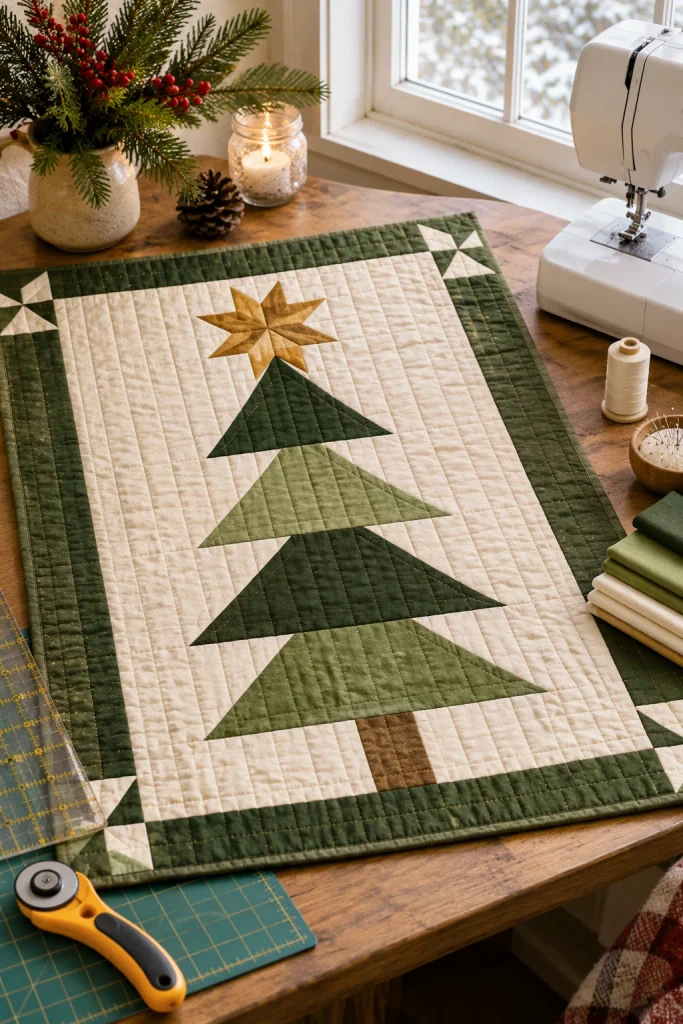
A single large tree gives a minimalist quilt a clear focal point without relying on lots of small blocks. Its simple silhouette feels graphic and calm, especially when the branches are built from three or four broad tiers rather than many tiny pieces.
Use forest green, deep spruce, or muted olive for the tree and warm ivory for the background. You can piece the branches from half-square triangles, rectangles, or large triangles, then add a narrow brown trunk and a small ochre star. Keep the surrounding background open so the tree has room to stand out. A slim dark-green binding frames the quilt without adding visual weight.
For a budget-friendly version, choose two green fabrics and use a leftover neutral for the background. Beginners can simplify the star or leave it off. Straight vertical quilting makes the tree feel taller and emphasizes the clean geometry.
Best for: A wall hanging above a console, mantel, or entryway bench.
2. Scandinavian Row of Simple Trees
Several small trees arranged in a neat row create a quiet Nordic look. Repetition gives the quilt rhythm, while generous space between the motifs keeps it from feeling like a busy holiday sampler.
Try sage, pine, and soft gray-green trees on a snow-white or oatmeal background. Make each tree from two or three triangles and use the same small trunk shape throughout. You can vary the heights slightly, but keep the spacing consistent for a balanced layout. A narrow charcoal or natural linen border can complete the Scandinavian feel.
Use fabric scraps for the trees, but keep them within the same muted color family. If you are making a small wall quilt, three trees may be enough; a larger throw can hold five or seven. Simple horizontal quilting between the rows will preserve the open design.
Best for: Neutral living rooms, bedrooms, and homes with Scandinavian or cottage-inspired decor.
3. Neutral Winter Tree Quilt
A neutral tree quilt replaces bright holiday colors with soft, earthy tones. The result feels warm and seasonal without competing with existing furniture, artwork, or everyday textiles.
Combine ivory, oatmeal, taupe, mushroom, warm gray, and a touch of muted olive. Use a slightly darker tree against a lighter background so the silhouette remains visible. Linen-look quilting cotton or subtle woven-style prints can add depth, while large-scale prints should be used sparingly to protect the calm appearance.
Choose low-contrast fabrics with different values rather than several identical shades; the tree still needs a readable outline. A simple crosshatch or widely spaced diagonal quilting pattern adds texture without making the surface busy.
Best for: Small apartments, minimalist rooms, and anyone who wants a Christmas quilt that can stay on display through winter.
4. Modern Triangle Tree Patchwork
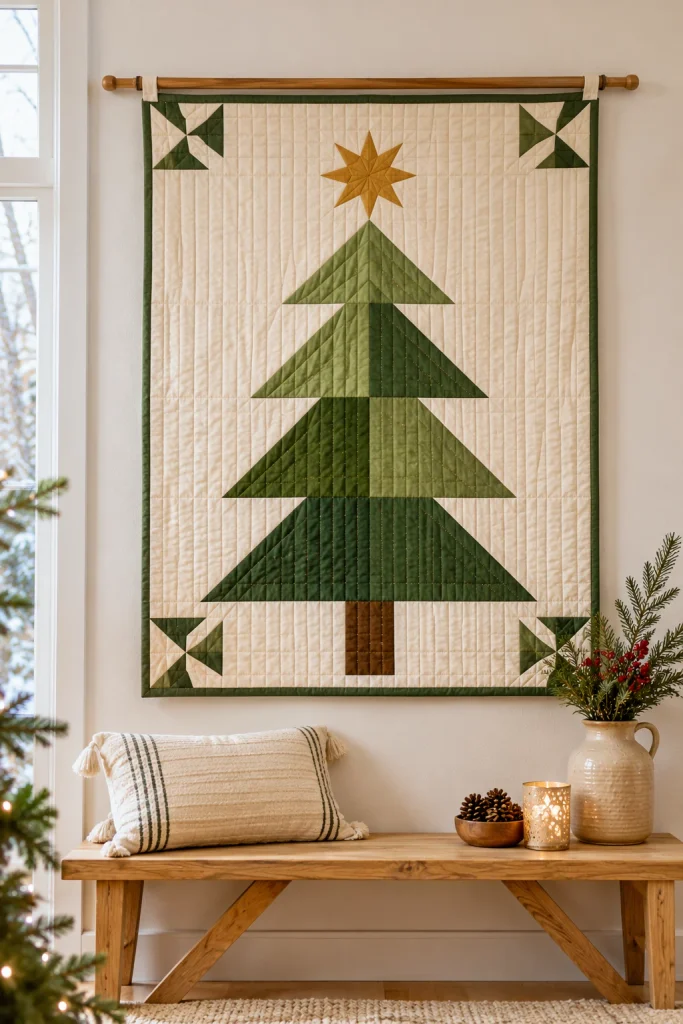
This design builds a tree from crisp triangles, creating a strong geometric pattern that feels modern and structured. The repeated angles can look like a stylized evergreen forest or one large abstract tree, depending on the layout.
Choose three greens with clearly different values, such as deep forest, medium pine, and pale sage. Pair them with a solid cream background and use the darkest shade near the lower branches to give the tree visual weight. Half-square triangles are approachable for many quilters, while foundation paper piecing can help with sharper, more intricate arrangements.
Press seams carefully and trim units consistently so the points line up neatly. If you want fewer seams, enlarge the triangle units instead of adding more small pieces. Keep the border plain and let the geometry do the work.
Best for: Confident beginners and intermediate quilters who enjoy precise piecing and clean modern lines.
5. Minimalist Forest Quilt with Negative Space
A forest layout uses a few simple tree shapes separated by broad areas of plain fabric. The open background is an important part of the design, not empty space that needs to be filled.
Place two or three trees at different heights across a cream, pale gray, or soft white background. Use one dark green and one lighter green to create gentle contrast, and consider leaving off ornaments, garlands, and decorative borders. An asymmetrical arrangement can feel contemporary as long as the visual weight is balanced across the quilt.
Before sewing, arrange fabric shapes on a design wall or floor and take a photo from a distance. This makes it easier to judge spacing and scale. Quilting can be limited to widely spaced vertical lines or a few echo lines around the trees.
Best for: A large wall hanging in a modern living room or above a bed.
6. Striped Fabric Christmas Tree
A striped tree creates the evergreen silhouette from horizontal fabric bands instead of separate triangular branches. It has a simple, almost architectural appearance and is a useful way to show off a few favorite fabrics.
Cut fabric strips in graduated lengths, from short at the top to wider near the bottom. Use tonal greens, or alternate forest green with cream and muted sage for a softer effect. A small gold star and a plain trunk are enough to make the holiday theme clear. Keep the background solid so the striped tree remains the main feature.
Strip piecing can make construction faster because you can sew longer sections before cutting the final branch lengths. Use scraps from other projects or a coordinated jelly roll, but avoid too many contrasting prints. Straight-line quilting that follows the strip direction reinforces the design.
Best for: A quick wall hanging, table topper, or handmade seasonal gift.
7. Modern Two-Tone Christmas Tree Quilt
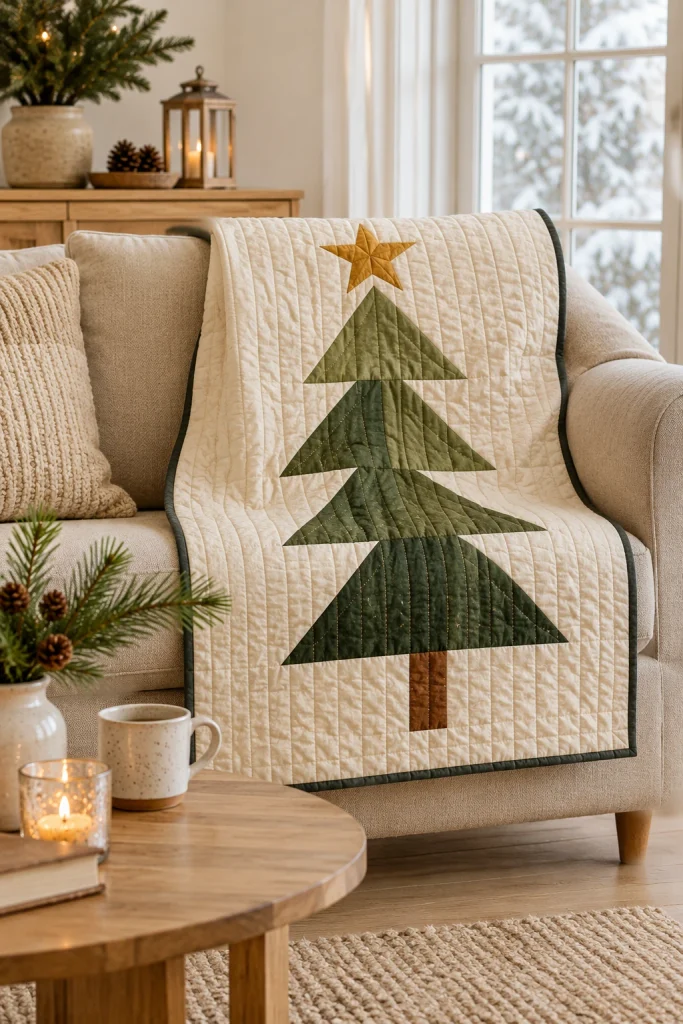
A two-tone quilt relies on a simple contrast rather than a broad palette. A deep green tree against a warm white background feels classic, while charcoal against pale gray or cream gives the design a more contemporary edge.
Use solid quilting cotton for a crisp, graphic finish, or choose subtle tone-on-tone prints if you want a little texture. The tree can be made from one large triangle, stacked rectangles, or a few half-square-triangle units. A contrasting binding in the tree color gives the quilt a neat, intentional edge.
Because the palette is limited, accurate cutting and pressing matter more than elaborate decoration. If you are new to quilting, start with a small wall hanging and practice straight seams before scaling up. A simple star can be added as a small accent, but it is not essential.
Best for: Modern homes and quilters who prefer a clean, uncomplicated project.
8. Minimalist Christmas Tree Quilt with Subtle Star Detail
A small star above a simple tree adds a recognizable holiday finish while keeping the overall composition restrained. The star becomes a tiny point of warmth rather than a large decorative feature.
Choose a muted gold, ochre, or soft mustard for the star, paired with evergreen or sage branches and an ivory background. Use a simple five-point star block, a small appliqué shape, or a single embroidered star if you want to avoid extra piecing. Keep the rest of the quilt free from additional motifs so the star has room to shine.
Echo quilting around the tree can add gentle texture, while a narrow binding in green or natural linen keeps the edges understated. If you are making a wall hanging, add a fabric sleeve to the back and use a wooden dowel for display.
Best for: A mantel, reading nook, or handmade gift for someone who enjoys understated Christmas decor.
Choose Fabrics and Colors for a Clean Modern Finish
A limited palette is one of the easiest ways to make a tree quilt look intentional. Choose one background, two or three greens, and one optional accent. If the fabrics have different values, the tree will remain easy to read even when the shades are close.
| Style | Color palette | Overall feel |
|---|---|---|
| Classic modern | Forest green, cream, muted gold | Warm and timeless |
| Scandinavian | Sage, ivory, soft gray | Quiet and natural |
| Neutral winter | Oatmeal, taupe, warm white, olive | Soft and understated |
| High contrast | Deep green, bright white, charcoal | Graphic and contemporary |
| Earthy farmhouse | Spruce, flax, natural linen, brown | Relaxed and cozy |
Quilting-weight cotton is a practical choice because it is easy to cut, piece, press, and quilt. Solids and subtle tone-on-tone prints help the geometric shapes stay clear. If you already have Christmas fabric scraps, use them as accents rather than introducing several competing prints.
Plan the Quilt Size Before Cutting
A small wall hanging is easier to finish and display in a narrow space, while a larger throw gives the tree motif more room to breathe. Measure the intended wall, sofa, or chair before choosing a finished size.
As a general planning guide:
- Mini wall quilt: Around 18–24 inches square.
- Medium wall hanging: Around 30–40 inches.
- Throw quilt: Around 45–60 inches wide.
These are flexible project examples, not fixed pattern requirements. Adjust the dimensions to your design and the space where you plan to display it.
Simple Construction Tips for a Neat Result
A minimalist quilt has fewer elements, so uneven seams and poorly aligned shapes can be more noticeable. A little planning before cutting can make the finished design look much more polished.
- Make a paper or fabric mock-up first so you can check the tree proportions and negative space.
- Use a consistent seam allowance and press each seam before joining the next unit.
- Trim half-square triangles or other repeated units to the same size before assembling the tree.
- Keep borders narrow and uncomplicated; a busy frame can undo the minimalist effect.
- Use a walking foot when quilting multiple layers to help feed the quilt sandwich evenly.
If you are working with a pattern, check whether its measurements refer to unfinished or finished blocks before cutting. This small detail helps prevent a tree layout from becoming too large or too small once the seams are sewn.
Quilting and Finishing Details
Straight vertical or horizontal lines are an easy match for geometric trees. Echo quilting around the silhouette can make the tree stand out, while a loose grid adds texture without drawing attention away from the piecing.
Use a batting weight that suits the intended purpose: a lighter wall hanging does not need the same loft as a sofa throw. Finish the edge with a binding that repeats one of the tree colors or blends into the background.
If you plan to hang the quilt, sew a fabric sleeve securely to the back and slide a wooden dowel through it. For a throw, check that the quilting density and backing fabric are comfortable for regular use.
How to Style a Minimalist Christmas Tree Quilt at Home
For a wall hanging, place the quilt where its simple silhouette can be seen clearly, such as above a console, bench, or mantel. Pair it with a small amount of greenery, a ceramic vase, or a candle rather than a crowded collection of ornaments. A wooden dowel or simple quilt hanger complements the handmade texture.
For a sofa or reading chair, fold a throw over the arm or back so the tree motif remains visible. Repeat one quilt color in a pillow or nearby accent, then let the remaining decor stay neutral. In a small room, a single wall quilt can provide seasonal impact without taking up floor or shelf space.
Frequently Asked Questions
1. What makes a Christmas tree quilt minimalist?
A minimalist design uses a simple tree silhouette, a limited color palette, clean piecing, and open background space. It avoids excessive novelty prints, ornaments, and decorative borders.
2. What fabrics work best for a minimalist Christmas tree quilt?
Quilting-weight cotton is a practical choice because it is easy to cut, piece, press, and quilt. Solids and subtle tone-on-tone prints help the geometric shapes stay clear.
3. Can a beginner make a minimalist Christmas tree quilt?
Yes. A single large tree made from triangles or rectangles is a manageable first project. Start with a small wall hanging and use a simple straight-line quilting design.
4. What colors look modern in a Christmas tree quilt?
Forest green, sage, cream, oatmeal, warm gray, and muted gold create a calm modern palette. For stronger contrast, pair deep green with bright white or charcoal.
5. How do I display a Christmas tree quilt?
Use a sewn hanging sleeve with a wooden dowel or a quilt hanger, or drape a throw over a sofa or chair. Keep nearby decor simple so the quilt remains the focal point.
Conclusion
A minimalist Christmas tree quilt is a thoughtful way to bring handmade holiday warmth into a modern home. Choose a simple shape, a restrained palette, and quilting that highlights the fabric, then enjoy a seasonal piece that feels festive without overwhelming your space.



One Comment