9 Chic Rag Quilt Pattern Ideas for Cozy Home Decor: Stunning Looks
Rag quilts bring a special kind of warmth to a room. Their soft layers, exposed seams, and gently frayed edges create a relaxed handmade look that feels inviting on beds, sofas, and favorite reading chairs. With the right fabric combinations, they can look just as beautiful in a modern home as they do in a farmhouse or cottage-inspired space.
One of the best things about rag quilting is its design flexibility. You can combine florals, checks, solids, flannel, and leftover cotton fabrics to create a piece that suits your color palette and decorating style. The finished texture adds interest without requiring complicated patchwork shapes.
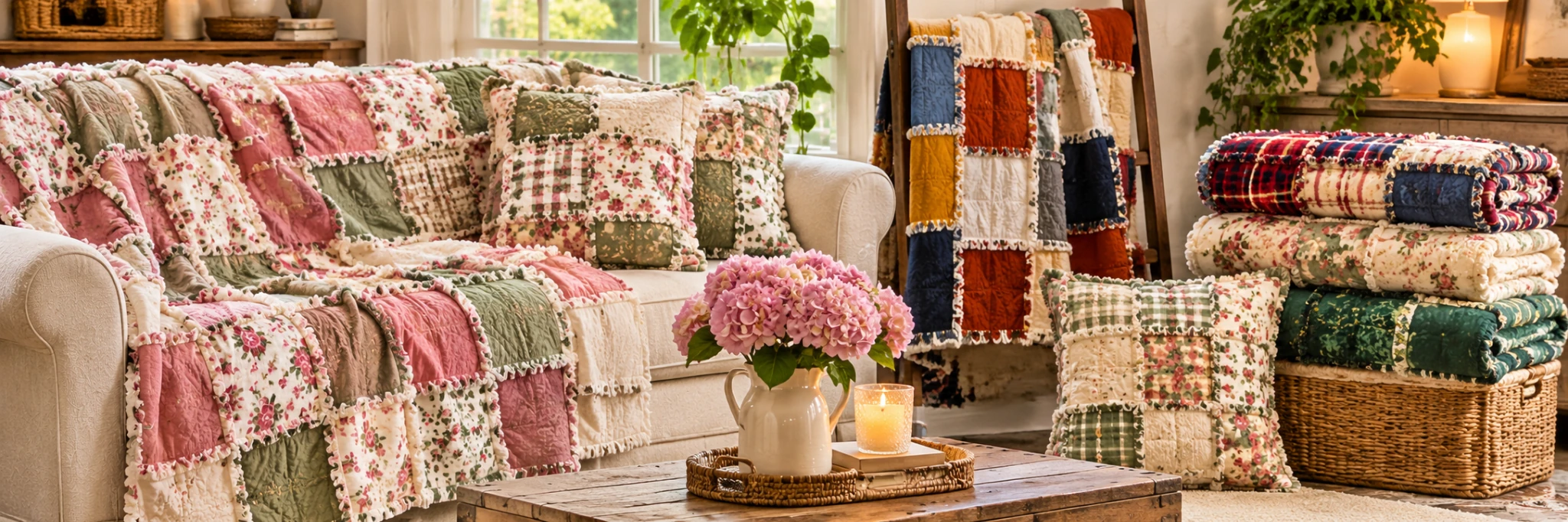
These chic rag quilt pattern ideas for cozy home decor include full-size throws and smaller accents you can use throughout your home. Explore the designs, find a palette that complements your space, and choose a project that matches your sewing experience.
What Makes a Rag Quilt Different?
A rag quilt is made by sewing fabric layers together while leaving the seam allowances exposed on the finished surface. Those raw edges are clipped at intervals and then washed to encourage the fabric to fray, creating the soft, fluffy texture that gives this quilt style its name.
Many traditional rag quilts use cotton or flannel for the front and back, with flannel or another suitable middle layer. Individual blocks are often stitched with an X or simple quilting lines before they are joined. The exact construction depends on the pattern and fabric combination. brother-usa.com+1
Unlike a conventional quilt with enclosed seams and a finished binding, a rag quilt celebrates its textured edges. That makes it especially appealing for relaxed home decor, where a little softness and handmade character can make a room feel more welcoming.
9 Chic Rag Quilt Pattern Ideas for Cozy Home Decor
1. Romantic Floral Rag Quilt for a Cottage Bedroom
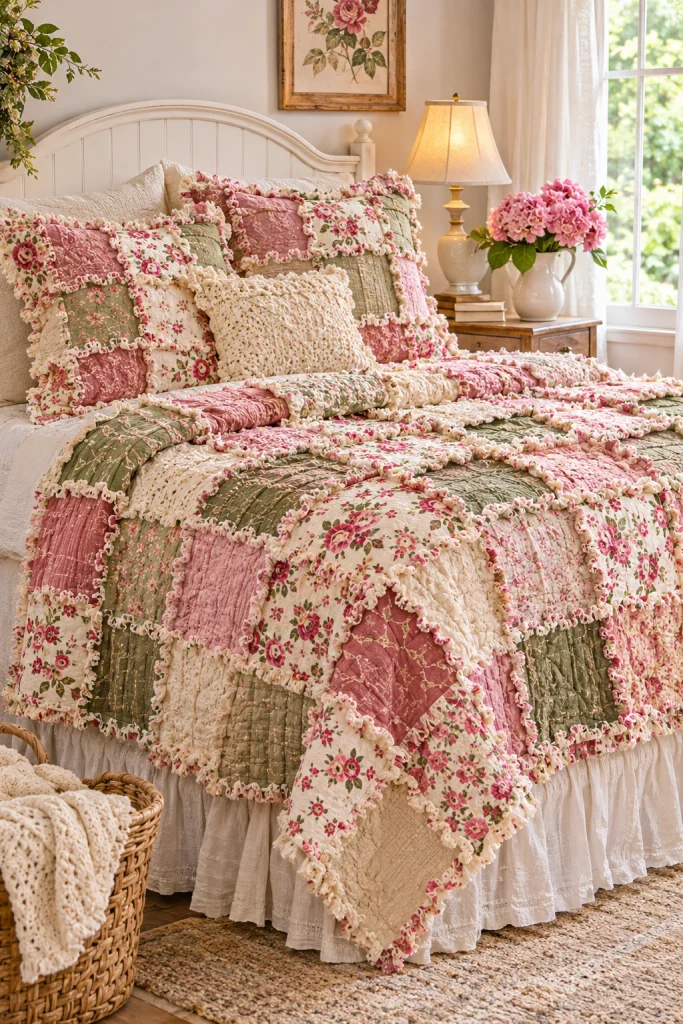
A floral rag quilt can give a bedroom a soft, romantic character without making the space feel overly formal. Picture a patchwork of rose prints, tiny botanical patterns, muted pinks, dusty blues, and warm cream, finished with visible frayed seams that add a relaxed handmade texture.
EXPLORE MORE : Summer Quilt Pattern Ideas
For a balanced design, combine two or three larger floral prints with smaller patterns and a few plain blocks. Cream or pale sage can act as a visual resting point between busier fabrics. If your bedroom already has patterned curtains or wallpaper, use a quieter floral palette so the quilt complements rather than competes with the room.
Drape the finished quilt across the foot of a bed and pair it with solid blush, ivory, or sage pillows. This design works particularly well in cottage, vintage, and shabby-chic bedrooms. For a smaller project, use the same fabric palette in a matching cushion cover.
2. Neutral Farmhouse Rag Quilt for a Relaxed Living Room

A neutral rag quilt creates texture without introducing strong colors. Oatmeal, ivory, warm beige, taupe, mushroom, and soft gray make a calming combination that works with natural wood, woven baskets, linen curtains, and upholstered furniture.
Mix subtle checks, ticking stripes, small-scale prints, and plain cotton or flannel. Keeping the palette within a few related shades helps the different patterns feel coordinated. You can also use a slightly darker fabric every few blocks to create gentle contrast instead of a completely uniform surface.
This pattern is a lovely choice for a farmhouse living room, a neutral bedroom, or a reading corner. Fold the throw over a sofa arm or place it in a woven basket beside an accent chair. If your furniture is already beige, add a little contrast with charcoal, muted brown, or soft olive blocks.
3. Modern Geometric Rag Quilt for a Statement Sofa
Geometric blocks give a rag quilt a cleaner, more contemporary appearance. Instead of relying on floral prints, this design uses color placement and repeated shapes to create visual movement. Navy, rust, mustard, cream, charcoal, and muted teal make a strong combination for a modern home.
You can arrange square blocks in a checkerboard, alternate light and dark sections, or create diagonal color bands across the quilt. Keep the backing relatively simple so the front remains the main attraction. If you are new to quilting, begin with larger squares and a straightforward layout before attempting smaller or more intricate shapes.
A geometric rag quilt looks especially effective across a plain sofa, where its pattern can become the main accent. Coordinate it with one or two solid cushions in colors taken from the quilt. This approach adds personality without making the seating area feel visually crowded.
4. Cozy Flannel Rag Quilt for a Reading Nook
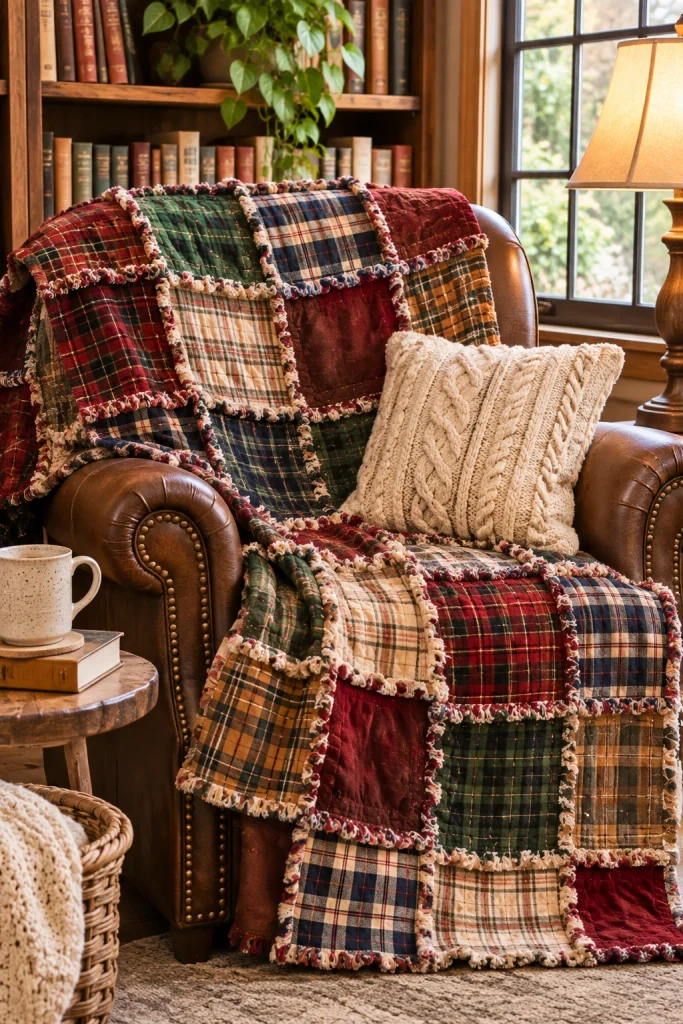
Flannel is a natural choice when you want a rag quilt to feel especially soft and comfortable. A combination of plaid, gingham, small checks, and solid flannel in forest green, navy, burgundy, cream, and warm brown creates a cozy cabin-inspired look.
For a coordinated result, choose one dominant plaid and support it with smaller patterns or plain fabrics. Avoid using too many large checks together because they can compete for attention. Prewash washable flannel before cutting, since different fabrics can shrink at different rates.
Use the finished throw in a reading nook, family room, or guest bedroom. Fold it over a comfortable armchair and add a small cushion in one of the quilt’s darker colors. It is an especially suitable project for homes that lean toward rustic, cabin, or traditional decor.
5. Vintage Patchwork Rag Quilt for a Layered Bedroom
A vintage-inspired rag quilt has the charm of a well-loved textile. Combine faded florals, tiny dots, muted stripes, old-fashioned checks, and small-scale prints in dusty rose, faded blue, sage, butter yellow, and cream. The exposed seams make the finished piece feel relaxed rather than perfectly polished.
The key is to create variety while keeping the colors connected. Repeat a few shades throughout the layout so that even unrelated-looking fabric prints feel like part of one design. A soft cream or pale beige backing can help unify the quilt and keep the overall effect light.
Layer it over a plain duvet or use it as a decorative bed throw. It suits cottage bedrooms, vintage-inspired guest rooms, and spaces with antique wood furniture. You can also make the quilt from coordinated fabric remnants, provided the fabrics are suitable for the intended washing and wear.
6. Botanical Rag Quilt for Nature-Inspired Interiors

A botanical rag quilt brings a calm, nature-inspired feeling into a room. Leaf prints, delicate branches, fern motifs, and small floral patterns work beautifully with sage, olive, eucalyptus green, warm white, and soft sand. The frayed seams add texture while the natural palette keeps the design understated.
Choose a mixture of botanical prints rather than using the same leaf pattern in every block. Add plain cream or pale green squares to break up the print and give the eye somewhere to rest. If you want a slightly deeper look, include a few forest-green or muted brown blocks.
This style is ideal for Scandinavian-inspired rooms, relaxed modern interiors, and bedrooms decorated with natural materials. Drape it over a light sofa or place it at the end of a bed with linen pillows and a few wooden accessories. The result feels fresh without looking overly themed.
7. Jewel-Tone Rag Quilt for a Rich, Elegant Accent
For a more dramatic look, choose a rag quilt in rich jewel tones. Emerald, sapphire, burgundy, plum, deep teal, and muted gold create depth and make the quilt feel like a statement textile. The soft frayed edges balance the saturated colors, giving the piece a comfortable rather than overly formal finish.
Try grouping similar shades together for a subtle gradient, or alternate dark and lighter blocks for a more graphic effect. A charcoal, deep navy, or warm cream backing can change the overall mood. Before sewing, lay out the fabrics together and check that the colors have enough contrast to remain distinct.
A jewel-tone quilt can bring color to a neutral bedroom or add a rich accent to a reading chair. Keep nearby cushions and accessories relatively simple so the quilt remains the focal point. This is a good option when you want handmade decor that feels bold and polished.
8. Rag Quilt Pillow Covers for Sofas and Beds
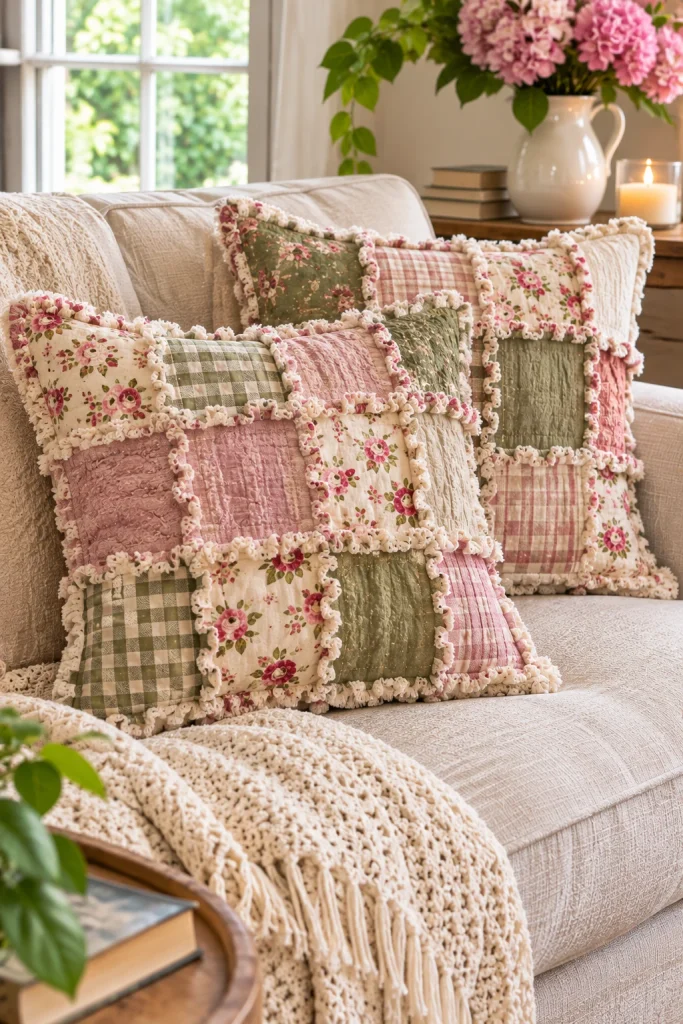
Rag quilt pillow covers are a practical way to use the same textured style on a smaller scale. Instead of making a full throw, create a patchwork front from small squares in a coordinated palette. Floral prints, neutral checks, denim-look cotton, or soft flannel can all work, depending on the look you want.
For a sofa, consider two matching pillows with one smaller accent cushion in a contrasting print. In a bedroom, use a pair of rag quilt cushions to echo the colors of a larger bedspread. Keep the block layout simple so the exposed seams remain the main decorative feature.
Because pillow covers receive regular handling, make sure the seams are securely stitched and the fabric is suitable for the cushion’s care requirements. Use a removable envelope or zipper-style backing with a clean finished edge. This project is particularly useful for adding handmade texture without committing to a large quilt.
9. Mini Rag Quilt Table Runner for a Handmade Dining Space
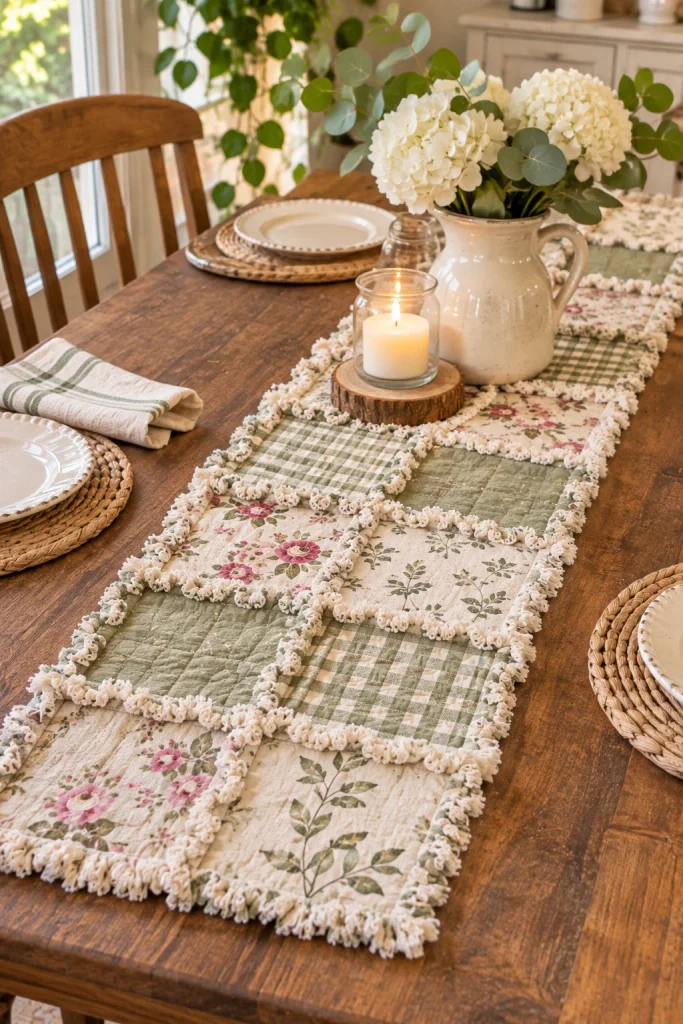
A mini rag quilt table runner brings patchwork texture to the dining room without covering the entire table. Narrow rectangles or small squares in cream, sage, muted floral, and soft beige create a gentle handmade look that suits cottage, farmhouse, and relaxed traditional interiors.
For a longer runner, arrange the blocks in a straight line or alternate small squares with larger rectangles. Keep the fabric palette connected to your dining chairs, table linens, or nearby kitchen decor. A simple arrangement of ceramic vases, wooden serving boards, or a small seasonal centerpiece will complement the runner without hiding its texture.
This smaller project can also be adapted for a console table, entryway surface, or sideboard. Because table textiles may encounter spills and frequent cleaning, choose washable fabrics and make sure the stitching is secure. Avoid placing a fabric runner close to open flames, hot cookware, or other heat sources.
Choosing Fabrics and Layers for a Rag Quilt
Fabric choice has a big effect on how a rag quilt looks, feels, and frays. Cotton and flannel are common choices because they are available in many prints and can create attractive exposed seam edges. For the middle layer, quilters often use flannel or a suitable batting, depending on the desired weight and construction method.
| Fabric choice | Best use | Visual effect |
|---|---|---|
| Quilting cotton | Floral, geometric, and patchwork designs | Crisp prints and defined blocks |
| Flannel | Sofa throws and reading blankets | Soft, warm, relaxed texture |
| Cotton solids | Modern and neutral designs | Clean contrast between prints |
| Small-scale gingham | Farmhouse and cottage styles | Gentle pattern and visual rhythm |
| Botanical prints | Nature-inspired decor | Calm, organic character |
Prewash fabrics when appropriate, especially when combining materials that may shrink differently. Test a small sample if you are unsure how a fabric will fray or behave after laundering. Avoid assuming that every fabric will produce the same fluffy edge.
Practical Rag Quilt Sewing and Care Tips
A few careful choices can make your project easier to sew and help it last longer.
- Plan the finished size first. Account for seam allowances and the amount of fabric used in each block before cutting.
- Use consistent seam allowances. Follow the measurements in your chosen pattern so the blocks line up evenly.
- Secure the layers. Stitch each block through its layers before joining the blocks together.
- Clip carefully. Make short cuts into the exposed seam allowance, but never cut through the stitching. A cut seam can weaken during washing. For additional guidance on safe clipping and rag quilt construction, follow this Brother rag quilt project guide
- Expect loose lint. Rag quilts can release a noticeable amount of lint during their first wash and dry cycles. Clean the lint filter and check the machine after laundering. brother-usa.com+1
- Follow the fabric care guidance. Use a suitable washing temperature and drying method for the materials in your quilt.
If you are new to rag quilting and want a step-by-step walkthrough, explore this SewCanShe rag quilt tutorial for additional help with cutting, sewing, clipping, and washing your finished quilt.
Frequently Asked Questions
1. What is the easiest rag quilt pattern for beginners?
A simple square-block rag quilt is one of the easiest places to start. Repeated squares, straight seams, and a basic X-shaped stitch make the construction easier to manage than complicated patchwork layouts.
2. What fabric is best for making a rag quilt?
Cotton and flannel are popular choices. Quilting cotton offers many prints and colors, while flannel creates a softer, warmer finish. The best combination depends on the quilt’s intended use and the texture you want.
3. How do you make the seams look fluffy?
After sewing the quilt, carefully clip the exposed seam allowances at regular intervals without cutting through the stitching. Washing and drying then encourage the edges to fray. The amount of fraying depends on the fabric and construction.
4. Can I make a rag quilt for my living room?
Yes. A rag quilt can work as a sofa throw, accent pillow, chair blanket, or decorative layer over a bench. Choose colors that coordinate with your upholstery, rugs, and other textiles to make the finished piece feel integrated into the room.
5. Do rag quilts need batting?
Not necessarily. Many rag quilts use flannel as the middle layer, while other patterns specify suitable batting. Follow the requirements of your chosen pattern and consider the thickness of all the layers before sewing.
Conclusion
Rag quilts bring together comfort, texture, and handmade character in a way that suits many decorating styles. From romantic florals and neutral farmhouse throws to modern pillows and table runners, these designs offer plenty of ways to make your home feel warmer and more personal.
Choose a pattern that suits your room, select fabrics that work well together, and start with a project that matches your sewing experience. A thoughtfully made rag quilt can become a useful everyday textile as well as a beautiful home accent.