11 Jelly Roll Quilted Jackets and Vests for Cozy Comfort: Stunning Ideas
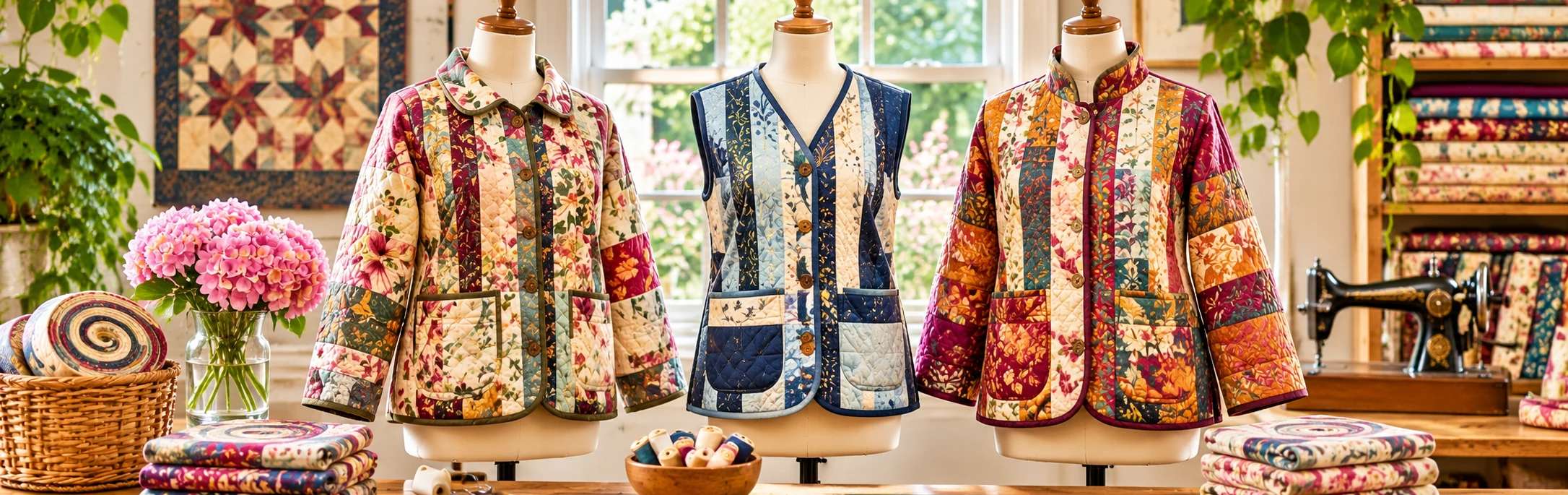
A jelly roll can become much more than a beautiful patchwork quilt. With colorful fabric strips, soft batting, and creative stitching, you can turn simple quilting materials into stylish jackets and vests that bring handmade charm to your wardrobe.
Whether you prefer delicate florals, modern geometric patterns, earthy colors, or vibrant patchwork, these wearable quilting projects offer plenty of opportunities to experiment with different fabrics and silhouettes.
Explore these 11 Jelly Roll Quilted Jackets and Vests for cozy comfort to discover beautiful design combinations, practical sewing ideas, and inspiration for creating your own unique outerwear.
11 Jelly Roll Quilted Jackets and Vests for Cozy Comfort: 11 Stunning Designs
1. Vintage Floral Patchwork Quilted Jacket
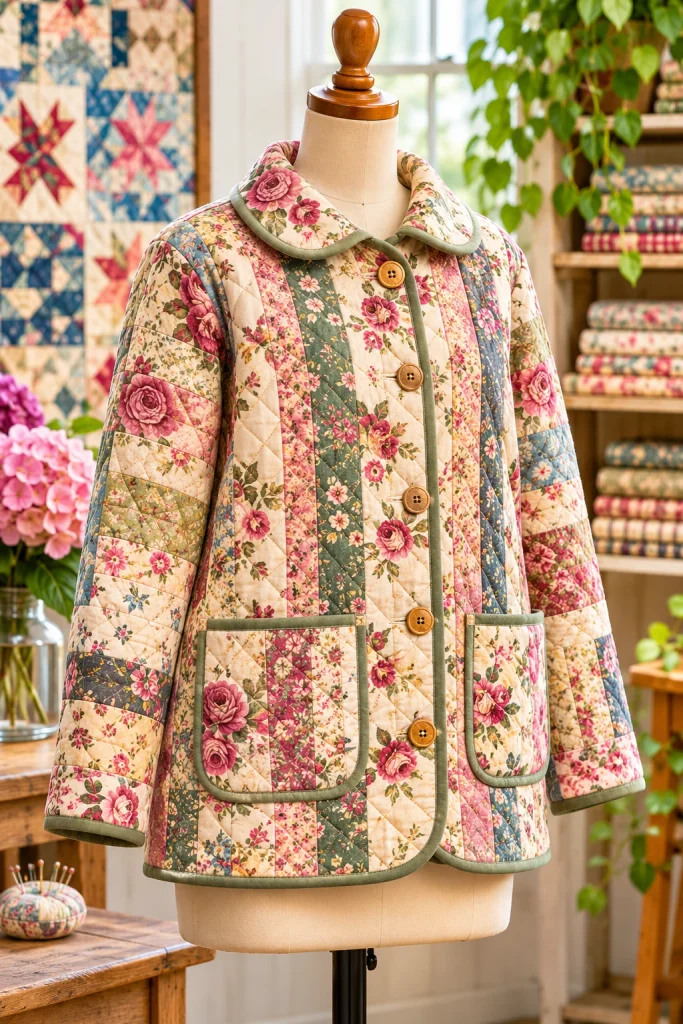
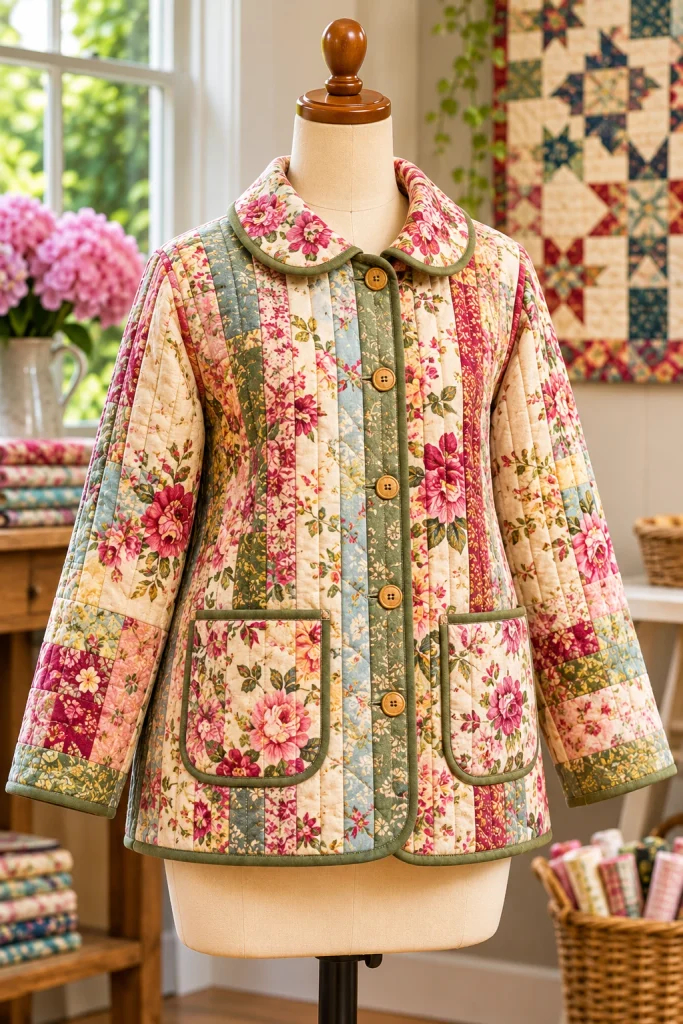
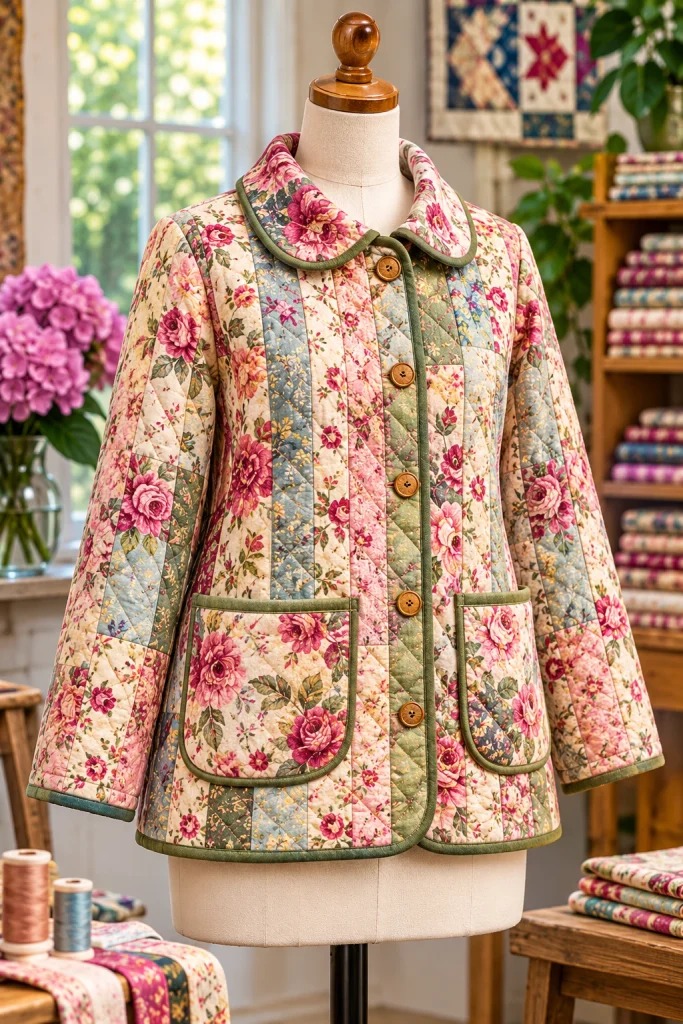
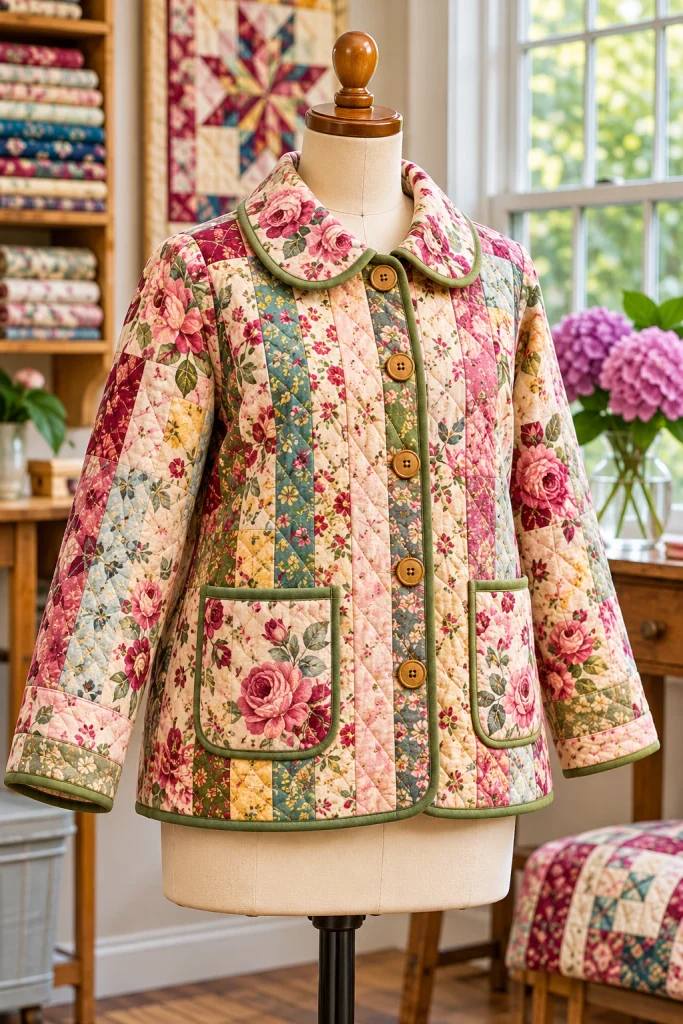
A vintage floral jacket combines delicate botanical prints with traditional patchwork to create a romantic, timeless appearance. Its soft colors, decorative buttons, and quilted texture make it an attractive addition to a casual wardrobe.
Choose dusty rose, ivory, sage green, faded blue, and warm cream for a coordinated palette. Combine small floral prints with gingham, subtle stripes, and solid cotton strips to prevent the design from becoming visually crowded.
Styling details:
- Silhouette: Relaxed, slightly boxy jacket with a rounded neckline.
- Fabric: Floral quilting cotton and small botanical prints.
- Quilting: Straight-line stitching along the strip seams.
- Finishing: Wooden buttons, contrasting binding, and patch pockets.
For an affordable project, use leftover jelly roll strips to create the pockets and sleeve details. A lightweight cotton batting will help maintain a comfortable shape without making the jacket too bulky.
This design is especially suitable for vintage fashion lovers, cottagecore wardrobes, and anyone who enjoys romantic handmade clothing.
2. Modern Ombre Quilted Jacket
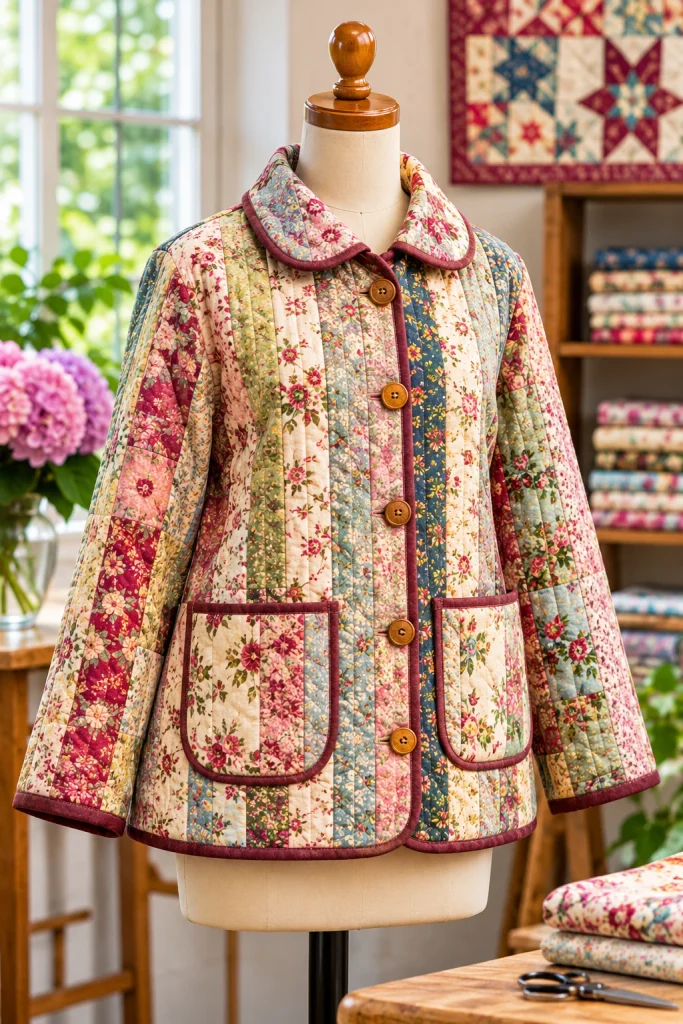
An ombre jacket transforms ordinary fabric strips into a beautiful color progression. The gradual movement from lighter shades to deeper tones creates a contemporary appearance while preserving the traditional charm of quilted clothing.
Experiment with aqua, turquoise, teal, and navy, or create a warmer combination using blush pink, dusty rose, raspberry, and burgundy.
Arrange the strips from light to dark before sewing. Vertical placement creates an elongated visual effect, while diagonal quilting adds movement and texture.
A simple button-front silhouette, minimal pockets, and charcoal binding will keep attention on the color transition. Photograph your fabric arrangement before assembling the panels so you can maintain the same gradient across the front, back, and sleeves.
This is one of the more artistic 11 Jelly Roll Quilted Jackets and Vests for cozy comfort, especially for quilters who enjoy modern color combinations.
3. Elegant Neutral Quilted Vest
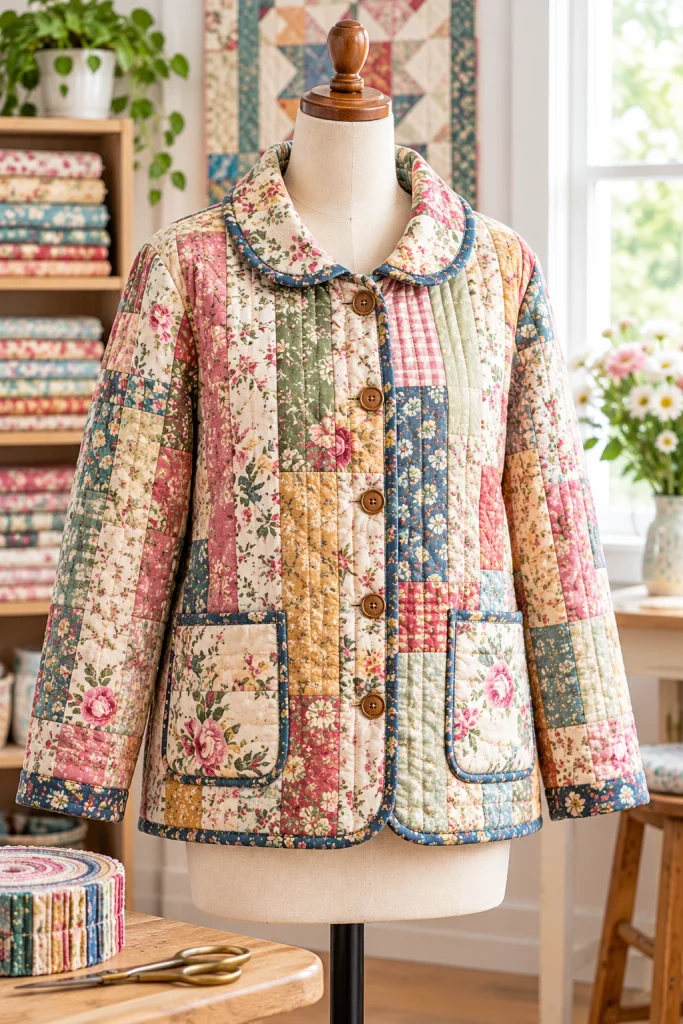
A neutral quilted vest creates an understated appearance with a beautiful combination of soft colors and delicate textures. Cream, oatmeal, mushroom, taupe, and cocoa produce a sophisticated palette that works with many everyday outfits.
Choose an open-front or button-front silhouette with a hip-length cut. Mix tiny printed fabrics with solid cotton strips to create visual interest without making the design too busy.
Beautiful finishing touches:
- Dark brown or charcoal binding.
- Small wooden or fabric-covered buttons.
- Two practical patch pockets.
- Subtle diagonal quilting.
- Soft cotton flannel as the middle layer.
You can use leftover neutral strips for the pockets and front edges, reducing the amount of additional fabric required.
This vest is a wonderful option for minimalist wardrobes, farmhouse-inspired outfits, and people who prefer subtle handmade fashion.
4. Reversible Colorful Quilted Jacket
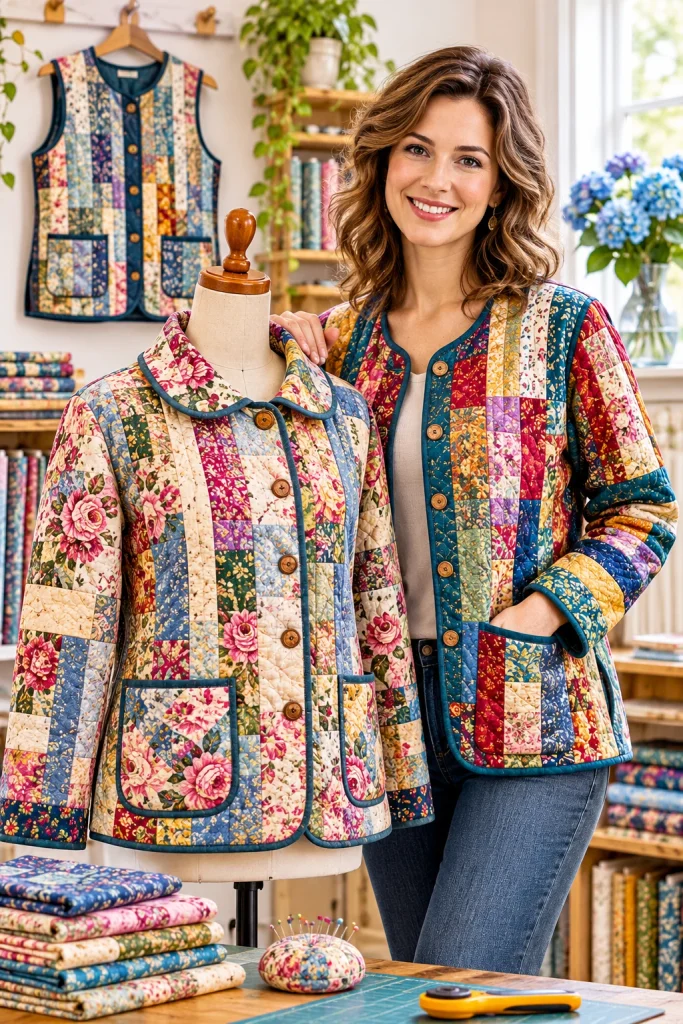
A reversible quilted jacket offers two different appearances in one creative garment. One side can feature colorful jelly roll patchwork, while the reverse uses a coordinated solid fabric or subtle print for a simpler everyday look.
For the statement side, combine coral, mustard, turquoise, raspberry, and cobalt blue. On the reverse, choose navy, charcoal, sage, or warm cream.
Plan both sides before cutting your panels because the edges and seams need neat finishing. Lightweight batting helps reduce bulk, while coordinating binding creates a polished appearance.
You can add pockets to both sides for extra practicality. However, remember that reversible construction requires more careful seam finishing than an ordinary lined jacket.
This idea is particularly useful for capsule wardrobes, travelers, and quilters who enjoy versatile clothing.
5. Earthy Boho Longline Quilted Vest
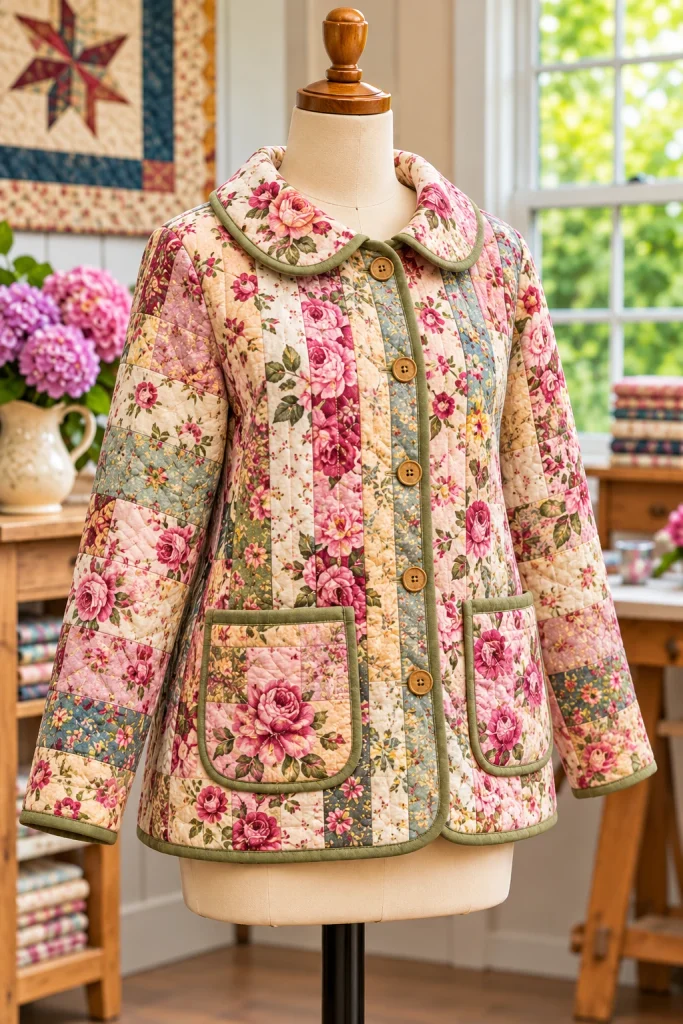
An earthy boho vest combines relaxed styling with the traditional beauty of handmade patchwork. Its longer silhouette, natural colors, and decorative stitching create an artistic appearance that works beautifully for casual layering.
Build the palette around olive green, moss, rust, terracotta, faded indigo, bronze, and oatmeal. Mix botanical prints with subtle stripes to create a natural, slightly weathered effect.
Choose a longline shape with an open front, curved edges, and deep patch pockets. Cotton flannel makes a comfortable middle layer when you want less padding and more flexibility.
For extra character, use contrasting ochre or cream thread for visible quilting. Leftover jelly roll strips can also become pocket panels or decorative front details.
Among these 11 Jelly Roll Quilted Jackets and Vests for cozy comfort, this design is particularly attractive for boho wardrobes, country-inspired outfits, and relaxed everyday styling.
6. Bright Batik Stand-Collar Quilted Vest
A batik vest introduces vibrant colors and artistic fabric patterns into traditional quilted outerwear. The combination of rich shades and a structured neckline creates a distinctive appearance without requiring complicated garment details.
Try turquoise, emerald, cobalt, saffron, coral, and deep violet. Arrange the strips vertically to create a streamlined body, or alternate warm and cool colors for a more playful design.
A softly structured stand collar, contrasting binding, and two patch pockets complete the look. Use lightweight interfacing in the collar and avoid unnecessary batting around the neckline to prevent stiffness.
For a more economical project, combine a few batik strips with plain cotton in coordinating colors.
This design is ideal for creative quilters who love bold fabrics, colorful clothing, and distinctive handmade accessories.
7. Scrappy Geometric Quilted Jacket
A scrappy geometric jacket transforms leftover fabric pieces into an expressive patchwork design. Instead of arranging every strip in the same direction, you can combine rectangles, squares, and angled pieces to create a dynamic surface.
Use ruby red, mustard yellow, turquoise, emerald, violet, navy, and cream. Repeat a few colors across the garment to make the different sections feel connected.
Consider these geometric arrangements:
- Rail Fence: Alternating strips create a zigzag effect.
- Chinese Coins: Rectangular strips form attractive vertical stacks.
- Log Cabin: Fabric pieces build around a central square.
- Diagonal patchwork: Angled strips introduce movement.
A relaxed boxy silhouette gives the patchwork plenty of room to stand out. Dark binding and a simple backing help balance the colorful exterior.
For beginners, start with rectangular strip-pieced panels before attempting triangles or complicated blocks.
This is a particularly rewarding option for scrap quilters and anyone who enjoys creative fabric combinations.
8. Lightweight Quilted Vest for Everyday Layering
A lightweight vest offers the texture of traditional quilting without the coverage of a full jacket. Its simple shape makes it easy to wear over shirts, lightweight sweaters, and casual dresses.
Choose pale sage, soft aqua, dusty pink, ivory, and light denim blue. Small floral prints and delicate geometric patterns create a gentle appearance suitable for everyday outfits.
Keep the design simple with a hip-length silhouette, curved neckline, narrow binding, and small patch pockets. Cotton flannel or low-loft batting can provide a softer feel than thick quilt batting.
This is also an excellent opportunity to use leftover strips from previous projects. Repeat a few colors across the front and back to create a coordinated finish.
This design works particularly well for transitional weather, indoor layering, and quilters who prefer comfortable sleeveless outerwear.
9. Denim-Inspired Jelly Roll Quilted Jacket
A denim-inspired jacket combines the familiar appearance of casual denim with the softness and texture of handmade patchwork. Different shades of blue create a relaxed design that feels versatile and easy to style.
Combine pale chambray, faded denim prints, navy, indigo, and subtle cream accents. A relaxed jacket shape with a simple collar, button-front opening, and utility-style pockets gives the garment a practical appearance.
Use quilting cotton with denim-style prints instead of heavy actual denim if you want easier sewing and less weight. Add golden or cream topstitching and dark indigo binding for definition.
For a budget-friendly alternative, combine blue fabric scraps with plain navy cotton.
This design suits denim lovers, casual wardrobes, and anyone looking for handmade outerwear that pairs easily with everyday basics.
10. Romantic Floral Quilted Vest
A romantic floral vest brings a soft cottage-inspired appearance to traditional quilted clothing. Tiny roses, lavender blossoms, pale leaves, and delicate botanical prints create a beautiful combination of colors and textures.
Choose dusty pink, lavender, buttercream, sage green, and warm ivory. Mix floral strips with coordinating solids to maintain a balanced patchwork design.
A rounded neckline, gently curved front edges, and narrow cream binding create a delicate finish. Add floral patch pockets and small fabric-covered buttons for extra charm.
Use lightweight batting or cotton flannel to preserve the vest’s flexibility. If your floral fabric is limited, reserve the prettiest prints for the front panels and pockets.
This design is ideal for cottagecore outfits, romantic wardrobes, and anyone who enjoys delicate floral quilting.
11. Classic Stripe and Solid Quilted Jacket
A stripe-and-solid jacket creates a polished appearance by combining colorful jelly roll strips with larger sections of plain fabric. The contrast between patterned and solid areas makes this design especially versatile.
Try navy, cream, warm gray, mustard, and taupe. Arrange the strips vertically across the body, then use larger solid sections for the sleeves, collar, or side panels.
Choose a relaxed straight-cut silhouette with understated buttons, simple patch pockets, and coordinating binding. Solid areas provide visual breathing room when your jelly roll contains several busy prints.
You can save money by using plain cotton from your existing fabric collection for the larger sections. Reserve the more attractive strips for the body and pocket details.
This final design among the 11 Jelly Roll Quilted Jackets and Vests for cozy comfort is perfect for modern minimalists and anyone who wants versatile handmade outerwear.
Choosing the Best Fabrics and Batting for Quilted Outerwear
The right fabric and batting make a significant difference to the comfort, flexibility, and appearance of handmade outerwear. When planning your 11 Jelly Roll Quilted Jackets and Vests for cozy comfort, consider how the different layers will behave when sewn together and worn.
| Material | Best use | Main benefit |
|---|---|---|
| Quilting cotton | Outer patchwork panels | Crisp colors and easy piecing |
| Cotton flannel | Lightweight vests | Softness and flexibility |
| Low-loft cotton batting | Everyday jackets | Traditional quilted texture |
| Lightweight polyester batting | Less bulky outerwear | Soft, lightweight padding |
| Cotton backing | Interior lining | Comfortable fabric finish |
| Cotton binding | Edges and armholes | Neat, durable finishing |
Five practical fabric tips
- Prewash suitable fabrics: Follow the manufacturer’s care instructions to reduce unexpected shrinkage.
- Test your quilt sandwich: Sew a small sample using your chosen top fabric, batting, and backing.
- Avoid excessive padding: Thick batting can make sleeves, collars, and armholes uncomfortable.
- Allow wearing ease: Your garment pattern should accommodate the additional thickness of quilted fabric.
- Control seam bulk: Grade or reduce unnecessary layers where your construction method permits.
How to Make Jelly Roll Quilted Jackets and Vests
Creating wearable patchwork requires a little more planning than making an ordinary quilt. However, the construction becomes manageable when you prepare the fabric panels before assembling the garment.
Materials you will need
- One coordinated jelly roll or suitable 2½-inch fabric strips.
- Matching cotton backing or lining fabric.
- Lightweight batting or cotton flannel.
- Coordinating sewing thread.
- A suitable jacket or vest sewing pattern.
- Rotary cutter, cutting mat, and quilting ruler.
- Sewing machine and suitable needle.
- Binding fabric, buttons, or snaps.
Simple construction steps
- Arrange the strips: Experiment with colors and patterns before joining the fabric.
- Piece the panels: Sew the strips together lengthwise using consistent seam allowances.
- Press the seams: Press carefully to create flat, manageable patchwork sections.
- Prepare the layers: Place the backing, batting, and patchwork together to create a quilt sandwich.
- Baste the panels: Use pins or clips to prevent the layers from shifting.
- Quilt the fabric: Add straight, diagonal, or decorative stitching.
- Position your pattern: Place the garment pattern pieces over the quilted panels.
- Cut the garment: Prepare the front, back, sleeves, and optional pockets.
- Assemble the pieces: Follow your sewing pattern for the shoulders, sleeves, and side seams.
- Finish the edges: Bind the neckline, armholes, cuffs, and front opening.
A walking foot can help feed multiple fabric layers evenly. Test the stitch length and thread tension on a sample before sewing the finished garment. A practical jelly roll jacket construction approach is also demonstrated in the Festival of Quilts workshop material. Jelly Roll Jacket+1
Quilted Jacket vs. Quilted Vest: Which Should You Choose?
Both garments offer attractive ways to use jelly roll strips, but their construction and wearing comfort are different.
| Feature | Quilted jacket | Quilted vest |
|---|---|---|
| Coverage | Full sleeves and body | Sleeveless |
| Fabric requirements | Usually higher | Usually lower |
| Layering | Over shirts and sweaters | Over shirts and sweaters |
| Construction | More involved | Often simpler |
| Best silhouettes | Boxy, cropped, relaxed | Open-front, longline |
| Suitable projects | Intermediate sewing | Beginner-friendly options |
A vest is often a more manageable first project because it has fewer garment pieces and no sleeves. A relaxed jacket is a rewarding next step once you are comfortable handling quilted panels.
For your first attempt at these 11 Jelly Roll Quilted Jackets and Vests for cozy comfort, choose a simple vest pattern with an open front, practical pockets, and lightweight middle layers.
Frequently Asked Questions
1. How many jelly roll strips do I need for a quilted jacket?
The quantity depends on garment size, sleeve length, and the pattern’s panel dimensions. A full jacket may require approximately 28–40 strips as an initial planning estimate, but check your pattern before purchasing fabric.
2. Can beginners make jelly roll quilted vests?
Yes. A simple open-front vest with basic binding and patch pockets is a practical starting point. It avoids some of the fitting challenges associated with sleeves and complicated collars.
3. What batting is best for quilted jackets?
Lightweight cotton batting is useful for traditional quilted texture, while cotton flannel offers a softer, less padded alternative. The best choice depends on your preferred warmth and garment structure.
4. Can I use leftover jelly roll strips for jackets and vests?
Absolutely. Leftover strips work beautifully for pockets, cuffs, collars, decorative panels, and contrasting edges. Repeat a few colors throughout the garment to create a coordinated appearance.
5. How can I prevent a quilted jacket from looking bulky?
Choose lightweight batting, allow sufficient wearing ease, and avoid unnecessary fabric layers around the collar and armholes. Test a small sample before cutting your final garment pieces.
6. Are jelly roll quilted jackets suitable for everyday wear?
Yes. Choose breathable fabrics, comfortable construction, and a relaxed silhouette. Lightweight jackets and vests can work well for casual outings, transitional weather, and indoor layering.
Conclusion
These 11 Jelly Roll Quilted Jackets and Vests for cozy comfort demonstrate how simple fabric strips can become elegant, practical handmade outerwear. From romantic floral vests to colorful geometric jackets, each design offers a different way to explore patchwork, creativity, and personal style. Choose your favorite combination, plan a comfortable fit, and enjoy creating a beautiful garment that brings handmade charm to your wardrobe.