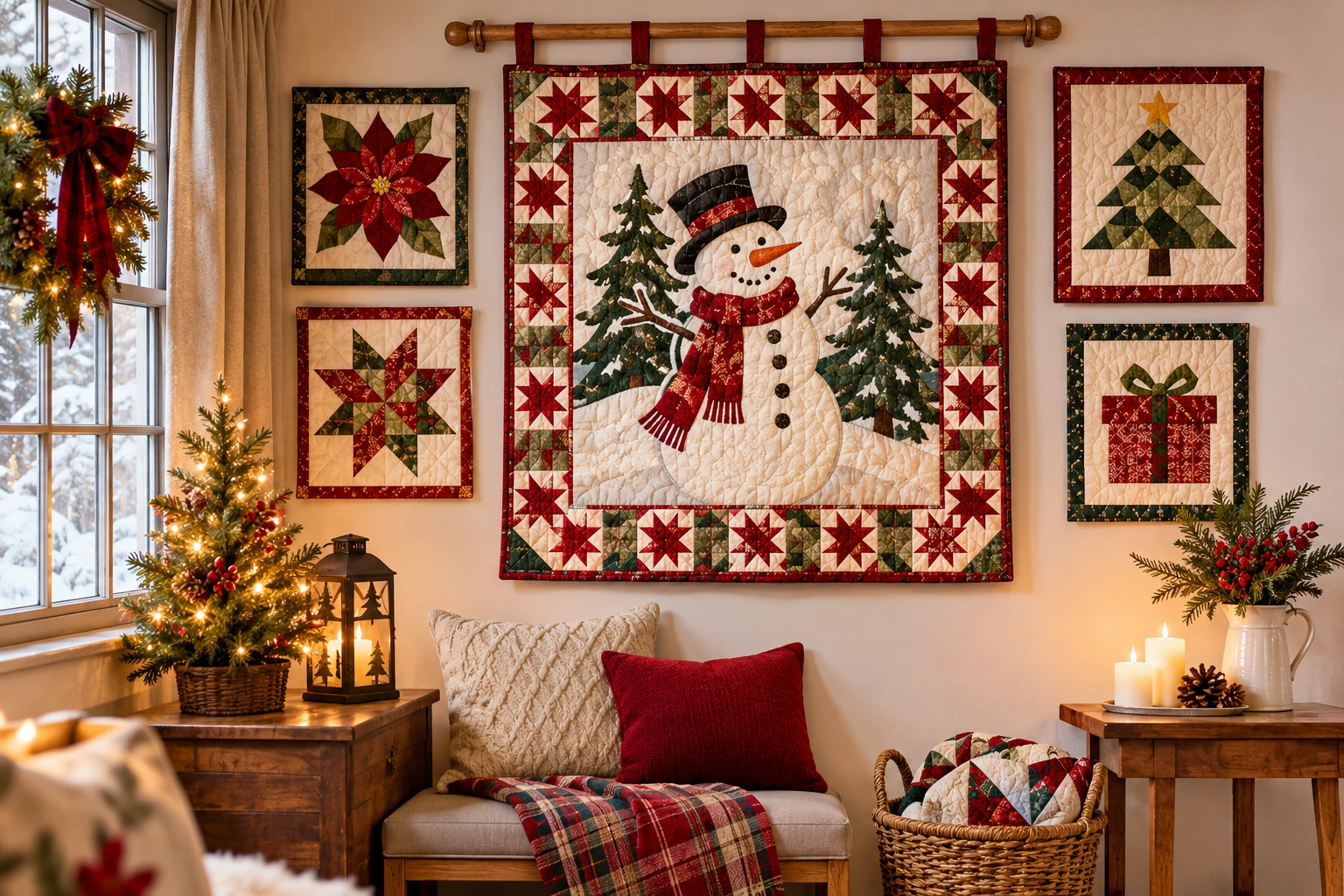
18 Stunning Christmas Wall Hanging Quilt Patterns You’ll Love
Christmas wall quilts bring handmade warmth to a room without taking up the space a full-size quilt requires. They can be traditional, playful, modern, or meaningful, and even a small design can become a holiday focal point.
The best part is that a wall hanging gives you room to experiment with patchwork, appliqué, embroidery, fabric scraps, and quilting textures without committing to a large project. You can also tailor the finished size to an entryway, kitchen wall, fireplace, or narrow space beside a doorway.
Below, you’ll find 18 distinct Christmas wall hanging quilt patterns, from classic trees and stars to gingerbread houses, winter villages, and modern minimalist designs. Each idea includes fabric and color inspiration, construction suggestions, and tips for choosing a design that suits your quilting experience.
1. Classic Patchwork Christmas Tree
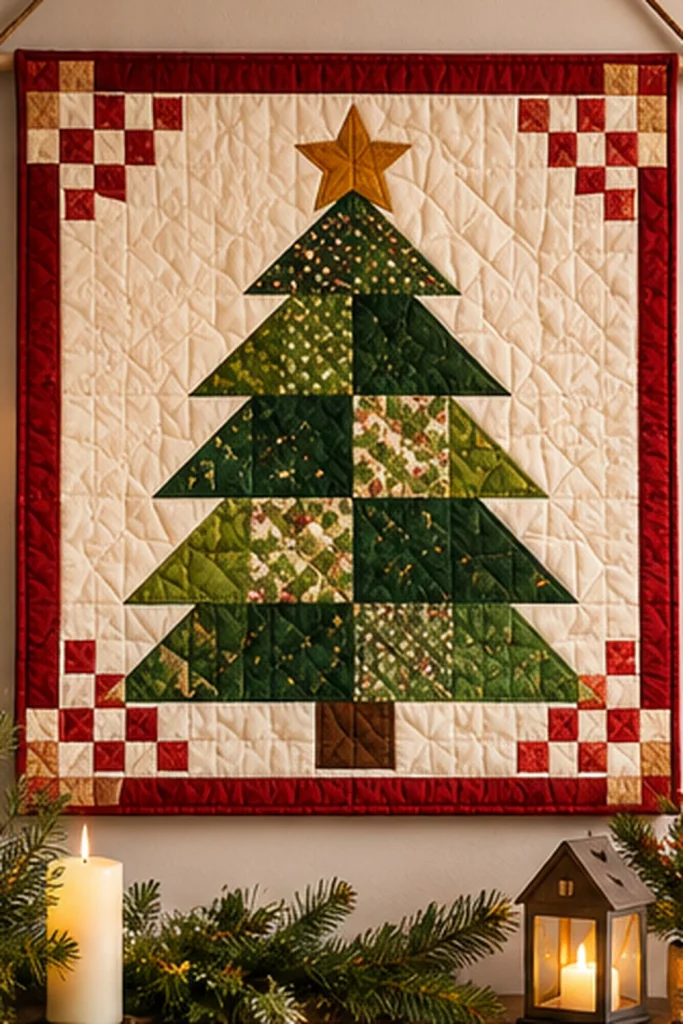
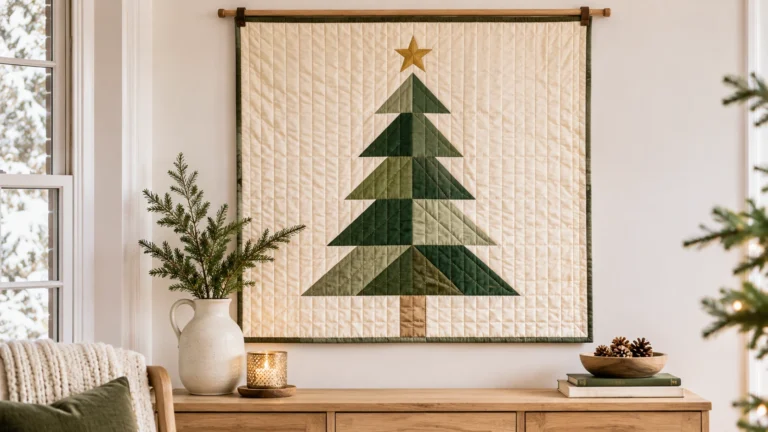
A traditional patchwork tree is a lovely choice when you want a wall quilt that reads as Christmas from across the room. Build the tree from stacked green rectangles or half-square-triangle units, then add a narrow trunk and a small star at the top.
Mix forest, pine, and sage prints with a few small-scale holiday motifs. A cream or warm-white background gives each branch room to stand out, while a red border adds a classic finish. Beginners can use one large tree block with strip-pieced branches; confident quilters can arrange several trees in different sizes.
For quilting, try straight lines that follow the branches or gentle vertical echo lines. Use leftover green fabric for the tree and a simple solid for the background to keep costs down. This pattern works beautifully above an entryway console, in a breakfast nook, or beside the Christmas tree.
2. Snowman Appliqué Wall Quilt
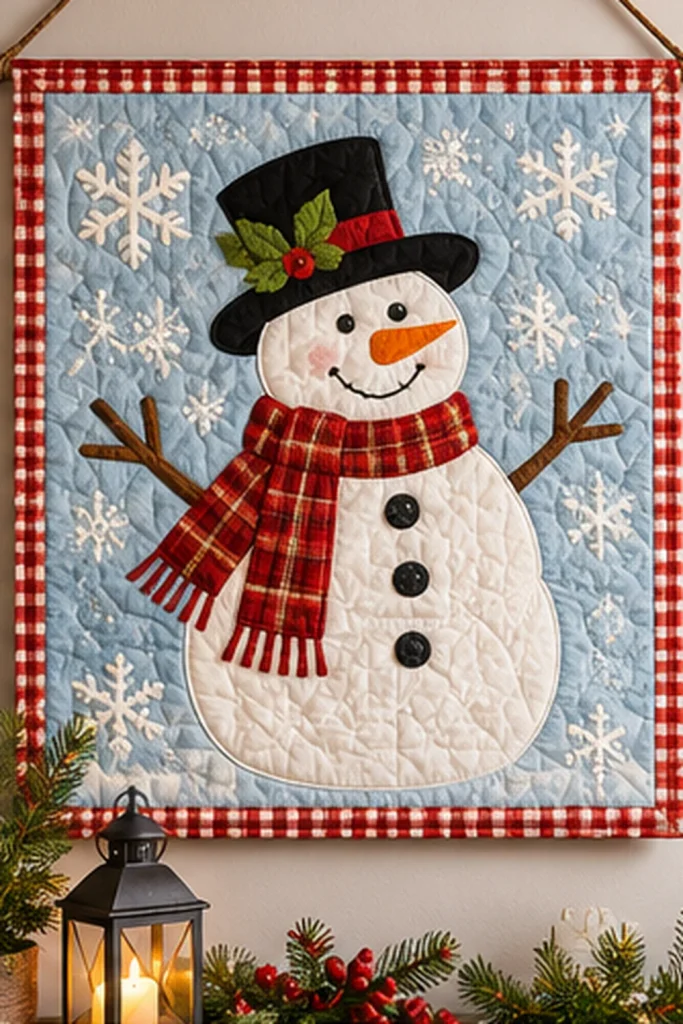
A friendly snowman makes a playful focal point, especially when its rounded shapes contrast with a crisp patchwork border. Layer fabric circles for the body, then add a carrot nose, stitched eyes, buttons, and a cozy scarf.
Choose a pale blue or winter-white background, with charcoal, orange, and cranberry accents. Fusible web can hold the appliqué shapes in place before a zigzag or blanket stitch secures the edges. Add snowflake quilting around the figure to fill open space without crowding the design.
If you are new to appliqué, use large simple shapes rather than tiny details. This design is a good fit for family rooms, playrooms, and anyone who enjoys cheerful winter characters.
3. Christmas Star Sampler
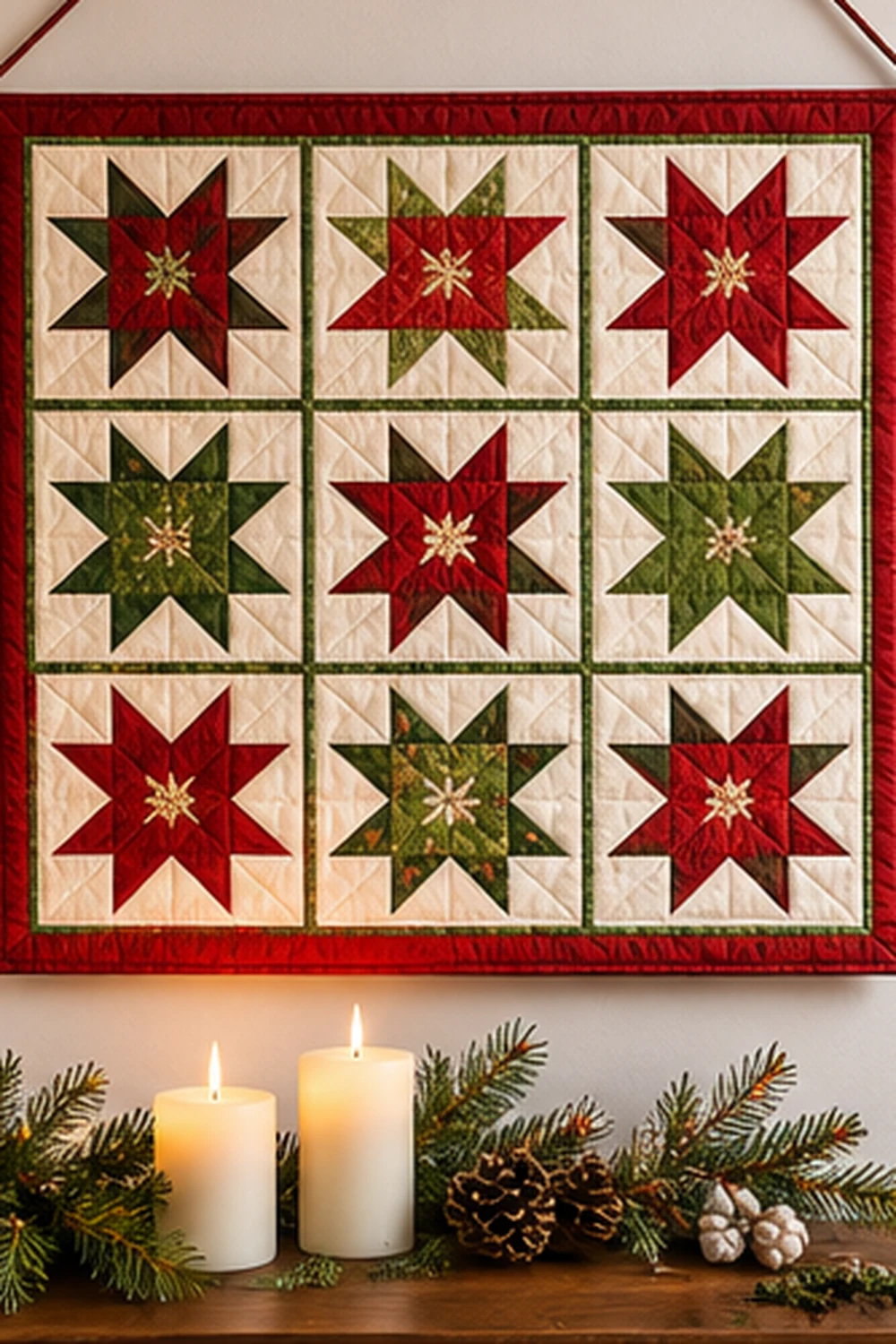
A star sampler combines several traditional quilt blocks into one balanced wall hanging. Each star can use a different red, green, cream, or gold print, creating a collected look that feels festive and timeless.
Choose blocks with similar finished sizes and separate them with narrow sashing so the patterns do not compete. Half-square triangles, flying geese, and sawtooth stars provide variety without requiring complicated novelty shapes. Use a quiet cream background and a darker outer border to frame the stars.
Quilting in the ditch keeps the piecing crisp, while small echo lines make the star points stand out. This pattern suits intermediate quilters who enjoy accurate piecing and want a design that can become a yearly decoration.
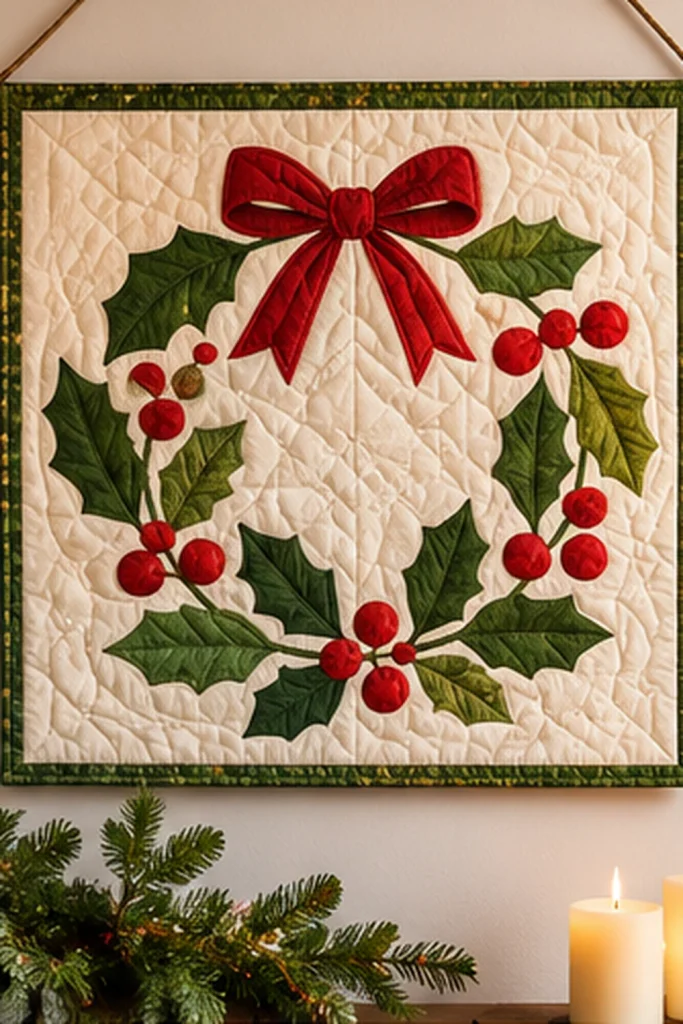
4. Holly and Berry Appliqué
A holly wall hanging brings a botanical Christmas motif to the wall through deep green leaves and small red berries. A wreath shape feels traditional, while a diagonal branch arrangement looks more contemporary and leaves plenty of negative space.
Use two or three green fabrics for leaf dimension and choose one saturated red for the berries. A linen-look cream background gives the appliqué a soft, handmade feel. Stitch leaf veins with a narrow decorative stitch or simple hand embroidery.
For a faster project, use a printed panel and add quilting around the leaves. Keep the berries large enough to sew neatly, especially if this is your first curved appliqué project. It is ideal for cottage kitchens, dining nooks, and nature-inspired holiday decorating.
5. Poinsettia Medallion Quilt
A large poinsettia bloom creates an elegant centerpiece, especially when its layered petals radiate from a small golden center. The design can feel traditional in red and green or softer in dusty rose, cream, and muted sage.
Use petal appliqué for rounded shapes or piece pointed petals from triangles if you prefer a geometric finish. Keep the background simple so the flower remains the focus, then frame it with a narrow green inner border and a wider neutral outer border.
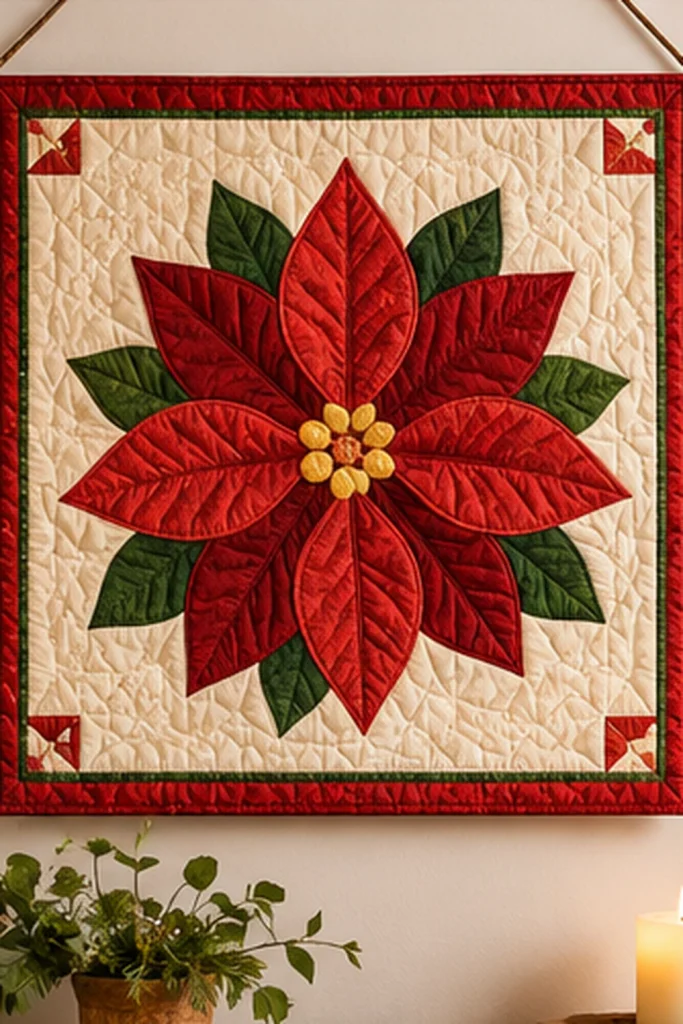
Add curved quilting around the petals to suggest movement. If you want a budget-friendly version, use one feature fabric for the petals and a few scraps for the leaves. This project is best for quilters comfortable with appliqué or careful triangle piecing, and it looks lovely above a mantel.
6. Scandinavian Reindeer Silhouette
A clean reindeer silhouette gives a Christmas wall quilt a calm Nordic character. The strong outline against a pale background looks graphic and modern, while tiny stars or snowflakes add a little seasonal detail.
Use charcoal, warm brown, or deep forest fabric for the reindeer and a snow-white or oatmeal background. Keep embellishment restrained: a small red nose, stitched antlers, or a narrow patterned border is enough. Fusible appliqué makes the silhouette manageable, while a simple grid quilting pattern keeps the background from feeling empty.
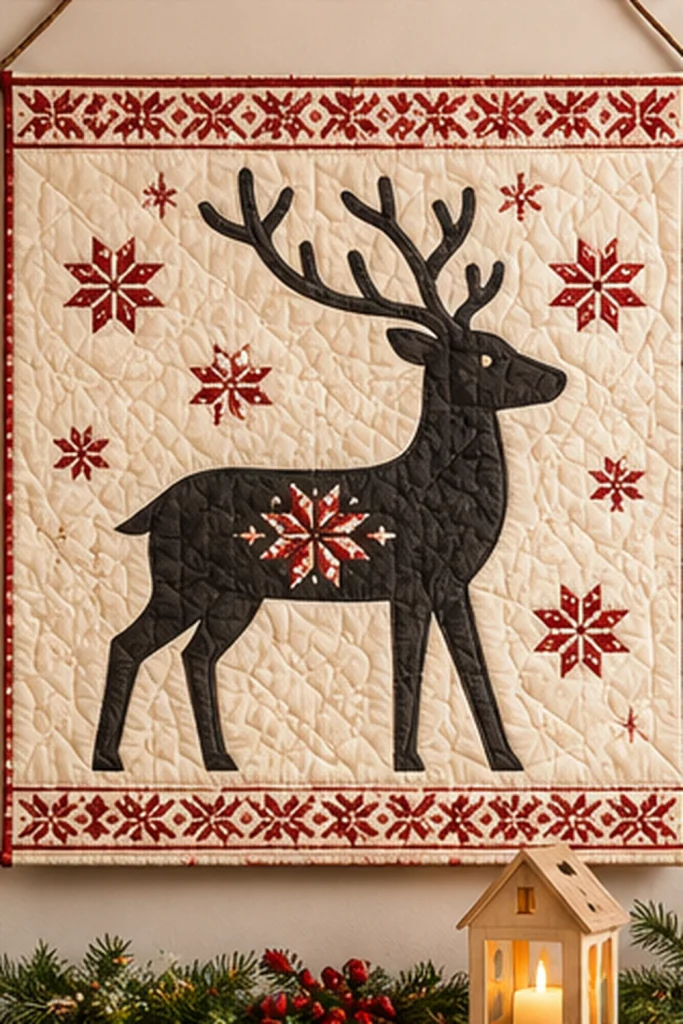
This design works especially well in minimalist homes, neutral living rooms, and spaces where a traditional red-and-green quilt might feel too bold. It is a good option for makers who prefer bold shapes over intricate piecing.
7. Snowflake and Winter White Quilt
A snowflake wall quilt can stay on display well beyond Christmas because its design celebrates winter rather than one specific holiday character. Repeated geometric flakes create a crisp, airy pattern with plenty of room for quilting texture.
Combine white, ivory, pale gray, and icy blue, then add a small amount of silver-print fabric if desired. Use paper-pieced snowflakes for sharp points or appliqué for a simpler route. A pale blue border gives the quilt definition without making it too seasonal.
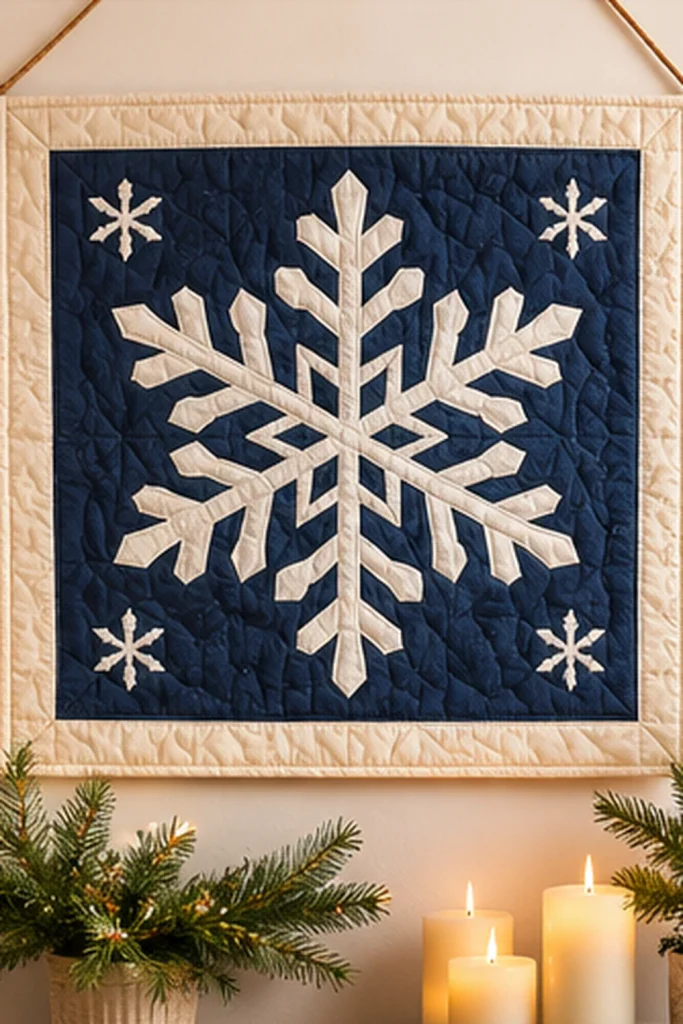
Quilting radiating lines from each flake reinforces the icy look. This pattern works well in bedrooms, hallways, and homes that favor understated winter decor.
8. Gingerbread House Village
A row of tiny gingerbread houses creates a sweet, storybook wall hanging that feels especially at home in a kitchen or breakfast nook. Each house can have a different roof, door, and candy-inspired detail while sharing one consistent block size.
Use tan, cinnamon, cream, and soft red fabrics, with small prints for doors and windows. White ric-rac or embroidered running stitches can suggest icing without adding bulky trim. Beginners can make simple house blocks from rectangles and triangles; more experienced makers can add appliquéd candy canes and wreaths.
A snowy border ties the houses together. This is a fun choice for family spaces and anyone who enjoys whimsical holiday sewing.
9. Flying Geese Christmas Tree
Flying geese units make an effective tree shape because their directional points naturally suggest branches. Stack the units from wide at the bottom to narrow at the top, then add a trunk and a small star for a clean geometric design.
Use several green prints that move from dark at the base to lighter near the top. A cream background and a red or charcoal border keep the quilt from feeling busy. Chain-piecing can speed up repeated units, and a no-waste flying-geese method can help reduce scraps when the dimensions are planned carefully.
Quilt parallel lines that follow the tree’s upward direction. This pattern suits confident beginners and intermediate quilters who enjoy structured piecing.
10. Log Cabin Christmas Star
A Log Cabin layout can create a glowing star effect when light and dark strips are arranged around contrasting centers. The design has a traditional patchwork feel but can look fresh with a restrained palette and carefully planned value changes.
Choose cranberry, evergreen, gold, and cream strips, keeping the light and dark values distinct so the star remains visible. Use consistent strip widths for a tidy, rhythmic pattern, and press seams in alternating directions where needed to reduce bulk.
A narrow dark border can sharpen the outer shape. Straight-line quilting along the log strips emphasizes the geometry. This is best for intermediate quilters who enjoy precision and classic block construction.
11. Advent Calendar Pocket Quilt
An Advent wall quilt adds a useful countdown feature to seasonal decoration. A central tree, village, or simple patchwork background can support a neat arrangement of numbered pockets for small notes or treats.
Use sturdy cotton for the base and lighter quilting cotton for the pockets. Number the pockets with appliqué, embroidery, or fabric markers tested on a sample first. Reinforce pocket openings and keep small treats age-appropriate if children will use the calendar.
A hanging sleeve should be securely attached because the pockets add weight. This is ideal for family rooms, playrooms, and makers who want a decorative project with a practical purpose.
12. Bargello Christmas Waves
A Bargello wall quilt uses strips of fabric cut into different widths and rearranged to create flowing waves. In Christmas colors, the movement can resemble ribbons, rolling hills, or the glow of lights across a winter evening.
Select a controlled range of reds, greens, and creams, or use icy blue through navy for a winter palette. Arrange values from dark to light before sewing so the wave remains readable. Accurate seams and careful labeling of strip sets help prevent placement mistakes.
Keep the border simple because the central movement is already strong. This is a rewarding project for intermediate quilters who enjoy color planning and strip piecing.
13. Vintage Ornament Blocks
Vintage ornament blocks bring the look of heirloom glass baubles into fabric form. Rounded appliqué shapes, small caps, and hanging strings can be arranged in a tidy grid or scattered across a soft background.
Choose jewel tones such as ruby, emerald, sapphire, and antique gold, balanced with cream or pale gray. Fussy-cut small motifs for the ornament centers if you have special scraps to showcase. Use appliqué for smooth curves and add stitched loops or metallic thread sparingly.
Echo quilting around each ornament gives the shapes dimension. This works beautifully in traditional homes and makes a thoughtful handmade gift.
14. Present and Bow Patchwork
Gift-box blocks are cheerful and easy to recognize, making them a natural choice for a playful Christmas wall quilt. Each block can use a different wrapping-paper print, with a contrasting ribbon strip and a small appliquéd bow.
Use bright red, green, teal, and gold prints against a neutral background, or keep the palette muted with dusty rose and sage. Simple rectangles and squares form the packages, so the design can be adapted to many skill levels.
Add a fabric bow or embroidered ribbon tails for dimension without excessive bulk. This is a strong scrap-friendly project for beginners and looks charming near a gift-wrapping station.
15. Nativity Scene Panel Quilt
A nativity wall hanging can become a meaningful seasonal focal point when a printed panel is framed with coordinated borders and thoughtful quilting. The panel supplies the main artwork, allowing the maker to focus on color, texture, and finishing.
Choose borders that pick up two or three colors from the panel rather than introducing a new palette. A narrow inner frame and a wider outer border give the image a finished, gallery-like appearance. Quilt around the main figures with gentle echo lines and use denser stitching in the background if the panel needs support.
Check the panel’s care and fabric content before washing. This is a good option for panel lovers and homes that display faith-centered holiday decor.
16. Scrappy Christmas Star Wall Quilt
A scrappy star quilt turns leftover holiday fabrics into a lively design with a handmade, collected feel. Repeating one star block keeps the layout cohesive even when the fabrics vary in scale and color.
Sort scraps into light, medium, and dark groups before sewing so the star points remain clear. Mix small prints with a few solids and avoid placing several high-contrast novelty prints side by side. A plain cream sashing can calm a busy collection.
Use a walking foot for straight-line quilting or a simple meander if you prefer softer texture. This is ideal for stash-busting and quilters who enjoy improvisational color combinations.
17. Modern Minimalist Christmas Tree Grid
A modern tree grid uses simple silhouettes or geometric tree blocks arranged in evenly spaced rows. The repeated shapes feel clean and contemporary, especially when the palette is limited and the background is left open.
Try forest green, charcoal, and warm white, or use tonal greens with one small mustard or rust accent. Trees can be made from half-square triangles, rectangles, or raw-edge appliqué secured with dense stitching. A narrow border keeps the composition crisp.
Straight vertical quilting reinforces the modern structure. This is a good choice for small apartments, modern interiors, and makers who want a design that is quick to read from a distance.
18. Winter Village and Church Scene
A winter village wall quilt creates a quiet story across the fabric, with little houses, a church, snowy roofs, and evergreen trees arranged along a shared horizon. It can be detailed and pictorial or simplified into a few geometric silhouettes.
Use navy or slate blue for the evening sky, warm cream for snow, and small touches of red or golden yellow for windows. Build houses from rectangles and triangles, then add windows with appliqué or embroidery. Keep the snow shapes simple so the scene does not become too crowded.
Echo quilting in the sky and gentle horizontal lines in the snow help separate the layers. This suits confident beginners and intermediate quilters who enjoy scenic compositions.
Choosing Fabric, Size, and Quilting Details
Before cutting fabric, decide where the finished wall hanging will go. A narrow vertical space may suit a tall tree or ornament design, while a wide wall above a console can accommodate a square star sampler or village scene.
| Design choice | Good fabric direction | Best visual effect |
|---|---|---|
| Traditional Christmas | Red, forest green, cream | Warm, classic holiday look |
| Winter-inspired | White, icy blue, gray | Calm and suitable beyond Christmas |
| Scandinavian | Oatmeal, charcoal, muted green | Simple, modern styling |
| Vintage festive | Ruby, emerald, gold | Rich, nostalgic character |
| Scrap-friendly | Mixed prints with a consistent background | Collected, handmade charm |
Quilting-weight cotton is a dependable option for most wall quilts. Flannel can add softness, while metallic and novelty fabrics are often easier to manage as smaller accents. If you are using precuts, remember that pinked edges can affect measuring, so keep your seam allowance consistent.
Add a Hanging Sleeve Before Binding
A fabric sleeve across the back is a reliable way to hang a quilt from a dowel or flat rod. Plan for it before finishing the binding, since adding it afterward can be more awkward. A purpose-made quilt hanger is another option for small pieces. Avoid pushing nails, pins, or staples through the quilt itself because they can damage the fabric and stitching.
Choose Quilting That Supports the Design
- Use straight-line quilting to emphasize geometric trees, stars, and gift blocks.
- Try echo quilting around appliqué shapes to make them stand out.
- Use a gentle meander for busy scrappy designs that need an even texture.
- Keep dense stitching away from delicate embellishments that may become distorted.
Frequently Asked Questions
1. What size should a Christmas wall hanging quilt be?
A small wall quilt may be around 12 to 20 inches wide, while a larger statement piece can be 30 to 40 inches or more. Choose a size that suits the wall and the scale of nearby furniture, then check that your quilting machine can comfortably handle the layers.
2. What is the easiest Christmas wall hanging quilt for beginners?
A simple patchwork tree, present blocks, or a printed panel with borders is a manageable starting point. These designs use straightforward shapes and let beginners practice accurate seams, layering, quilting, and binding.
3. How do you hang a quilt on the wall without damaging it?
A fabric hanging sleeve stitched to the back and supported by a dowel or flat rod distributes the weight across the top edge. A purpose-made quilt hanger is another option; avoid putting nails or pins directly through the quilt.
4. What fabric is best for Christmas wall hanging quilts?
Quilting-weight cotton is a reliable choice because it is easy to piece, press, and quilt. Flannel can add softness, while metallic or novelty fabrics work best as accents rather than large areas if they are difficult to sew.
5. Can I make a Christmas wall quilt from fabric scraps?
Yes. Scrappy stars, patchwork trees, and gift blocks are especially suitable for using leftover fabric. Sort scraps by color and value first so the design remains balanced and the main shapes stay easy to see.
6. When should I start making a Christmas wall hanging?
Starting in early fall gives you time to choose a design, piece the top, quilt, bind, and add a hanging sleeve without rushing. Small panel projects may take less time, while detailed appliqué or paper-pieced designs need more planning.
Conclusion
A handmade wall quilt can become one of the most personal decorations you bring out each Christmas, whether you prefer a traditional tree, a playful snowman, or a peaceful winter village. Choose a pattern that matches your sewing experience, use fabrics you genuinely enjoy, and let these Christmas Wall Hanging Quilt Patterns inspire a festive piece you’ll be happy to display year after year.


One Comment