15 Dining Room Accent Wall Ideas You’ll Love
A plain dining room wall can make the whole space feel unfinished, even when the table and chairs look great. These dining room accent wall ideas offer 15 ways to add color, texture, or personality without changing your entire room.
You will find simple painted walls, classic molding, botanical wallpaper, wood slats, and statement murals. Each idea includes practical guidance on colors, materials, furniture pairings, or installation considerations, so you can look beyond the photograph and decide what suits your home.
Whether you are decorating a small apartment dining area or refreshing a larger room, start with the wall you notice first. Then choose a treatment that works with your lighting, existing furniture, and maintenance needs.
1. Make a Statement With a Bold Painted Accent Wall

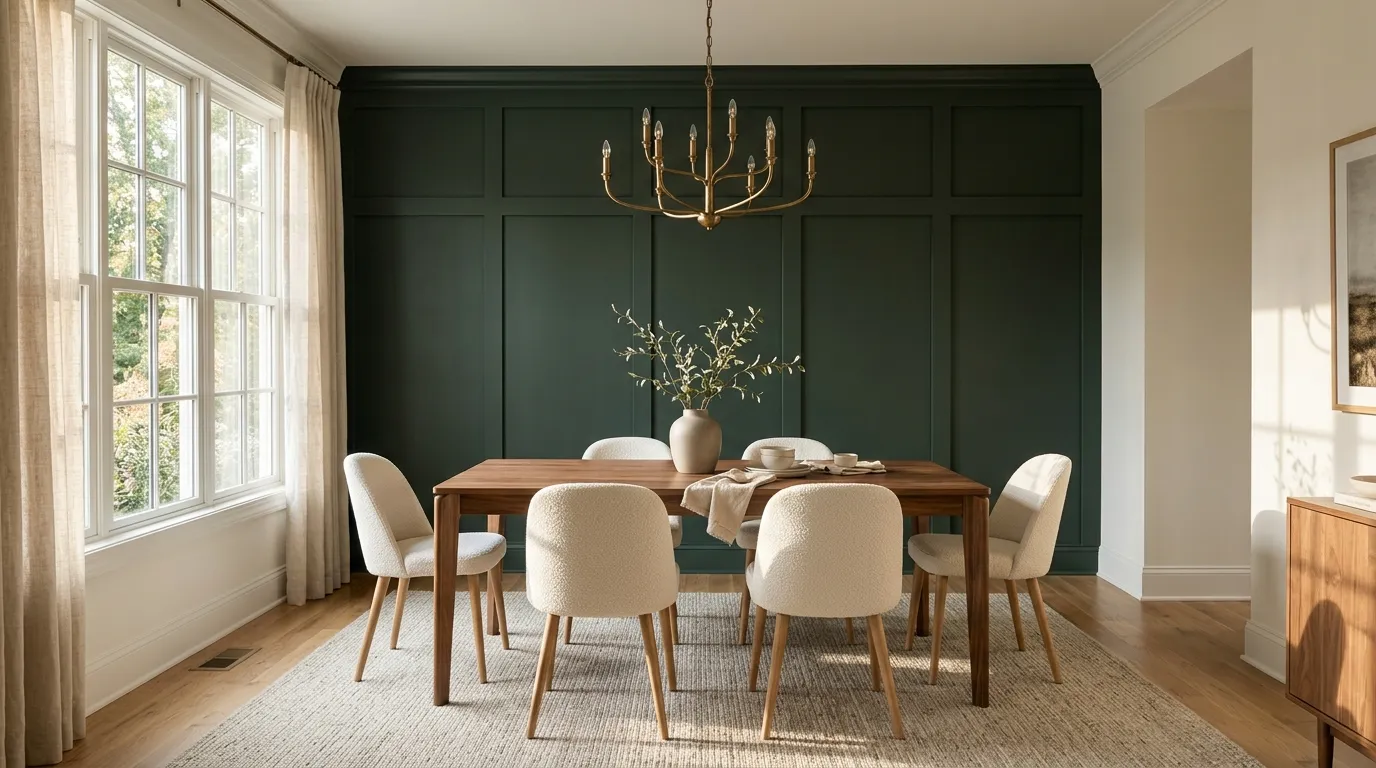
A bold painted wall can give your dining room a stronger focal point without changing the furniture or layout. Deep forest green looks beautiful with walnut tables and brass lighting, while navy blue works well with oak furniture and warm white upholstery. Terracotta brings warmth to rooms with natural materials and neutral decor.
Choose the wall behind your dining table or sideboard, especially if it is visible when entering the room. Test large paint samples in morning and evening light before deciding. Darker shades can feel dramatic, but the room will look more balanced when the surrounding walls, furniture, and lighting complement the chosen color.
2. Add Timeless Charm With Board and Batten Paneling
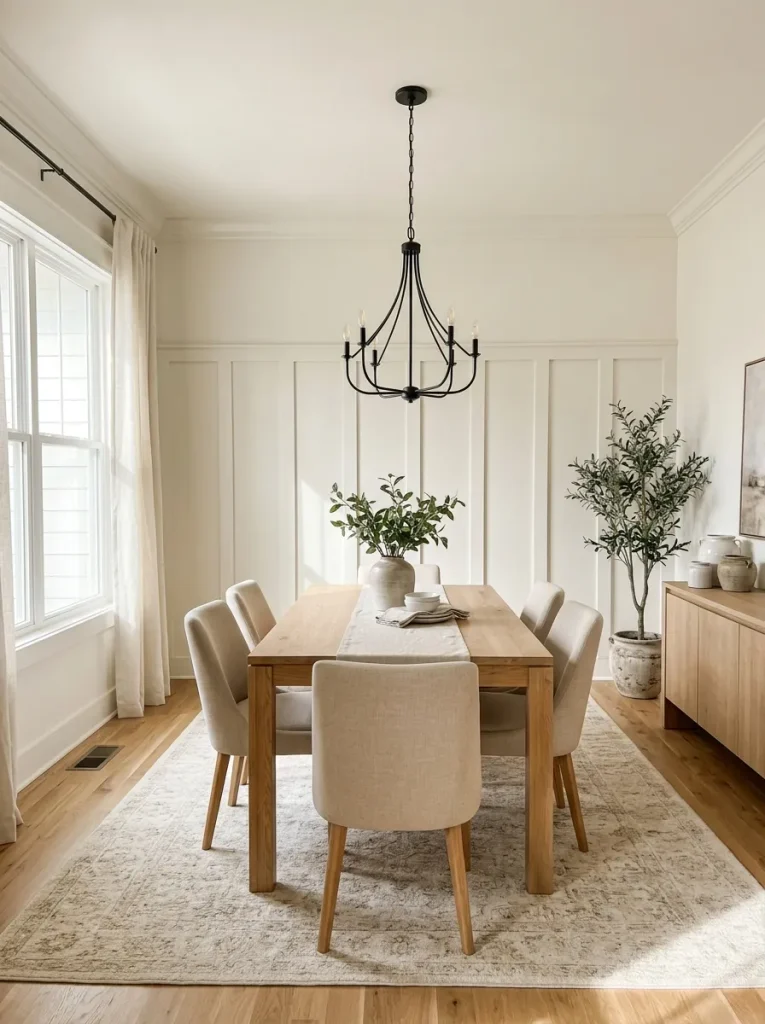
Board and batten paneling adds architectural interest to a plain dining room wall. Its clean lines suit farmhouse, transitional, and modern interiors, especially when painted in warm white, greige, or muted sage green.
For a simple DIY installation:
- Plan your layout. Measure the wall and sketch evenly spaced vertical battens, accounting for outlets and existing trim.
- Prepare the surface. Repair damaged areas, clean the wall, and remove obstacles where appropriate.
- Install the trim. Attach the horizontal rail and vertical battens using suitable fasteners and construction methods. Locate studs and check for hidden wiring or plumbing before drilling.
- Finish the edges. Fill nail holes and caulk appropriate trim joints for a cleaner appearance.
- Paint the paneling. Apply primer where needed, followed by a suitable interior paint.
For a dining room with standard-height ceilings, lower-wall paneling can provide definition without overwhelming the space. Full-height paneling creates a stronger feature, particularly behind a large dining table.
3. Bring Personality Into Your Dining Room With Statement Wallpaper
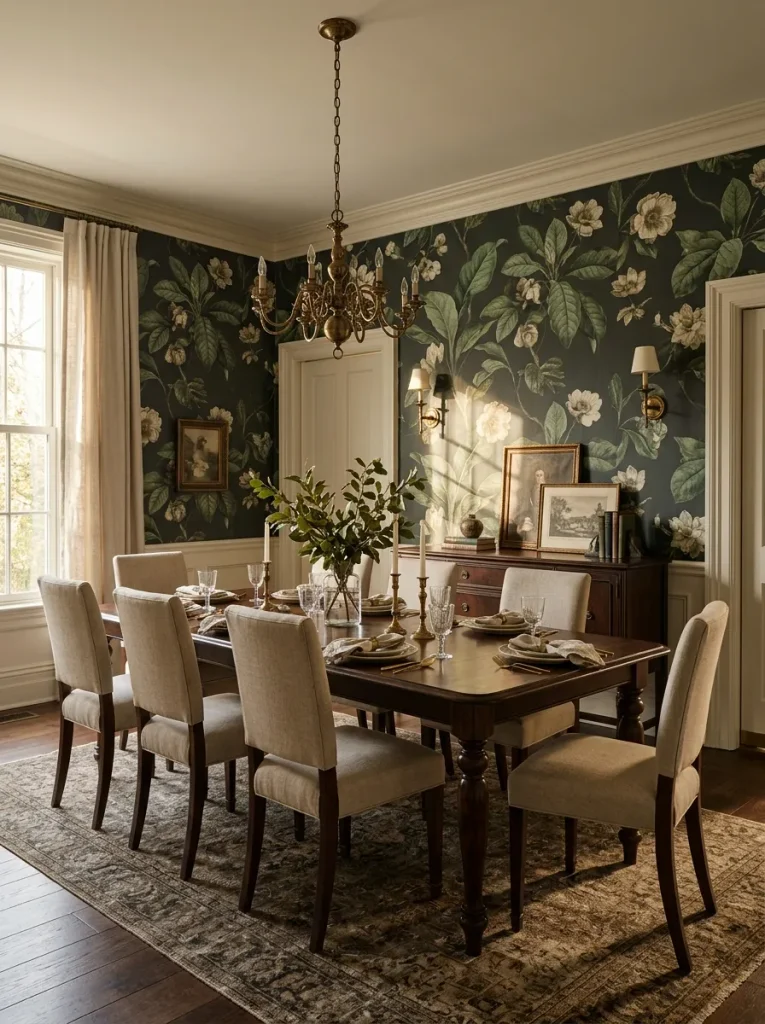
Quick Tip: Choose your wallpaper pattern according to the size of your wall and the visual weight of your furniture. Large botanical prints can create a dramatic focal point, while smaller repeating patterns offer a softer appearance.
Before buying, order samples and examine them beside your dining table, curtains, and flooring. Wallpaper colors can look noticeably different under warm evening lighting.
For a cohesive design, repeat one or two colors from the wallpaper in your dining room accessories. For example, botanical wallpaper with muted green leaves can pair with sage cushions, cream upholstery, and natural wood furniture. Keep neighboring walls relatively simple so the patterned surface remains the main feature.
Peel-and-stick wallpaper may suit renters, but check manufacturer instructions and test a small area first because some finishes can damage paint during removal.
4. Create a Warm Modern Look With Vertical Wood Slats
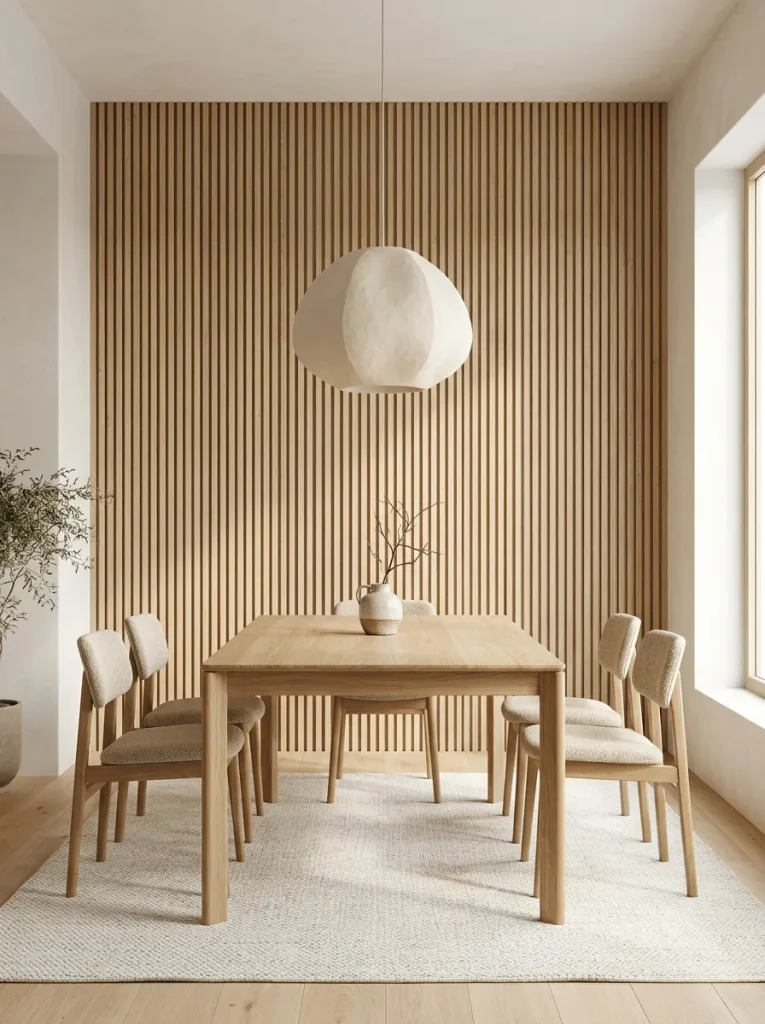
Common Mistake: Covering a small dining room with heavily textured or dark wood slats can make the space feel visually busy, especially when the furniture already has strong grain patterns. Poorly planned spacing or uneven installation can also weaken the finished appearance.
The Fix: Use lighter wood tones in compact rooms and keep the surrounding furniture simple. Consider covering only the wall behind the dining table instead of multiple adjoining surfaces. Plan the panel arrangement before installation so the end cuts look intentional.
For a modern dining room, natural oak slats pair beautifully with off-white walls, linen chairs, and understated lighting. Walnut finishes create a richer, more dramatic appearance when combined with warm neutral furnishings.
Before purchasing decorative slat panels, check their dimensions, installation requirements, cleaning needs, and suitability for your wall. Some systems require battens or specialized mounting hardware, while others are designed for direct installation on suitable surfaces.
5. Give Your Dining Room an Elegant Finish With Picture Frame Molding
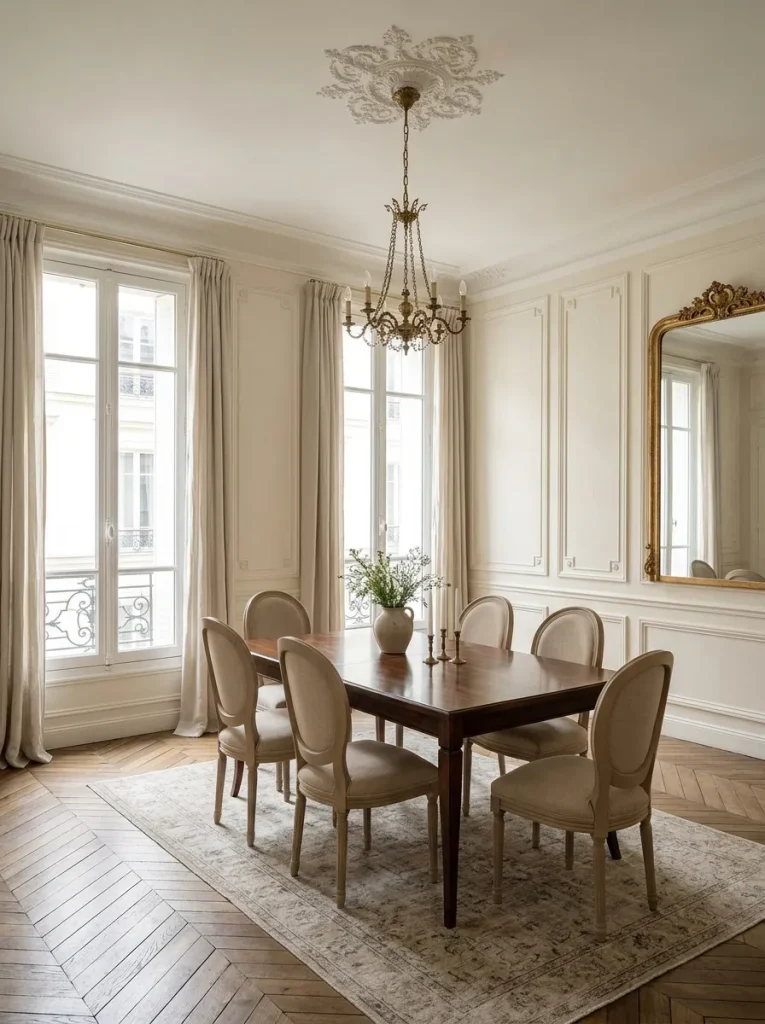
Picture frame molding adds architectural detail to plain walls without introducing bold colors or busy patterns. Its rectangular trim arrangements create an elegant backdrop for traditional, transitional, and French-inspired dining rooms.
What You Need:
- Decorative wall molding: Choose a consistent trim profile that suits your interior.
- Measuring tape and level: Help position each rectangular frame accurately.
- Miter saw: Creates neat angled corners for the molding.
- Suitable adhesive and fasteners: Secure the trim according to the wall material.
- Paintable caulk and filler: Conceal suitable joints and small nail holes.
Before installation, sketch your arrangement and mark the position of the frames with painter’s tape. Keep the spacing consistent and consider the location of outlets, furniture, and wall lighting.
Painting the molding and wall the same warm neutral shade creates a subtle, cohesive finish. For stronger contrast, consider muted sage green or charcoal, complemented by brass lighting and simple upholstered dining chairs.
6. Try a Two-Tone Accent Wall for Subtle Contrast
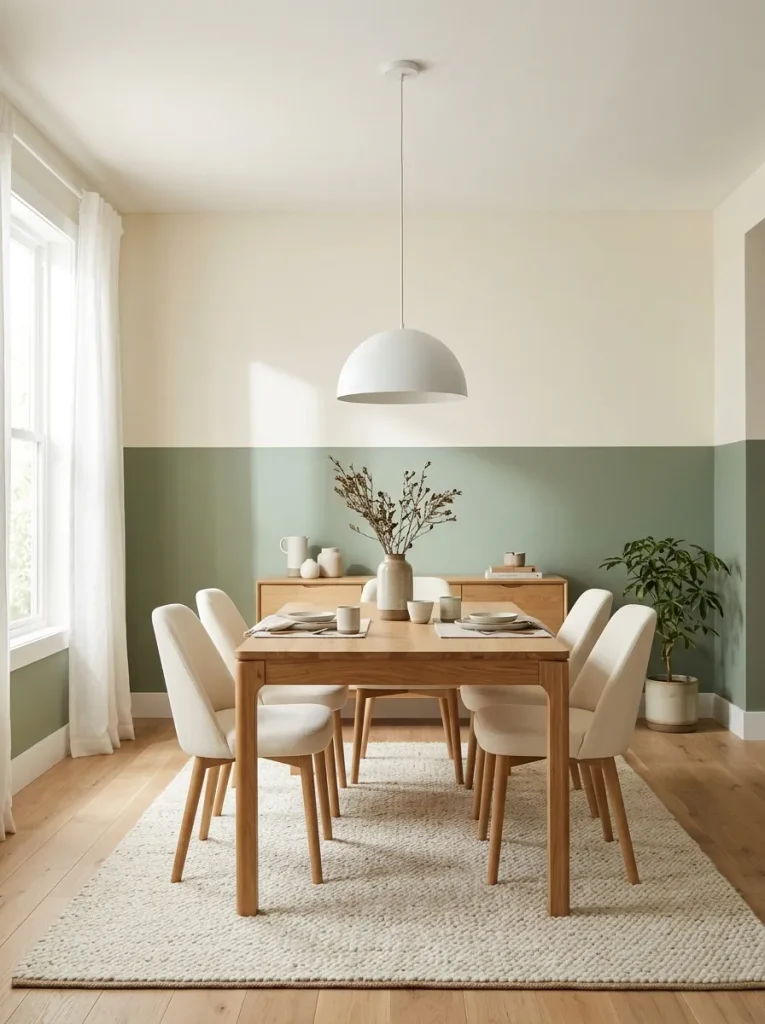
Before: A dining room with uniformly painted walls may feel visually flat when the furniture and surrounding finishes share similar neutral colors. There is little contrast to define the dining area.
After: A two-tone wall introduces a clear color division, giving the dining room a more intentional design. A muted sage green lower section paired with warm ivory above creates gentle contrast without making the space feel overly decorated.
For a painted treatment, use a level and painter’s tape to mark the dividing line. A division near one-third of the wall height can create a grounded appearance, while a higher division may produce a different visual balance. Test the position before painting.
If your dining room has existing chair rail molding, it can provide a natural boundary between colors. Choose shades that complement the flooring and dining furniture, and remove painter’s tape according to the paint and tape manufacturers’ instructions for cleaner edges.
7. Add Natural Depth With a Textured Plaster or Limewash Wall
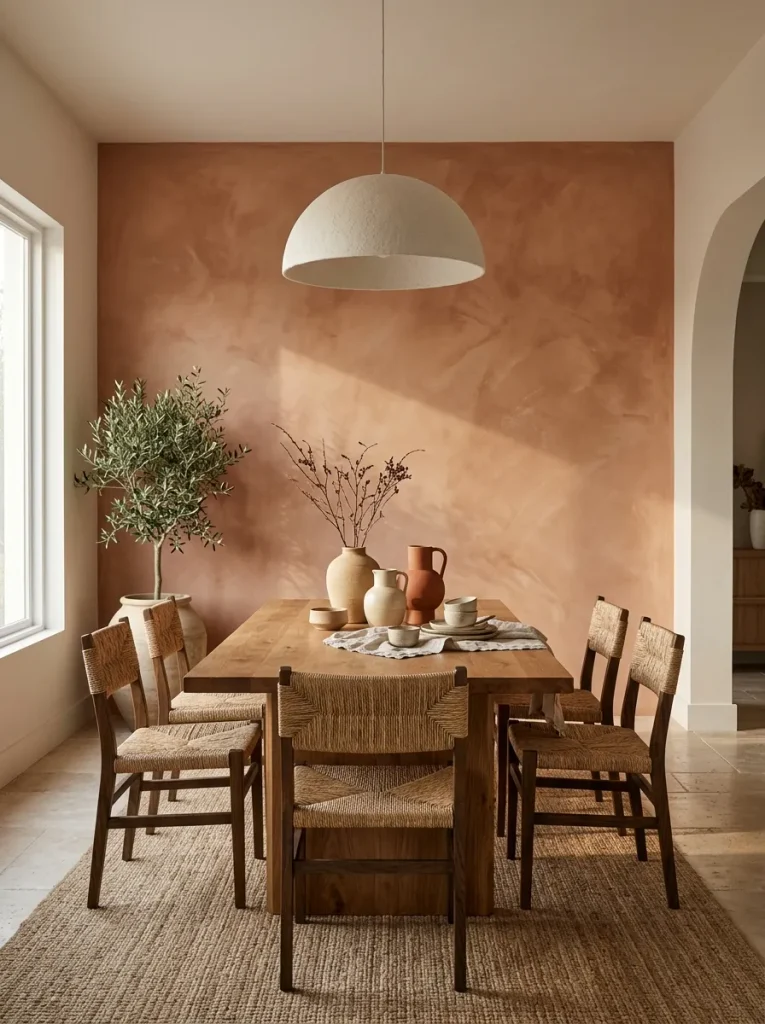
Do This:
- Choose warm neutral or earthy shades such as sand, clay, muted terracotta, or soft taupe.
- Test a sample on the actual wall to assess its texture and appearance under different lighting.
- Check whether your chosen limewash or plaster finish needs a specific primer or wall preparation.
- Pair the textured wall with simple furniture that allows the finish to remain visible.
Avoid This:
- Applying limewash directly over an unsuitable painted surface without the required preparation.
- Assuming limewash and textured plaster use identical application techniques.
- Combining heavily textured walls with too many competing patterns.
- Expecting a perfectly uniform finish from a material designed to show natural variation.
Limewash can create soft tonal movement, while decorative plaster may provide a more pronounced surface texture depending on the product and technique.
For dining rooms with natural wood furniture, a sandy beige finish creates a relaxed, organic atmosphere. Deeper clay tones work particularly well with cream upholstery and warm lighting. Always follow the product instructions, especially regarding surface preparation, application, and maintenance.
8. Give Your Dining Room a Cozy Farmhouse Feel With Shiplap
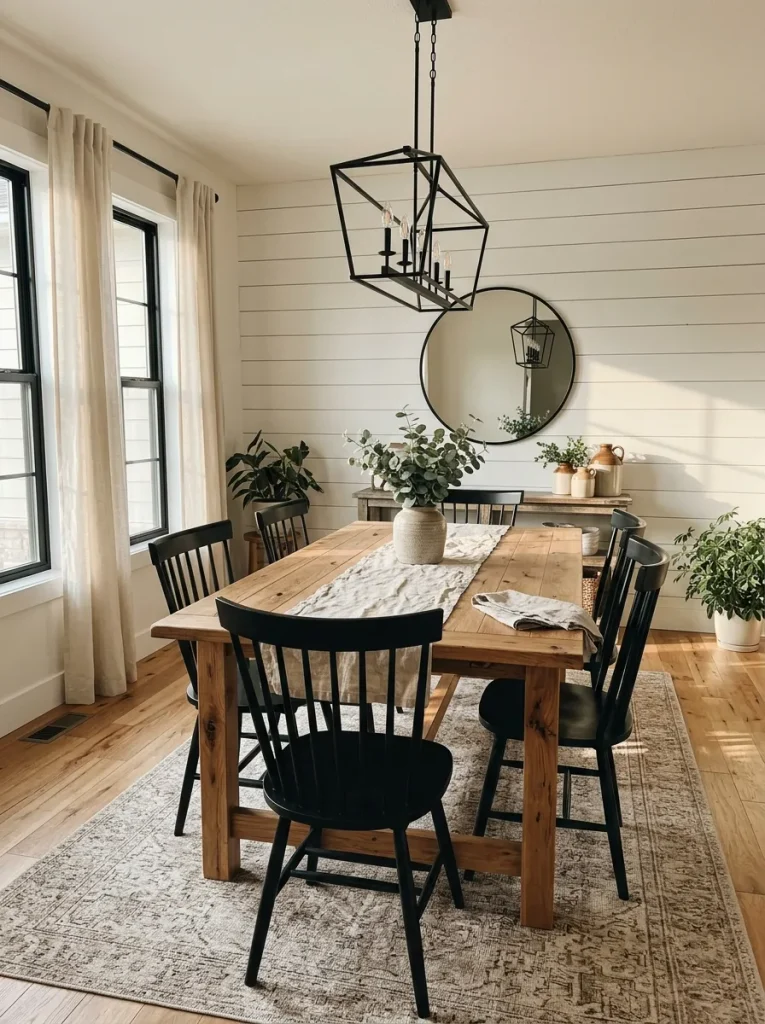
Quick Facts:
- Best for: Farmhouse, cottage, coastal, and relaxed transitional dining rooms.
- Material options: Solid wood, engineered wood, MDF, and suitable decorative panel products.
- Design choices: Horizontal or vertical boards, depending on the desired appearance.
- Expected result: A wall with subtle linear texture and a more defined architectural character.
White shiplap creates a bright, familiar farmhouse look, especially alongside natural wood furniture and black metal lighting. Horizontal boards emphasize the width of a wall, while vertical boards can draw attention upward.
For a softer appearance, consider warm white, light greige, or muted sage instead of stark white. These colors pair comfortably with woven accessories, neutral upholstery, and vintage-inspired dining furniture.
Before installation, check the wall’s condition and choose a product suitable for the room’s humidity and cleaning requirements. MDF panels generally need more moisture protection than suitable moisture-resistant alternatives. Keep board spacing consistent and use appropriate wall fixings to achieve a neat, durable finish.
9. Turn a Blank Dining Room Wall Into a Beautiful Gallery Display

A gallery wall adds personality to your dining room without requiring new paint, wallpaper, or permanent paneling. Combine botanical illustrations, abstract prints, family photographs, or vintage artwork to create a display that reflects your decorating style. For a cohesive appearance, repeat one or two frame finishes rather than mixing too many unrelated colors.
Start by arranging your frames on the floor before hanging them. Keep the gaps reasonably consistent and position the overall arrangement in relation to your dining table or sideboard. Above a sideboard, leave enough clearance so decorative accessories do not overlap the lowest frames.
For a modern look, choose simple black frames and neutral artwork. If you prefer a collected, traditional appearance, combine warm wood frames with muted landscapes and botanical prints. Use appropriate wall anchors for the weight of each piece, especially where people regularly walk or sit.
10. Make a Small Dining Room Feel Brighter With a Mirror Accent Wall

Mirrors can make a compact dining area feel brighter by reflecting available light and revealing more of the surrounding room. The best position depends on what the mirror reflects, how much wall space is available, and whether its reflection will be comfortable for seated guests.
To create a balanced mirror feature:
- Choose the right wall. Look for a position that reflects a window, attractive artwork, or an uncluttered part of the room.
- Select the mirror shape. Arched mirrors soften angular furniture, while rectangular mirrors complement modern dining rooms.
- Check the proportions. Above a sideboard, a mirror that is narrower than the furniture usually creates a balanced arrangement.
- Mount it securely. Use hardware rated for the mirror’s weight and appropriate for your wall construction.
Avoid placing the mirror where it reflects harsh light directly into someone’s eyes. A large statement mirror can work beautifully on its own, while a pair of smaller matching mirrors may suit a wider dining room wall.
11. Introduce Rustic Character With an Exposed Brick Accent Wall
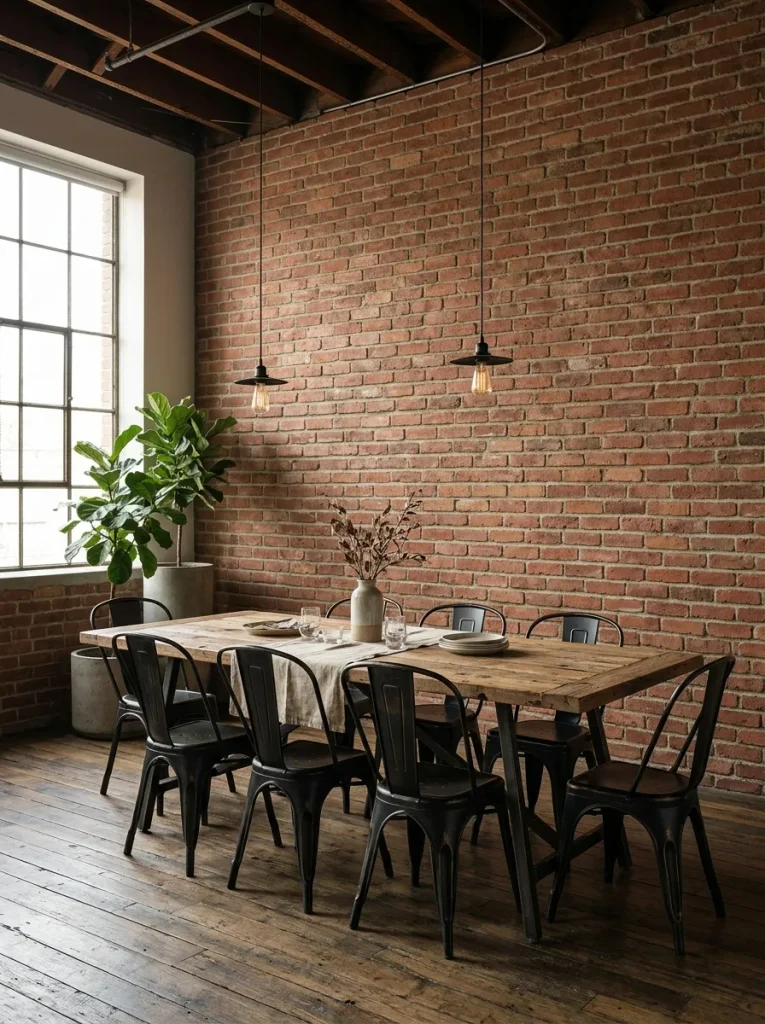
Quick Tip: If your home already has brick beneath an existing finish, establish its condition before exposing it. For homes without structural brick walls, consider thin brick veneer or suitable decorative brick panels instead of undertaking major masonry work.
Red brick pairs naturally with solid wood dining tables, black metal furniture, and warm pendant lighting. Its varied surface provides visual texture, so surrounding walls and accessories can remain relatively simple.
For a brighter dining room, consider light-colored brick or an appropriate painted finish. Darker brick works well in larger rooms with good natural or artificial lighting.
Keep maintenance in mind when selecting materials. Genuine brick may have porous surfaces and mortar joints that collect dust, while decorative alternatives have different cleaning requirements. Check the manufacturer’s recommendations before applying any coatings or cleaning products.
12. Create a Stunning Focal Point With a Scenic Wall Mural
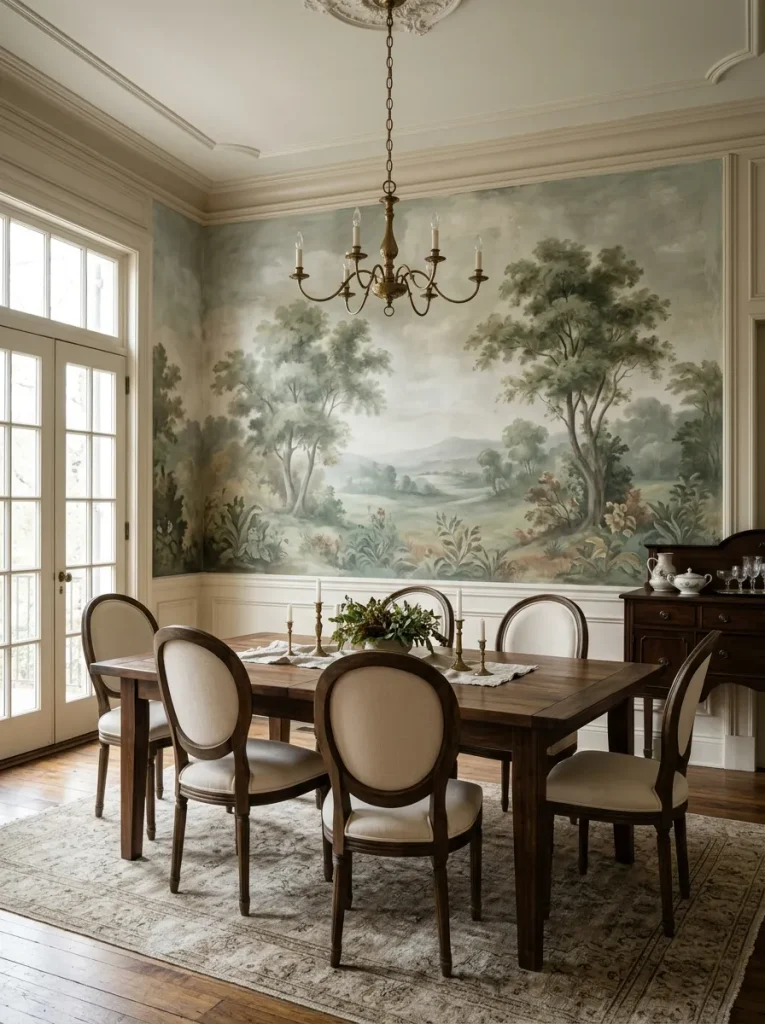
Common Mistake: Selecting a scenic mural based only on a close-up product image can lead to disappointing proportions once it covers an entire wall. Important details may disappear behind furniture, or the mural’s main subject may be positioned awkwardly.
The Fix: Measure the complete wall and review the mural’s full-size layout before ordering. Consider where the dining table, sideboard, artwork, and lighting will sit in relation to the design. Check whether the supplier offers adjustable cropping or custom dimensions.
For a traditional dining room, vintage landscapes with muted greens and soft blue tones can create a calm backdrop. Botanical murals suit natural wood furniture, while abstract painted scenes complement contemporary interiors.
A mural with gentle color transitions is often easier to coordinate with existing furnishings than a composition featuring several competing bright colors. Choose dining accessories that repeat subtle shades from the artwork without covering its most important details.
13. Add a Playful Modern Touch With Geometric Wall Designs
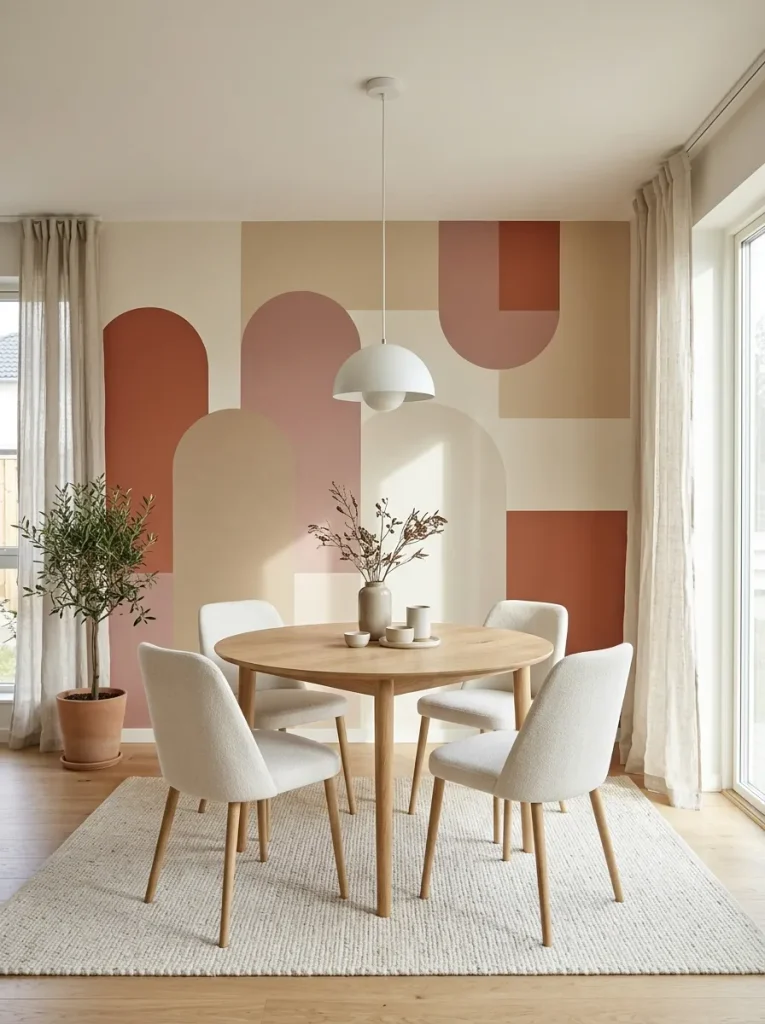
Geometric wall designs give your dining room a modern, creative appearance without requiring expensive materials. Painted arches, diagonal shapes, and overlapping color blocks can transform a plain wall into an attractive focal point. Muted terracotta, dusty rose, sage green, and warm beige work particularly well with natural wood furniture.
Do This:
- Choose two or three coordinating paint colors to maintain visual balance.
- Sketch the design before painting and check its scale against the dining table.
- Use a level and suitable painter’s tape to create clean straight lines.
- Position the main geometric feature where furniture will not hide its most important details.
Avoid This:
- Combining too many bright colors in a small dining area.
- Creating complicated patterns that compete with decorative lighting or artwork.
- Placing painted arches randomly without considering furniture alignment.
A single oversized arch behind a sideboard can create a softer look than a wall filled with geometric shapes. For a more understated design, use closely related neutral shades and allow the changing shapes to provide visual interest.
14. Bring Soft Organic Texture Into the Room With Grasscloth Wallpaper

Quick Facts:
- Best for: Organic modern, transitional, coastal, and understated traditional interiors.
- Material options: Natural grasscloth and synthetic grasscloth-look wallpapers.
- Popular colors: Warm beige, oatmeal, taupe, muted olive, and soft gray.
- Expected result: A subtly textured wall that adds depth without requiring bold patterns.
Grasscloth wallpaper introduces a woven appearance that pairs beautifully with wood furniture, linen upholstery, and ceramic accessories. Natural fibers create small variations in color and texture, making the finished wall feel less uniform than standard printed wallpaper.
For a calm dining room, choose oatmeal or warm beige grasscloth with a walnut table and cream chairs. Muted olive works well with oak furnishings and brass lighting.
Natural grasscloth can be more delicate than washable vinyl wallpaper, and visible seams are often part of its appearance. Check the manufacturer’s cleaning instructions and installation requirements before purchasing. If your dining area is frequently exposed to food splashes or moisture, a washable grasscloth-look alternative may be easier to maintain.
15. Combine Style and Storage With Built-In Accent Wall Shelving

Built-in shelving turns an unused dining room wall into a practical feature for displaying decorative objects, storing dinnerware, and organizing entertaining essentials. Combining open shelves with closed lower cabinets creates a balance between attractive displays and everyday storage.
Before: A blank dining room wall may offer little visual interest or convenient storage. Dinnerware, serving pieces, and decorative accessories may need to be stored elsewhere, even when they are used regularly.
After: A thoughtfully planned shelving arrangement can provide display space for ceramics, framed artwork, and decorative bowls while keeping less attractive items inside closed cabinets. The surrounding cabinetry also gives the wall a more intentional architectural appearance.
For a modern dining room, combine natural oak shelves with warm white cabinetry and simple brass or black hardware. If you prefer a traditional look, choose painted cabinetry with classic trim details and symmetrical shelving.
Before installation, measure the available wall space and maintain enough clearance around dining chairs and walkways. Heavy dinnerware requires shelves and fixings rated for the intended load, with cabinets properly secured to suitable structural supports.
Avoid overcrowding the open shelves. Group objects of different heights, leave some empty space, and repeat a limited selection of colors to create a display that feels coordinated with the rest of your dining room.
Conclusion
The best dining room accent wall ideas complement the furniture you already own while giving the room a clear focal point. A painted wall or gallery display may be enough for a simple refresh, while wood paneling, textured wallpaper, or built-in shelving can bring additional character and function.
Before committing, consider the size of your room, available daylight, upkeep, and how each finish looks beside your dining table. Test colors or material samples where possible, and measure carefully before installing anything permanent. Save this guide on Pinterest so you can compare your favorite looks later, then choose one idea to plan for your space.