How to Style a Narrow Living Room So It Feels Wide and Open
Does your living room feel more like a narrow hallway than a comfortable place to relax? Learning how to style a narrow living room can help you create a space that feels wider, brighter, and more inviting without expensive renovations.
I’ve noticed that even beautifully decorated rooms can feel cramped when furniture blocks walkways or too many accessories fill the space. The good news is that a few thoughtful changes can improve how your room looks and functions.
In this guide, you’ll discover practical furniture layouts, space-saving ideas, lighting tricks, and simple decorating techniques. Whether you’re working with a small apartment or a long rectangular living room, these beginner-friendly tips will help you make the most of every inch.
Why Narrow Living Rooms Feel Cramped and How to Fix That
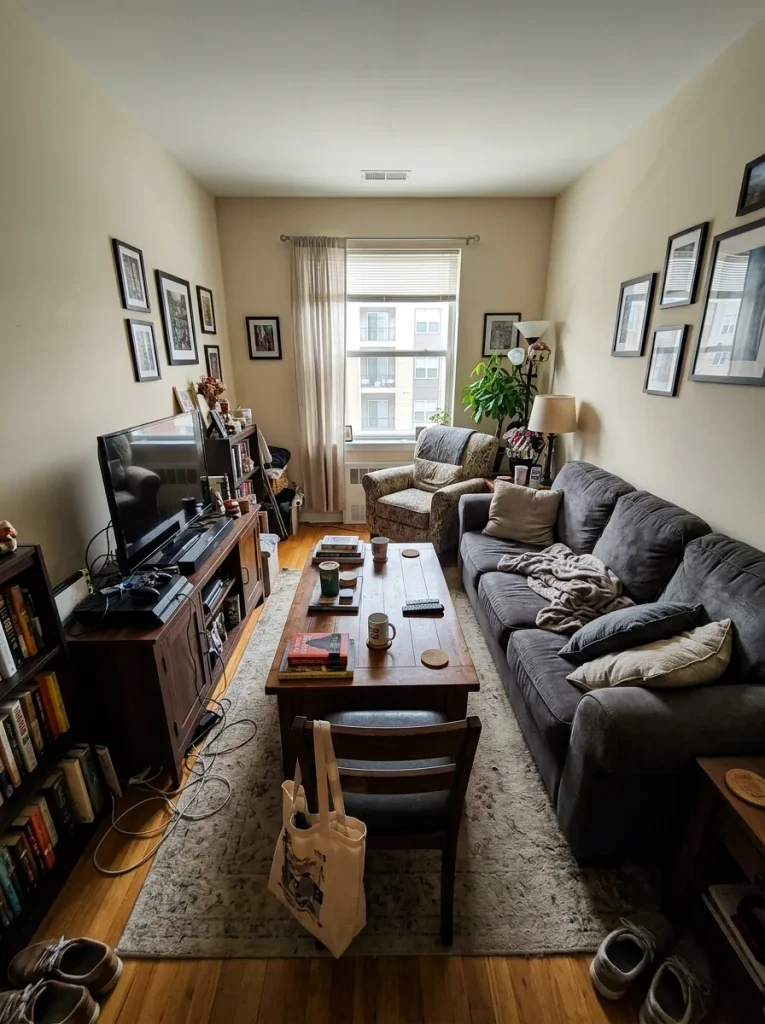
A narrow living room often feels cramped because furniture takes up too much floor space or blocks natural walking paths. Large sofas, bulky coffee tables, and crowded corners can make the room appear even smaller. Understanding how to style a narrow living room starts with recognizing these common layout problems.
The solution is to create clear pathways, choose furniture that matches the room’s proportions, and keep the overall design visually balanced. You don’t need to replace everything. Start by removing unnecessary pieces and noticing where movement feels restricted. Small adjustments to furniture placement can make the space feel noticeably wider.
Start by Measuring Your Space and Planning the Layout

Before moving furniture, take a few measurements to understand how much usable space you actually have. A simple floor plan helps you avoid buying oversized pieces or placing furniture where it blocks movement. This planning stage makes every decorating decision easier and more practical.
1. Measure the room: Record the length and width of your living room, including any awkward corners or recessed areas.
2. Mark doors and windows: Note their positions on a simple sketch so furniture won’t block entrances or natural light.
3. Measure existing furniture: Write down the dimensions of your sofa, chairs, coffee table, and storage units.
4. Plan a clear walkway: Aim for approximately 30 to 36 inches of space along the main walking route wherever the layout allows.
5. Test furniture placement: Use painter’s tape to outline furniture positions on the floor before rearranging anything.
Choose Furniture That Fits a Narrow Living Room
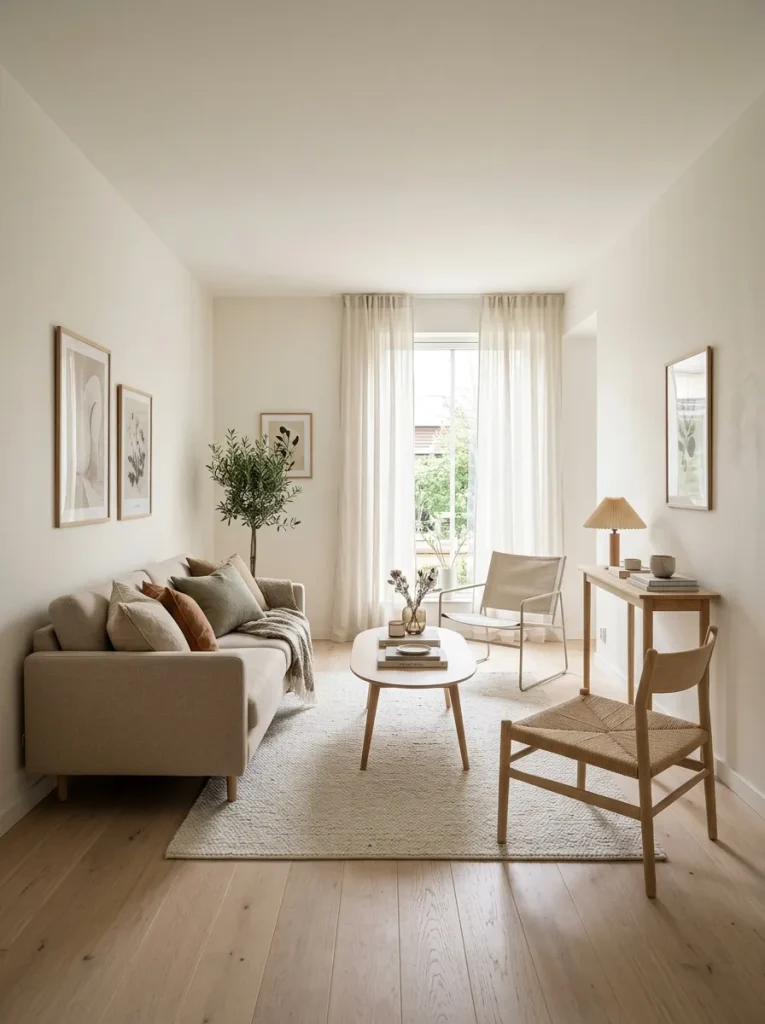
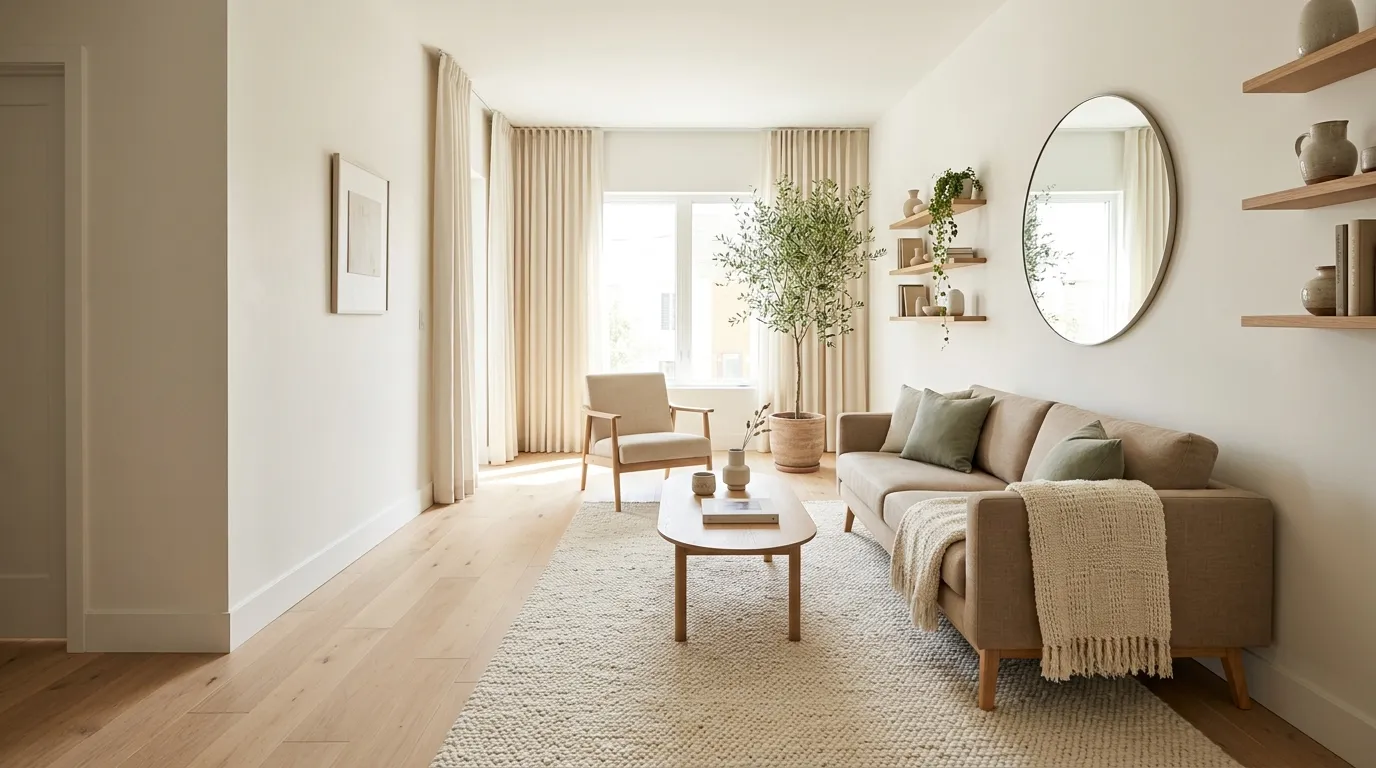
Quick Tip: Choose furniture with slim arms, raised legs, and simple silhouettes to keep more of the floor visible. A compact sofa paired with an oval coffee table often works better than bulky seating and a large square table in a tight layout.
Start with the sofa because it usually occupies the most space. Measure its depth as carefully as its length, especially if it sits beside the main walkway. Add lightweight chairs only when needed, and consider nesting tables instead of a large coffee table. Leave breathing room between furniture pieces.
Arrange Your Furniture to Create an Open Walkway
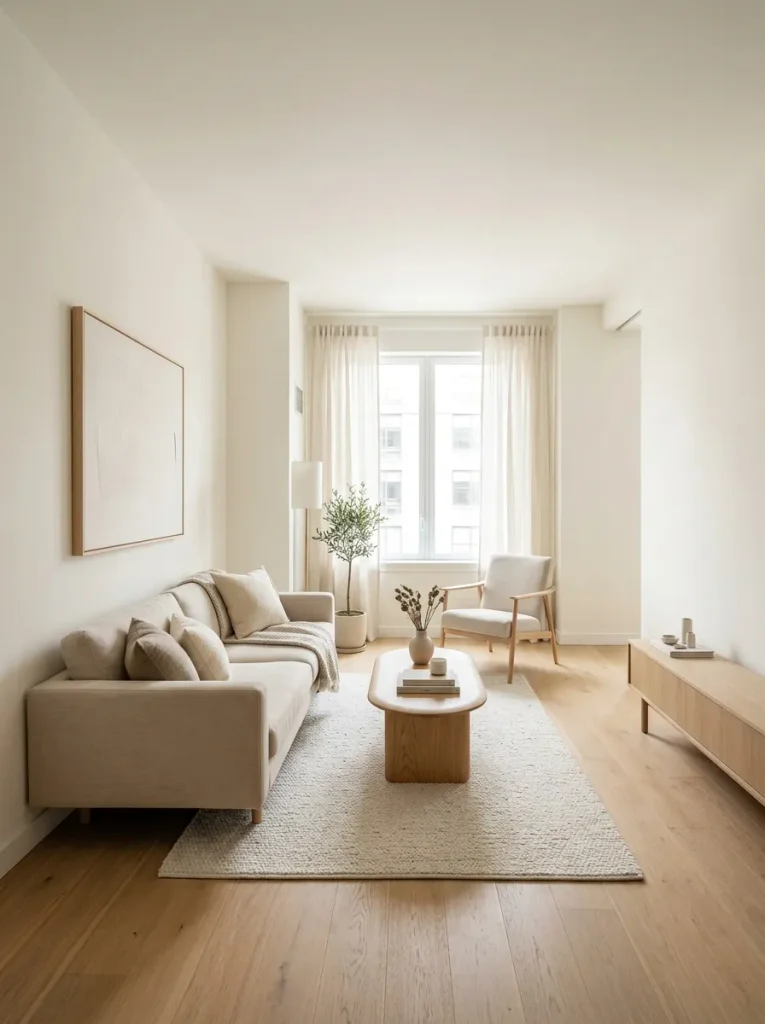
Common Mistake: Pushing too many furniture pieces against both long walls can create a tunnel-like appearance. Placing a large coffee table in the center also makes it difficult to move comfortably through the room.
The Fix: Keep the main walking route open and arrange seating around one clear focal point, such as a television or window. Position larger furniture along one side when possible, and use smaller accent pieces to balance the opposite side.
Try walking through your living room as you normally would. If you need to turn sideways or squeeze between furniture, adjust the arrangement. Keep frequently used pathways as open as possible, and avoid placing chairs near doorways. A comfortable layout should feel natural, not like an obstacle course.
Use Light Wall Colors to Make the Room Feel Wider
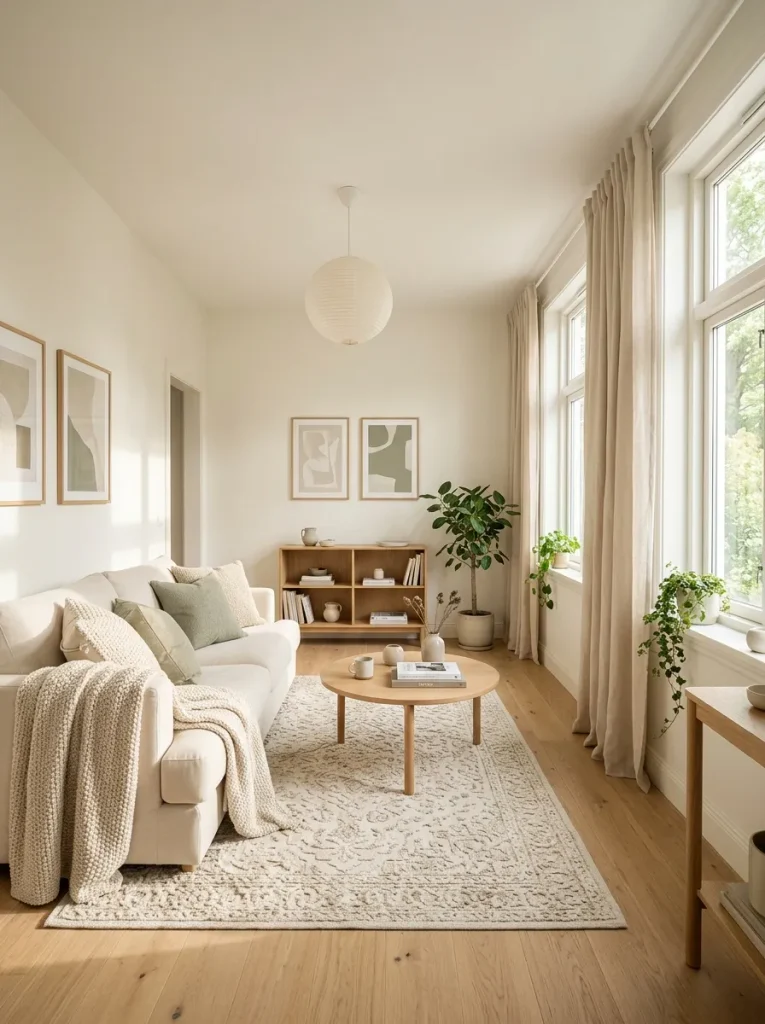
What You Need:
- Warm white paint: Creates a bright, welcoming background without making the room feel stark.
- Soft neutral colors: Beige, cream, and light gray help maintain a balanced appearance.
- Coordinated furniture tones: Similar shades prevent large furniture pieces from visually dominating the room.
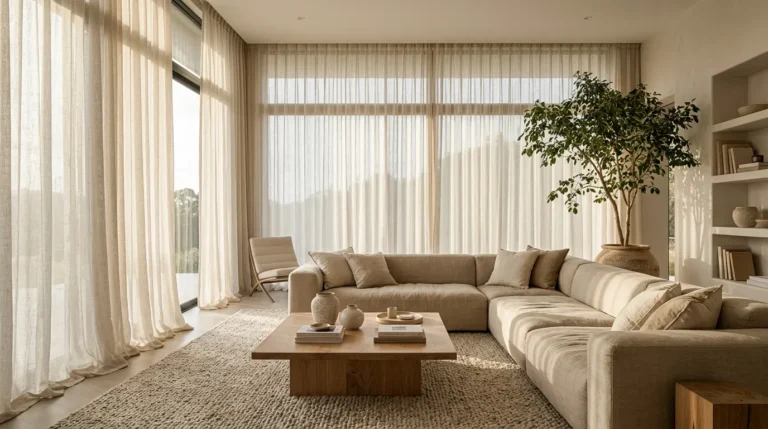
- Lightweight curtains: Soft fabrics keep windows looking open and inviting.
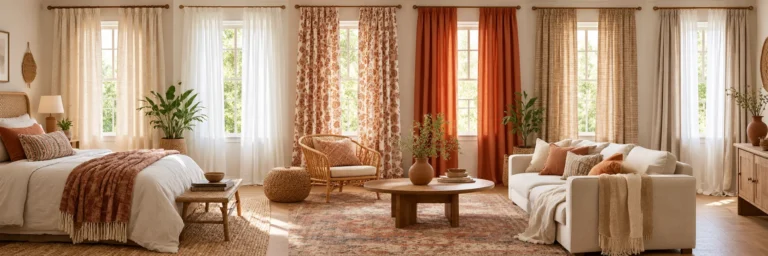
- Subtle accent colors: Sage green, dusty blue, or muted terracotta add personality without overwhelming the space.
A coordinated color palette helps the eye move smoothly across a narrow room without stopping at strong visual contrasts. Choose one main wall color, a complementary furniture shade, and one or two accent colors. Test paint samples in morning and evening light before committing to a final shade.
Make the Most of Natural Light and Layered Lighting
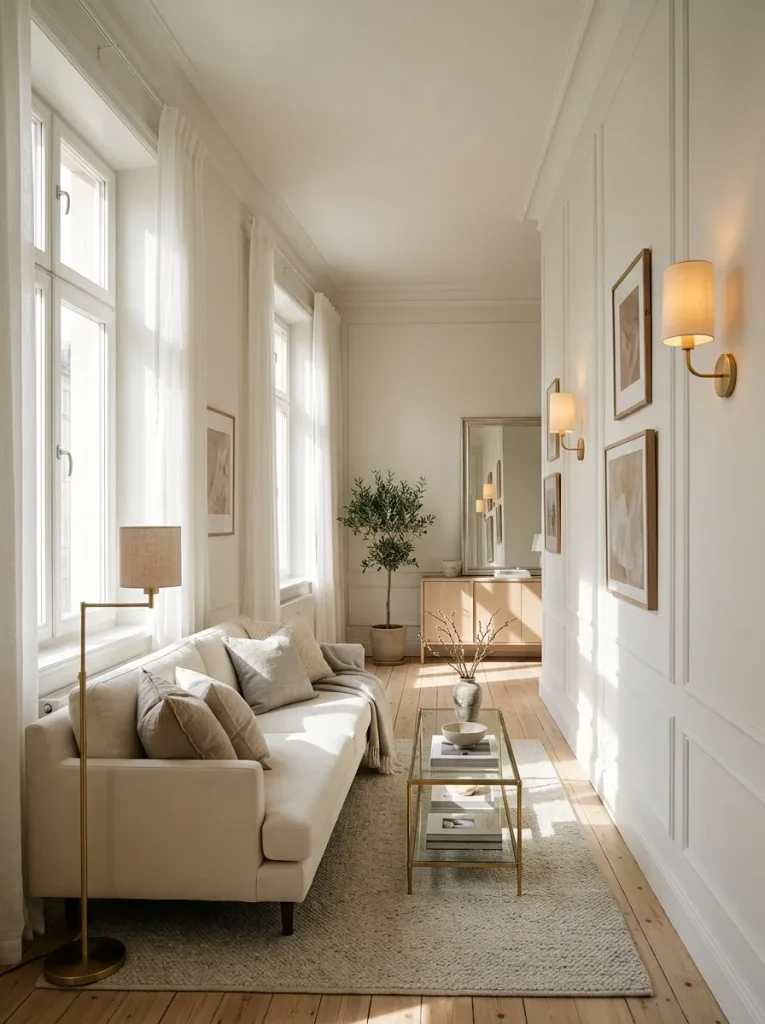
Before: Heavy curtains cover much of the window, while a single ceiling light leaves the far end of the room looking dim. Dark corners make the living area feel smaller and less welcoming.
After: Sheer curtains allow more daylight inside, while a slim floor lamp and wall sconces distribute light throughout the room. Previously shadowy areas feel brighter, creating a more balanced and open appearance.
Start by removing anything that blocks your windows, including tall furniture and heavy decorative accessories. Then add lighting at different heights to reduce dark spots. Use warm white bulbs for a cozy atmosphere, and choose wall-mounted lights when floor space is limited. Keep electrical cords safely tucked away.
Use Mirrors to Create the Illusion of More Space
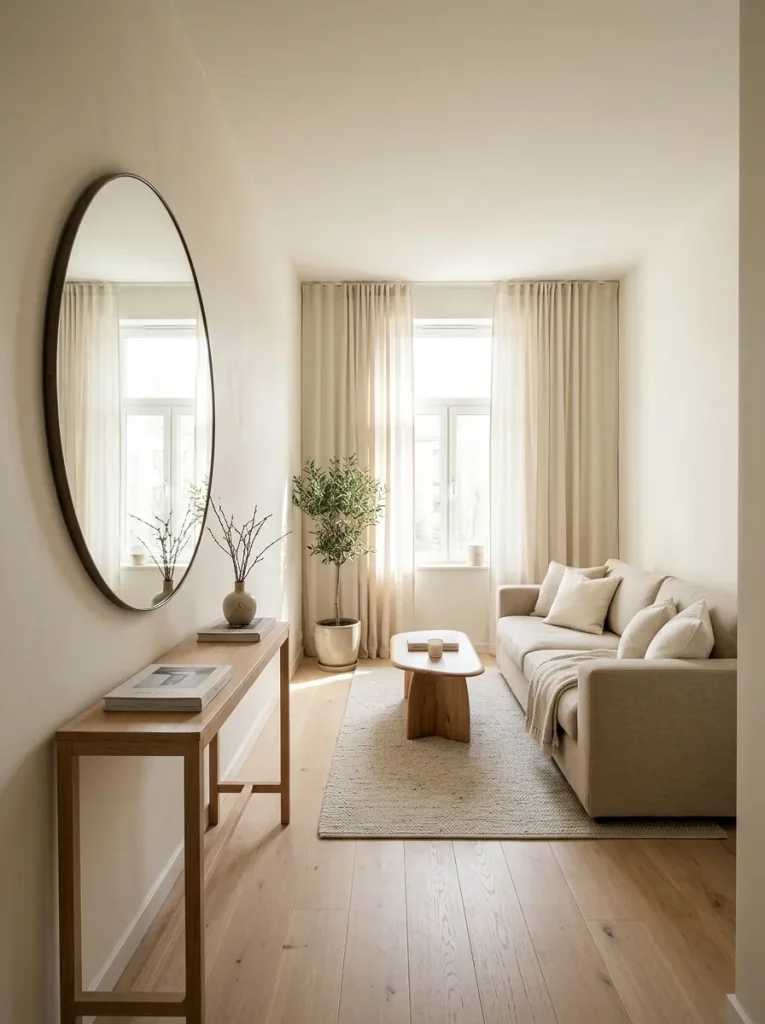
Do This:
- Position a large mirror where it can reflect natural daylight from a nearby window.
- Choose a round or rectangular mirror that complements your furniture proportions.
- Hang a mirror above a slim console to create a balanced focal point.
- Use a simple frame that matches your room’s overall color palette.
Avoid This:
- Placing mirrors where they reflect cluttered shelves or crowded furniture.
- Hanging several small mirrors randomly across a narrow wall.
- Choosing oversized decorative frames that visually overwhelm the space.
- Positioning mirrors where they create uncomfortable glare.
Mirrors can add visual depth by reflecting brighter areas of the room, making narrow spaces appear more open. In my experience, one thoughtfully positioned mirror often looks better than several scattered pieces. Before hanging it, check what appears in the reflection from your usual seating position.
Choose the Right Rug and Curtains to Balance the Room
Time Needed: Approximately 30 to 60 minutes for measuring and planning.
Difficulty: Easy for beginners.
Cost: Low if repositioning existing items, higher if purchasing new rugs or curtains.
Tools Required: Measuring tape, painter’s tape, pencil, and notebook.
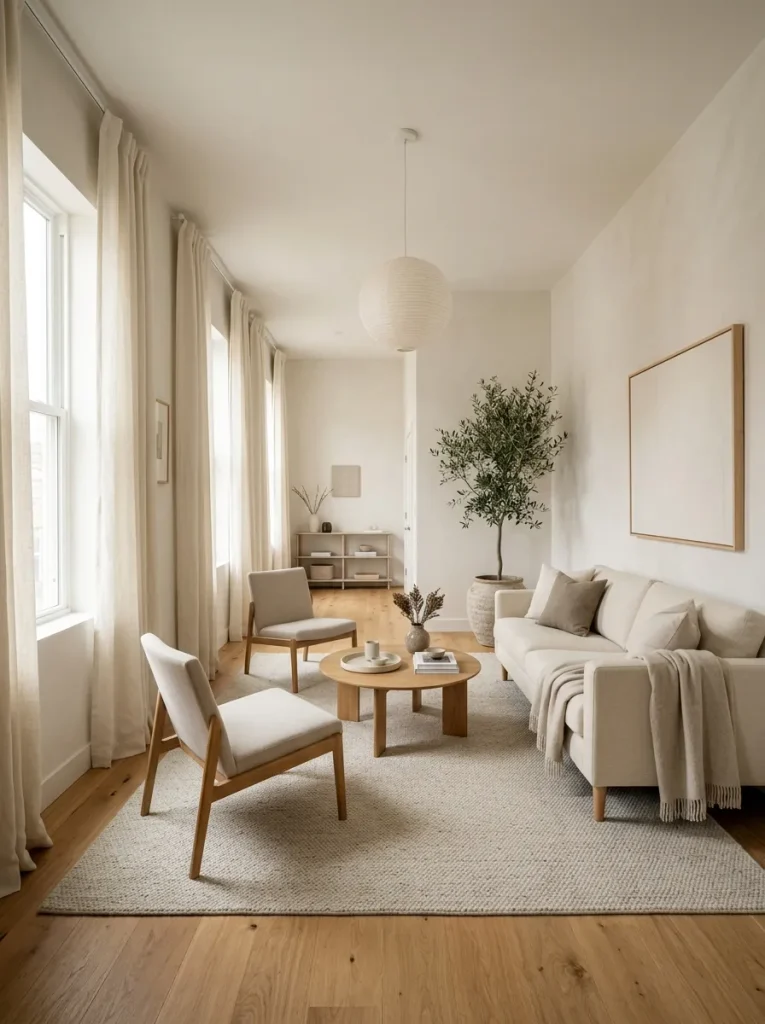
Rugs and curtains can change how a narrow room feels without moving major furniture. Choose a rug wide enough to sit beneath the front legs of your main seating pieces. Hang curtain rods above the window frame and extend them slightly beyond its sides to emphasize height and natural light.
Add Smart Storage Without Crowding the Floor
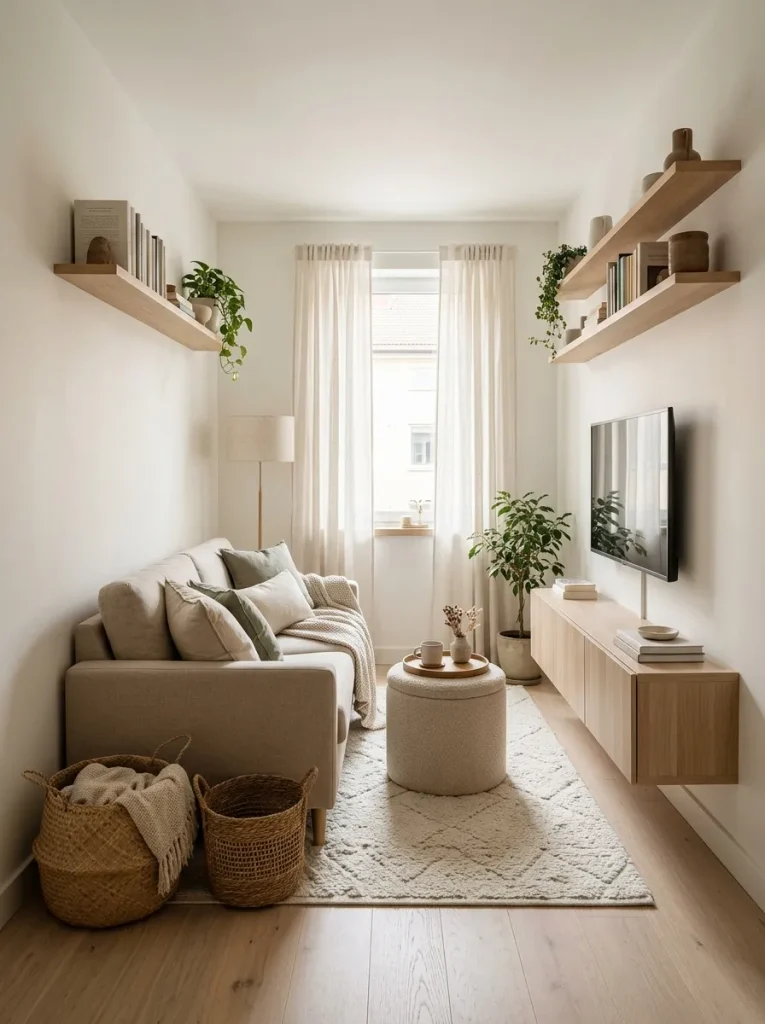
Storage becomes especially important in a narrow living room because everyday items can quickly make limited floor space feel crowded. Instead of adding bulky cabinets, use vertical wall space and furniture that serves more than one purpose. Floating shelves, compact storage ottomans, and narrow media consoles provide practical storage without overwhelming the layout.
Keep frequently used items inside easy-to-reach storage, while displaying only a few decorative pieces on open shelves. Use matching baskets to organize smaller belongings and reduce visual clutter. Secure wall-mounted units properly and avoid overloading shelves. The goal is to maintain an organized room with clear, comfortable walking paths.
Decorate With Simple Accessories That Keep the Room Airy
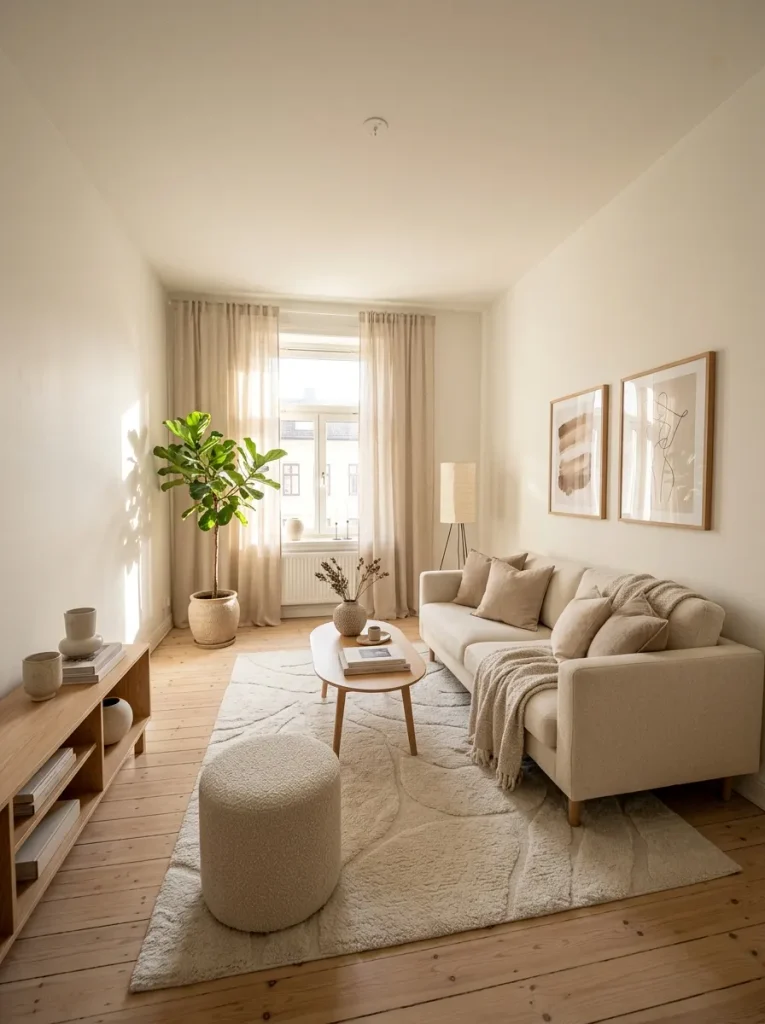
Decorating a narrow living room requires a thoughtful balance between personality and simplicity. Too many accessories can make even a well-arranged space feel crowded. Choose a few meaningful decorative pieces that complement your furniture, such as neutral cushions, simple artwork, and a small indoor plant.
Quick Tip: Group decorative items in small arrangements instead of spreading them across every available surface. Leave some shelves and tabletops partially empty to create visual breathing room.
Stick to two or three complementary accent colors for a coordinated appearance. Choose artwork that suits the wall’s proportions, and place taller plants in unused corners rather than walkways. Mix soft fabrics with natural materials such as wood or ceramic to add warmth without introducing unnecessary clutter.
Avoid These Common Narrow Living Room Decorating Mistakes
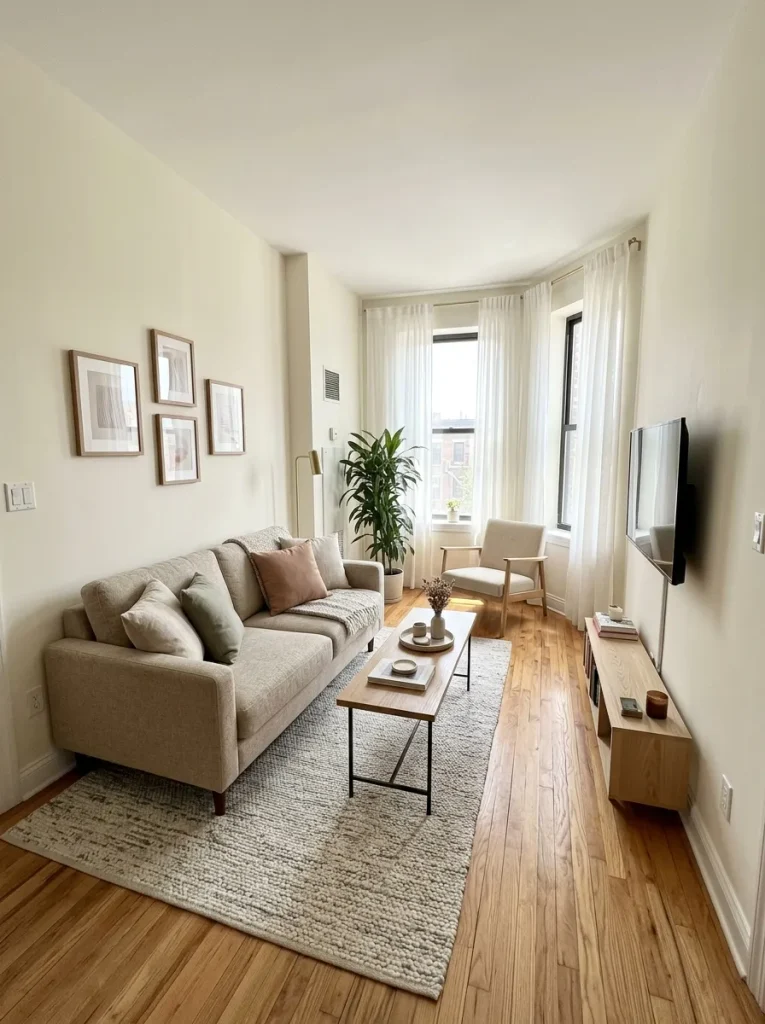
Common Mistake: Choosing oversized furniture, placing every piece against opposite walls, and filling empty corners with unnecessary decorations can make a narrow living room feel even tighter. Small rugs and heavy curtains can also disrupt the room’s visual balance.
The Fix: Select furniture that suits your measurements, maintain a comfortable walking path, and use a rug large enough to connect your seating area. Keep window treatments light and remove accessories that make surfaces feel crowded.
Before finishing your room, stand near the entrance and look across the entire space. Check whether furniture blocks natural light, pathways feel restricted, or decorations compete for attention. Adjust one problem at a time rather than changing everything. A balanced, functional layout matters more than filling every empty corner.
Frequently Asked Questions
How do you make a narrow living room look wider?
Use light wall colors, appropriately sized furniture, and mirrors that reflect natural light. Keep walkways clear, choose a large enough area rug, and avoid excessive decorations to create a more spacious appearance.
What is the best furniture layout for a long narrow living room?
Position your main sofa along one wall and arrange smaller seating pieces around a clear focal point. Maintain an open walking route and avoid placing bulky furniture on both sides of the room.
Should you put a sofa against the wall in a narrow living room?
Yes, placing a sofa against a long wall can help preserve valuable floor space. However, the best position depends on doorways, windows, and furniture dimensions, so measure your room before deciding.
What colors make a narrow living room look bigger?
Warm white, soft beige, cream, and light gray can make a narrow living room feel brighter and more open. Combine these shades with coordinated furniture and subtle accents to maintain a balanced appearance.
What size rug is best for a narrow living room?
Choose a rug large enough to fit beneath the front legs of your main seating furniture. Measure the seating area before purchasing, and avoid rugs that look disconnected from the sofa and chairs.
How can I decorate a narrow living room on a budget?
Start by rearranging existing furniture, removing unnecessary accessories, and improving natural light. Reposition mirrors, simplify decorations, and use storage baskets to create a cleaner, more open appearance without purchasing expensive new furniture.
Where should you place a mirror in a narrow living room?
Position a mirror where it reflects natural daylight or an attractive, uncluttered part of the room. Above a slim console or near a window often works well without occupying valuable floor space.
How do you arrange a narrow living room with a TV?
Place the television where it can be viewed comfortably without blocking windows or walking paths. Consider a slim wall-mounted media console and arrange compact seating to maintain a practical, uncluttered layout.
Can dark furniture work in a narrow living room?
Yes, dark furniture can work when balanced with lighter walls, bright curtains, and adequate lighting. Choose pieces with slim profiles and avoid overcrowding the room with several bulky, dark-colored items.
How do you make a narrow living room feel cozy without cluttering it?
Use soft cushions, warm lighting, natural textures, and a few carefully selected accessories. Keep surfaces partially clear, coordinate your colors, and prioritize comfortable seating to create a welcoming atmosphere without sacrificing openness.
Conclusion
Creating a beautiful, comfortable space doesn’t require a large room or an expensive makeover. Once you understand how to style a narrow living room, simple changes like rearranging furniture, choosing lighter colors, improving lighting, and reducing clutter can completely transform its appearance.
I’ve seen how adjusting just one furniture arrangement can make a room feel more balanced and welcoming. Start with the easiest changes and build from there.
Save this guide on Pinterest for future inspiration, try these ideas in your own home, and share it with someone struggling with a narrow space.
Your dream living room starts with one thoughtful change!