Light Filtering Curtains to Soften Natural Light: 8 Beautiful Ideas
Natural sunlight can make any home feel brighter, warmer, and more inviting. However, excessive sunlight often creates uncomfortable glare, sharp shadows, and uneven brightness throughout a room. Light filtering curtains to soften natural light offer a stylish solution by gently diffusing daylight while maintaining a fresh, airy atmosphere.
Unlike blackout curtains that block most incoming sunlight, light-filtering curtains allow natural brightness to enter through the fabric. They create a comfortable balance between illumination, daytime privacy, and interior decoration.
Whether you are decorating a cozy bedroom, refreshing your living room, or improving a sunny home office, choosing the right curtains can completely transform the atmosphere.
In this guide, explore eight beautiful curtain ideas, discover the best fabrics and colors, and learn how to create softer natural lighting in every room.
Light Filtering Curtains To Soften Natural Light Ideas
Light-filtering curtains are specially designed window treatments that reduce the intensity of direct sunlight without completely blocking daylight.
Their semi-opaque fabrics scatter incoming light, creating a softer glow and reducing harsh contrasts between windows and surrounding walls.
These curtains are particularly useful in homes where maintaining natural brightness is important.
Key benefits include:
- Reducing uncomfortable sunlight and window glare.
- Creating soft, evenly distributed daylight.
- Improving daytime privacy.
- Adding warmth and texture to interior spaces.
- Maintaining a bright and welcoming atmosphere.
- Complementing modern and traditional home decor.
Choosing light filtering curtains to soften natural light is especially beneficial for homeowners who want comfortable daylight without relying entirely on artificial lighting.

How to Choose Light Filtering Curtains to Soften Natural Light
Selecting the right curtains requires more than choosing a beautiful color. Fabric thickness, window orientation, privacy requirements, and curtain dimensions all influence how effectively sunlight enters a room.
Start by considering whether you want maximum brightness, moderate sunlight filtering, or additional privacy.
Choose the Right Fabric
Linen-look, cotton-blend, polyester, and woven fabrics are common options for light-filtering window treatments.
Linen-look materials create a relaxed, textured appearance, while tightly woven fabrics generally provide greater diffusion and privacy.
The actual amount of filtering depends on the fabric’s weave, thickness, color, and construction.
Consider Window Direction
East-facing windows often receive strong morning sunlight, while west-facing windows may experience intense afternoon glare.
North-facing windows generally receive softer indirect daylight in the Northern Hemisphere, although conditions vary by location and season.
Select Curtains According to Room Function
| Room | Recommended Curtain Style |
| Living room | Medium-opacity linen-look curtains |
| Bedroom | Denser light-filtering panels |
| Home office | Matte textured curtains |
| Small bedroom | Pale full-length curtains |
| Modern living room | Soft gray or beige panels |
| Cozy family room | Warm ivory or cream curtains |
Before purchasing, test a curtain sample against your window during daylight hours. Fabric that appears thick when folded may become significantly more transparent when backlit.

The right window treatment can make a room feel peaceful, spacious, and professionally decorated. These eight curtain styles combine practical sunlight control with timeless interior design.
1. Soft Ivory Light Filtering Curtains
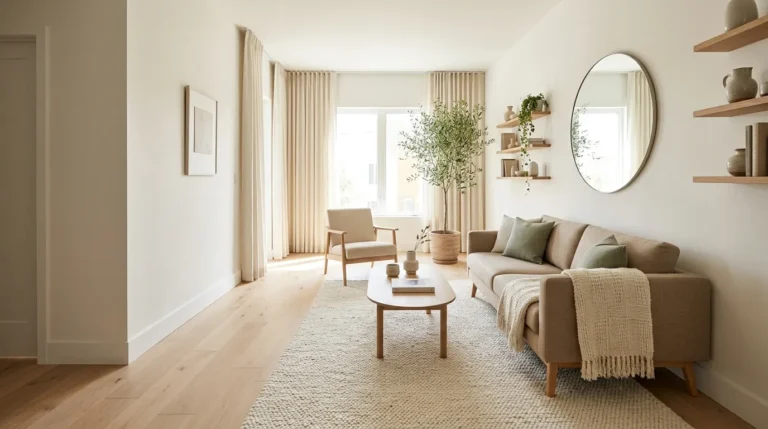
Ivory curtains are an excellent choice for creating warm, comfortable interiors. Their gentle off-white color allows daylight to pass through while producing a softer visual effect than stark white fabrics.
Ivory pairs beautifully with natural wood furniture, cream upholstery, warm white walls, and beige decorative accessories.
These curtains work particularly well in bedrooms and living rooms where a relaxing atmosphere is the main priority.
Best for: Cozy bedrooms, neutral living rooms, and warm minimalist interiors.

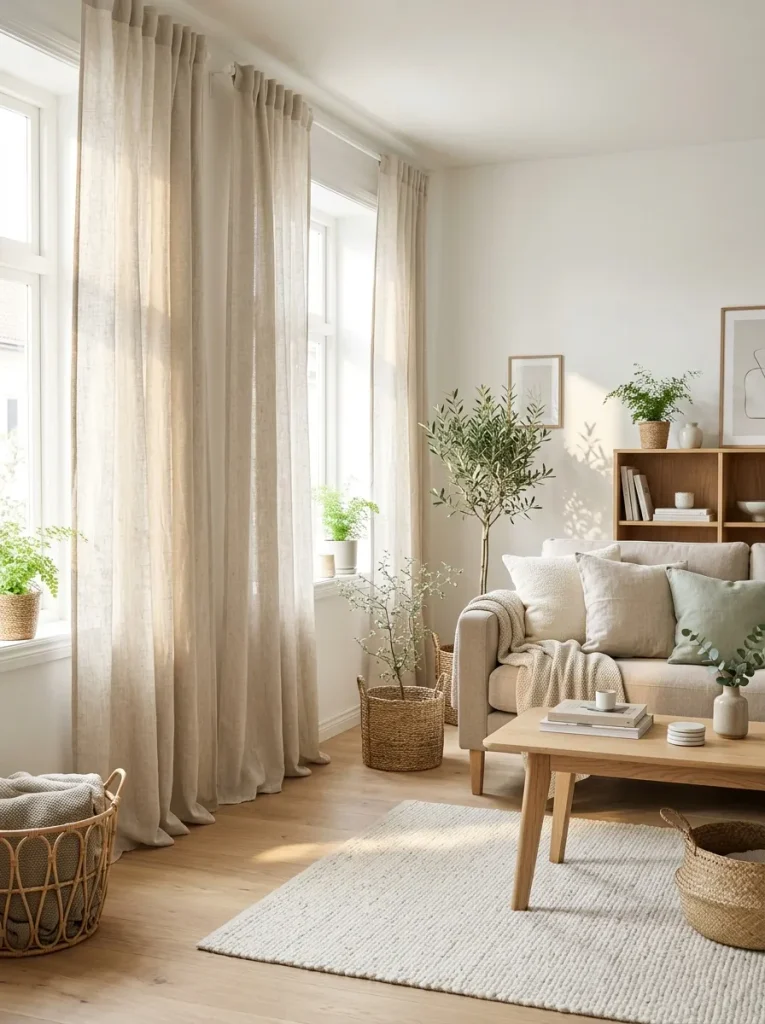
2. Textured Linen-Look Light Filtering Panels
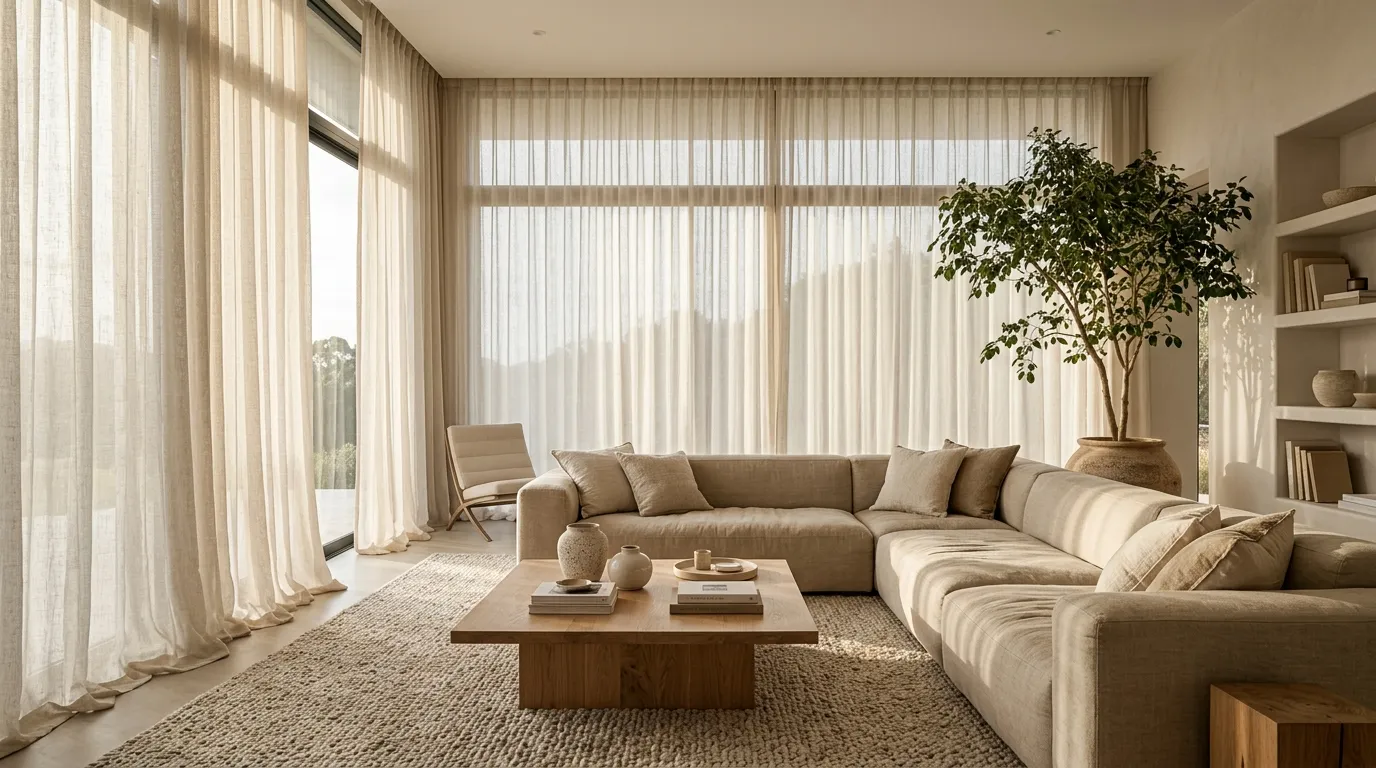
Linen-look curtains combine organic texture with elegant simplicity. Their visible weave gives a window additional character while allowing diffused daylight to illuminate the room.
These panels work especially well in Scandinavian, coastal, farmhouse, and modern organic interiors.
Natural linen-look fabrics complement wooden floors, woven baskets, neutral upholstery, and indoor plants.
For homeowners who appreciate understated elegance, light filtering curtains to soften natural light in a textured linen-look finish provide an attractive combination of comfort and style.
Best for: Scandinavian interiors, modern bedrooms, and relaxed living spaces.
3. Warm Beige Light Filtering Curtains
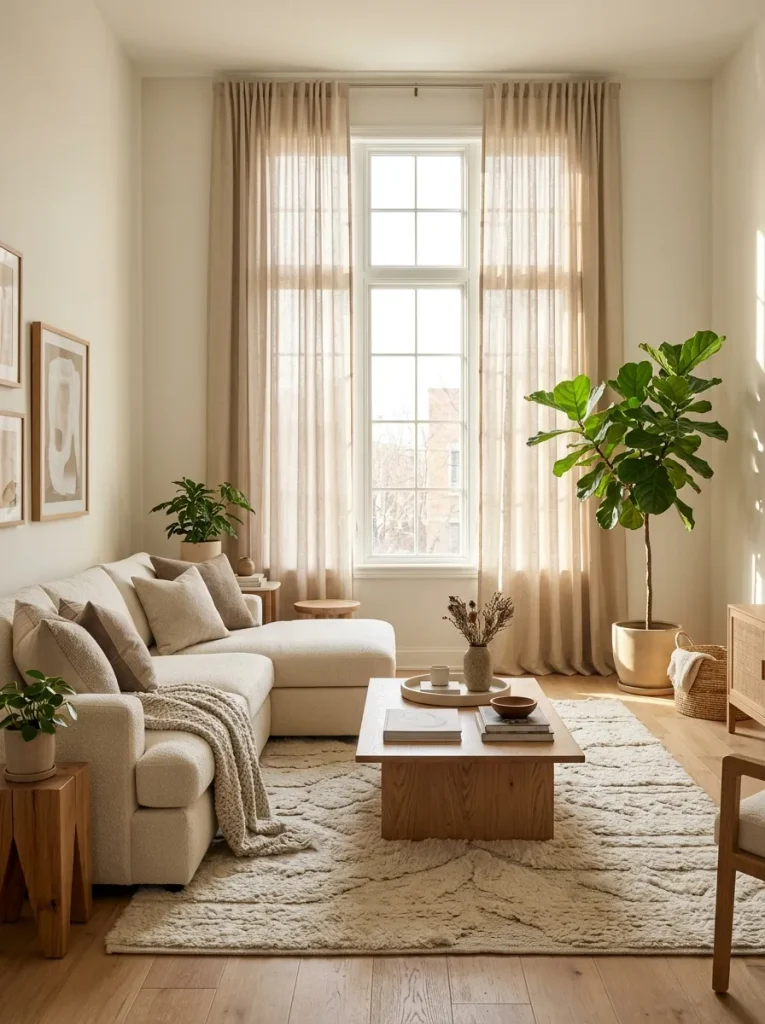
Beige curtains create an inviting atmosphere without introducing strong visual contrast.
Their earthy tone blends naturally with warm white walls, wooden furniture, cream textiles, and muted decorative accents.
Unlike darker curtains, lighter beige materials can help maintain an open, bright appearance while softening incoming sunlight.
Choose a medium-weight beige fabric if your room receives stronger direct sunlight.
Best for: Earth-toned living rooms, family spaces, and transitional interiors.
4. Pale Gray Light Filtering Curtains
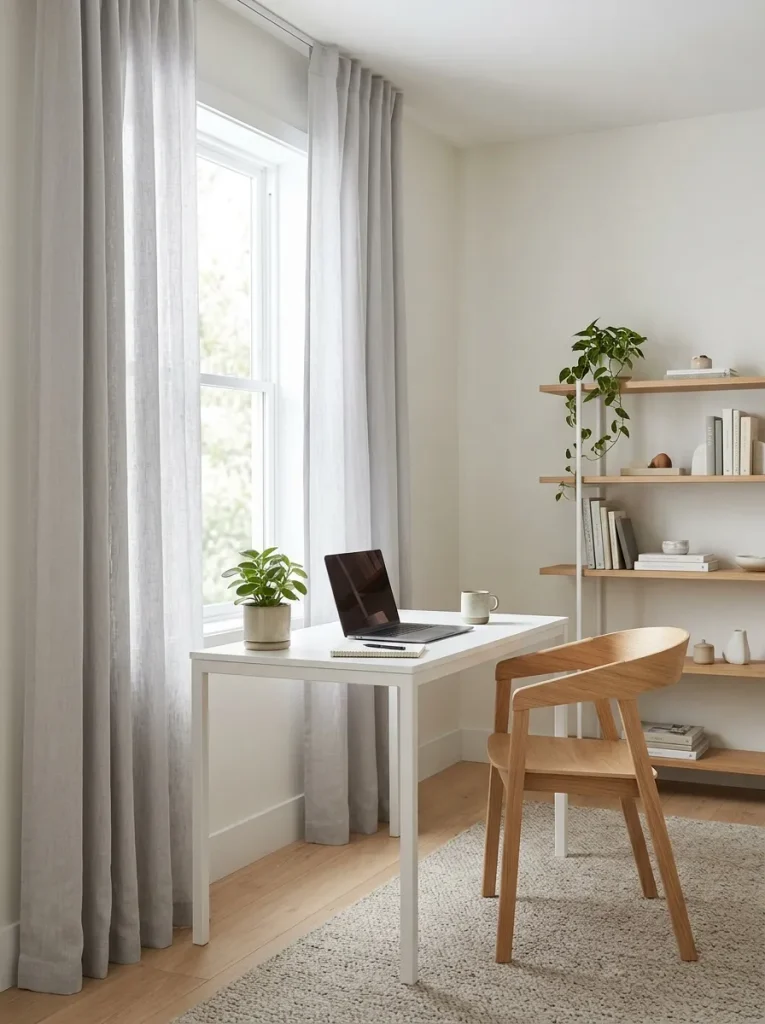
Pale gray curtains are ideal for contemporary rooms where cream or ivory may appear too warm.
Their subtle color complements white furniture, polished surfaces, black window frames, and minimalist decor.
Light gray fabric can produce a cooler lighting atmosphere while maintaining a bright appearance.
Avoid extremely dark gray panels if maximizing daylight is important.
Best for: Contemporary apartments, modern living rooms, and home offices.
5. Full-Wall Light Filtering Curtains
Full-wall curtains make windows appear larger while introducing visual softness across an entire wall.
Instead of positioning the curtain rod directly above the window, install it higher and extend it beyond both sides of the window frame.
This technique creates long vertical lines, adding an elegant architectural effect.
Generously wide fabric panels form beautiful folds and help distribute light more softly.
Best for: Large living rooms, picture windows, and contemporary open-plan interiors.
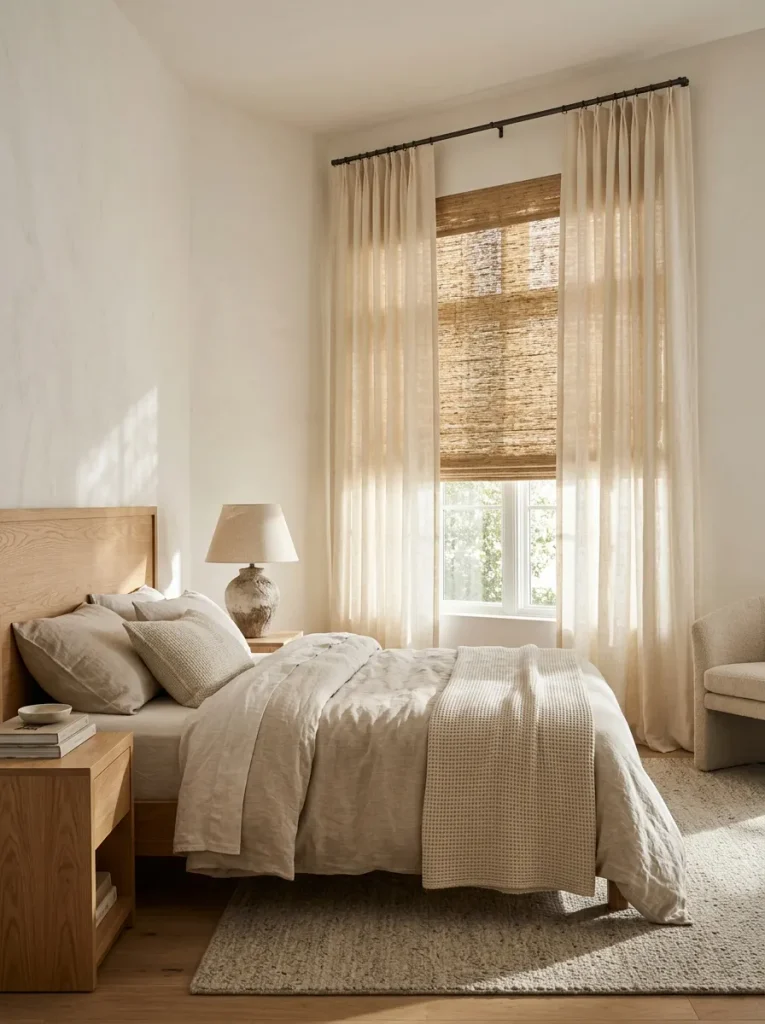
6. Light Filtering Curtains With Roman Shades
Layering curtains with Roman shades offers greater flexibility for controlling sunlight and maintaining privacy.
During the daytime, light-filtering panels create a gentle glow while the Roman shade can be adjusted to control stronger sunlight.
In the evening, lowering the shade provides an additional privacy layer.
This combination works beautifully in bedrooms, home offices, and living rooms.
For a coordinated appearance, combine ivory curtain panels with a natural woven Roman shade.
Best for: Bedrooms, home offices, and windows requiring adjustable privacy.
7. Soft Sage Light Filtering Curtains
Soft sage curtains introduce a calming natural color while maintaining the brightness of a room.
Their muted green tone coordinates beautifully with cream walls, wooden furniture, botanical artwork, and natural textures.
Sage is particularly attractive in interiors inspired by nature, where gentle colors help create a relaxing environment.
Choose a pale or muted sage shade to avoid making the window treatment visually heavy.
Best for: Nature-inspired bedrooms, cozy living rooms, and botanical interiors.

8. Double-Panel Light Filtering Curtains
Double-panel curtains create balanced window styling and allow convenient adjustment of daylight.
Using two generously sized panels also creates fuller folds, which can improve the overall appearance and soften light passing through overlapping sections.
Choose curtain panels with sufficient width so they do not appear stretched or flat when closed.
For a refined effect, use ceiling-height panels that fall close to the floor.
Best for: Primary bedrooms, formal living rooms, and wide windows.
Best Light Filtering Curtains to Soften Natural Light in Small Rooms
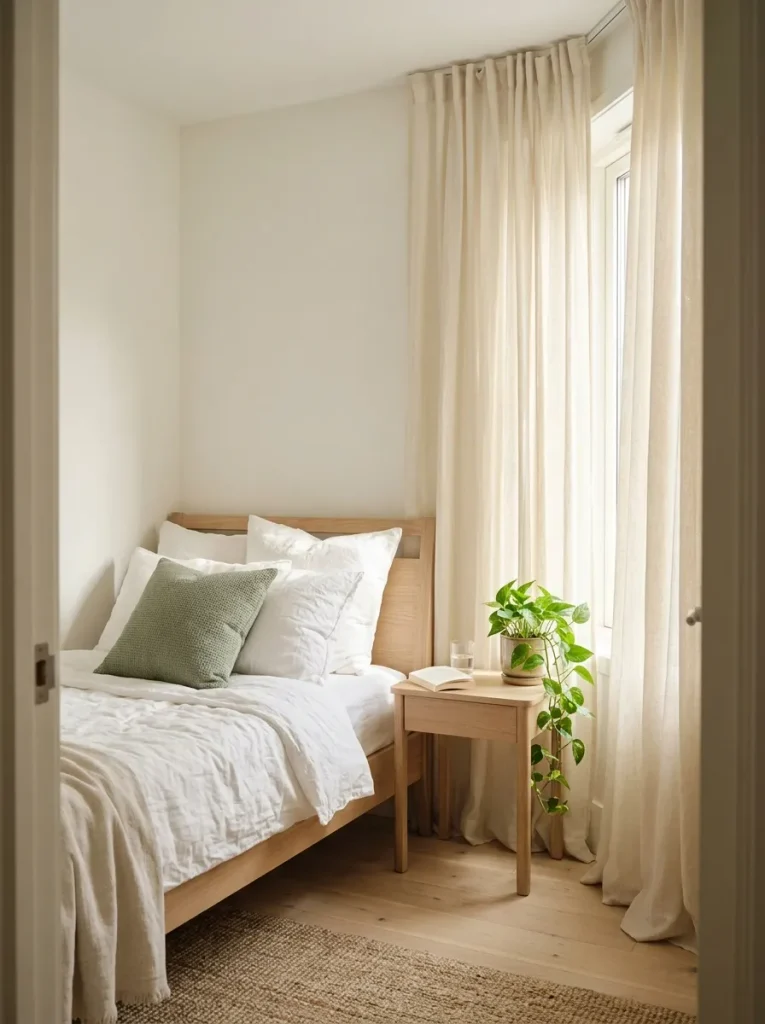
Small rooms require thoughtful window treatments because excessively thick or dark curtains can make limited spaces appear more enclosed.
Pale light-filtering curtains are often the most effective choice because they maintain brightness while adding subtle texture.
Best Curtain Colors for Small Spaces
- White for a clean and bright appearance.
- Ivory for gentle warmth.
- Cream for a cozy atmosphere.
- Pale beige for natural elegance.
- Very light gray for contemporary styling.
Mounting curtains close to the ceiling can visually increase wall height.
Allowing panels to fall close to the floor creates a continuous vertical line that makes the space feel taller.
Choose fabrics with moderate opacity to balance privacy and brightness.
What Curtain Colors Create the Softest Natural Lighting?
Curtain color influences how filtered sunlight appears inside your home.
Light-colored fabrics generally preserve more brightness, while warmer neutrals can give daylight a softer, more inviting character.
The following color options are particularly effective.
| Curtain Color | Visual Lighting Effect | Suitable Interior |
| White | Clean and bright | Minimalist rooms |
| Ivory | Warm and gentle | Cozy bedrooms |
| Cream | Soft and welcoming | Traditional interiors |
| Beige | Natural and earthy | Organic modern rooms |
| Pale gray | Cool and balanced | Contemporary spaces |
| Sage green | Muted and relaxing | Nature-inspired rooms |
| Dusty blue | Cool and calming | Coastal interiors |
When selecting light filtering curtains to soften natural light, consider the undertones of your wall paint and flooring.
Warm ivory fabrics often complement cream-colored walls, while cool gray panels may coordinate better with bright white or cooler neutral surroundings.

Common Mistakes When Choosing Light Filtering Curtains
Even beautiful curtains may fail to produce the desired effect if their size, fabric, or installation is unsuitable.
Avoid these common window-treatment mistakes.
Choosing Fabric That Is Too Transparent
Very sheer material may allow more sunlight and visibility than expected.
Select denser light-filtering fabric when stronger glare reduction and daytime privacy are important.
Using Curtains That Are Too Narrow
Insufficient panel width creates flat-looking curtains with limited fabric folds.
Choose generously sized panels for a fuller and more polished appearance.
Hanging Curtains Too Low
Installing curtain rods immediately above the window frame can make the window appear shorter.
Mounting the rod higher generally creates a more elegant visual effect.
Ignoring Nighttime Privacy
Light-filtering curtains may provide moderate daytime privacy, but silhouettes can become visible when interior lights are switched on after dark.
Additional shades or blackout panels may be necessary.
Ignoring Afternoon Sunlight
West-facing windows can receive intense sunlight during the afternoon.
Choose curtains with an appropriate opacity for these conditions instead of relying on fabric color alone.
How to Layer Light Filtering Curtains for Better Privacy
Layered window treatments offer a practical solution for homes that require both soft daylight and dependable privacy.
You can combine light filtering curtains to soften natural light with several types of window coverings.
Popular combinations include:
- Light-filtering curtains and roller shades: Ideal for flexible sunlight control.
- Light-filtering curtains and Roman blinds: Suitable for elegant bedrooms.
- Light-filtering curtains and blackout panels: Useful when nighttime darkness is important.
- Light-filtering curtains and woven shades: Attractive for natural, textured interiors.
- Light-filtering curtains and privacy blinds: Convenient for rooms facing nearby buildings.
During the day, keep the stronger privacy layer open when conditions allow and let the curtains diffuse incoming daylight.
At night, close the secondary window covering for additional privacy.
Frequently Asked Questions About Light Filtering Curtains to Soften Natural Light
1. Do Light Filtering Curtains Provide Privacy?
Yes, light-filtering curtains can provide daytime privacy, depending on their fabric density and the lighting conditions.
However, they generally provide less privacy at night when interior lights illuminate the room.
2. What Is the Difference Between Sheer and Light Filtering Curtains?
Sheer curtains are usually more transparent and allow greater visibility through the fabric.
Light-filtering curtains are generally denser, reducing glare and providing more privacy while preserving natural brightness.
3. Can Light Filtering Curtains Reduce Sun Glare?
Yes. Light-filtering curtains can diffuse direct sunlight and reduce glare on televisions, computers, and reflective surfaces.
Their effectiveness depends on fabric construction, opacity, and window orientation.
4. Which Colors Are Best for Soft Natural Lighting?
White, ivory, cream, beige, pale gray, and muted sage are excellent choices.
Light neutral colors maintain brightness while creating gentle, comfortable illumination.
5. Are Light Filtering Curtains Suitable for Bedrooms?
Yes. They work particularly well in bedrooms where soft morning daylight is desirable.
For stronger darkness or nighttime privacy, combine them with blackout blinds or heavier curtains.
6. Can Light Filtering Curtains Make a Small Room Look Bigger?
Yes. Pale full-length curtains, especially when mounted near the ceiling, can make a room feel taller, brighter, and more spacious.
7. Are Light Filtering Curtains Better Than Blackout Curtains?
Neither option is universally better.
Light-filtering curtains are designed to preserve daylight while reducing glare. Blackout curtains are better when significantly darker conditions are required, such as in bedrooms used for daytime sleeping.
Conclusion
Choosing light filtering curtains to soften natural light is a simple and elegant way to improve the comfort, appearance, and atmosphere of your home.
From warm ivory and textured linen-look panels to soft sage curtains and layered Roman shades, each design offers a distinctive way to balance brightness, privacy, and interior style.
For the best results, choose fabrics according to the room’s sunlight exposure, select colors that complement your decor, and install panels with sufficient width to create graceful folds.
If privacy after dark is important, combine light-filtering curtains with blinds or heavier window treatments.
With thoughtful fabric choices and proper installation, you can transform harsh sunlight into gentle daylight that makes every room feel peaceful, welcoming, and beautifully decorated.
Save these ideas to your Pinterest home decor or window-treatment board for inspiration when planning your next interior update.